
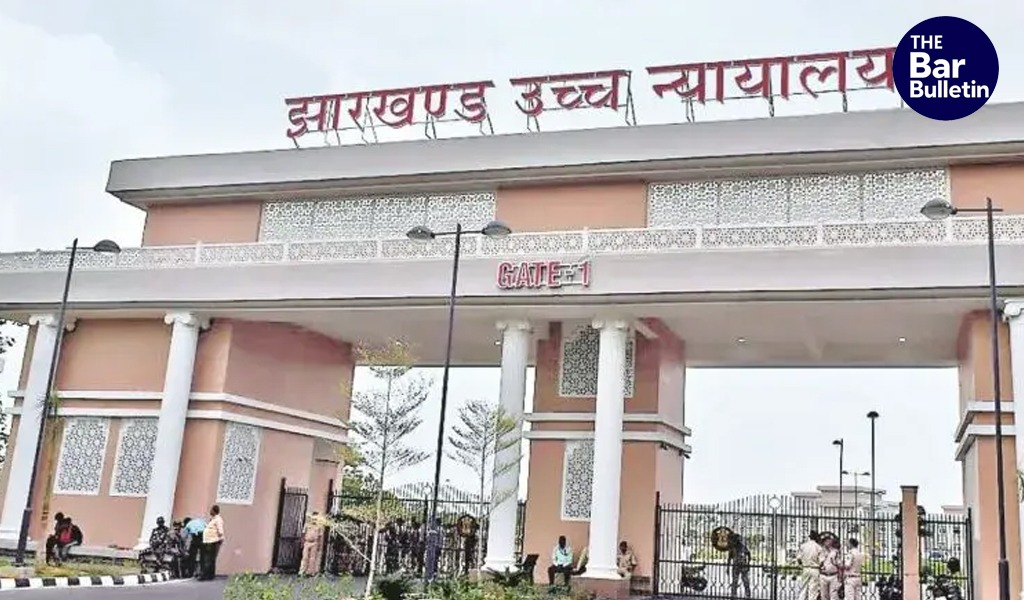

While affirming the trial court’s judgment of conviction and sentence for intentionally ramming the vehicle into Uttam Anand, District & Additional Sessions Judge-VIII, Dhanbad, during his morning walk on July 28, 2021, who later died from severe head injuries, the Jharkhand High Court has held that the case squarely attracted Sections 302/34 and 201/34 IPC. The Court found that there was a bodily injury, the nature of the injury was proved, the particular injury was intentionally inflicted by deliberately ramming the auto-rickshaw into the victim, and the medical evidence established that the injury was sufficient in the ordinary course of nature to cause death. Therefore, even if there was only a single impact, the offence amounted to murder and not a lesser offence.
“
“The enormity of the act of the appellants and the audacious nature of its execution has been an affront to the judiciary encapsulating serious concerns over the safety and security of the Judicial Officers”, added the Court.
The High Court also held that common intention under Section 34 IPC was proved against both accused. Their joint theft of the vehicle, concealment of its identity, presence together in the front seat, coordinated movement before and after the collision, and subsequent conduct established that the murder was committed in furtherance of their shared design. Accordingly, both were liable for the offences under Sections 302/34 and 201/34 IPC.
The Division Bench comprising Justice Rongon Mukhopadhyay and Justice Pradeep Kumar Srivastava said the evidence of Sarban Singh, the only eyewitness to the actual impact, was highly significant. The Court accepted his statement that the auto-rickshaw deliberately veered left and hit Uttam Anand, and also noted his account that one occupant got down later and took another auto while the offending vehicle continued onward. The Court found this testimony consistent with the CCTV footage and the broader prosecution case. The Court observed that the stolen auto-rickshaw was successfully linked to the crime through a combination of recovery, physical description, forensic matching and CCTV analysis. It specifically noted that the auto recovered at the instance of Lakhan Kumar Verma was the same vehicle that rammed Uttam Anand, and that broken fibres recovered from the spot matched the broken indicator of the seized auto.
On the presence and role of both accused, the Court held that the prosecution had proved beyond reasonable doubt that both appellants were in the auto-rickshaw at the relevant time. It relied not only on witness testimony and forensic evidence, but also on Lakhan Kumar Verma’s own defence evidence admitting that Rahul Kumar Verma was sitting beside him when the auto struck the judge. The Court carefully viewed the CCTV footage in court and said it clearly showed the auto suddenly veering left towards Uttam Anand and then continuing in a calm and normal fashion after the impact. According to the Court, this conduct was inconsistent with an accident, because if the impact had been accidental, the natural reaction would likely have been braking, speeding away in panic, or some sign of loss of control. Instead, the footage suggested a calculated and dispassionate execution of the act.
The High Court rejected Lakhan Kumar Verma’s explanation that a stone came under the tyre and caused the collision. It held that this defence was unsupported by any evidence, that repeated inspections of the place of occurrence never revealed any such stone, and that no forensic expert found anything in the CCTV footage suggesting an obstruction, wobble, jerk or sudden mechanical disturbance.
Also Read Delhi High Court Upholds Mesne Profits Against Cement Corporation of India, Sets Aside Interest
The Court found that even on a plain viewing of the footage, the auto moved smoothly before the impact. The Court also relied on expert evidence showing that the driver was in full control of the vehicle and had intentionally altered the path towards the victim. It referred to the forensic opinion that the auto driver followed Uttam Anand, seized an opportunity, and executed the act in a planned and intentional manner, and to the medical-forensic opinion that there was no attempt to avoid the victim and that the vehicle returned to its original path after the impact.
On the defence argument of absence of motive, the Court held that motive loses significance when there is direct and reliable evidence. It said that in the present case, the eyewitness account, CCTV footage, medical evidence and forensic analysis together formed a strong evidentiary foundation, making the lack of proved motive insufficient to weaken the prosecution case.
The Court further held that Rahul Kumar Verma could not escape liability merely because he was not the one driving the vehicle. It said that Section 34 IPC applied because both accused had stolen the auto together, defaced and removed the number plates to conceal identity, remained together up to the point of impact, and acted in concert in furtherance of their common intention. The surrounding circumstances clearly showed coordinated conduct, not mere presence. The High Court described the incident as an audacious act that raised serious concerns about the safety and security of judicial officers. It said the trial court had correctly appreciated the large body of ocular, documentary and scientific evidence, and that the culpability of both appellants was fully established on record.
Briefly, the appeal arose from the conviction of Lakhan Kumar Verma and Rahul Kumar Verma in the murder case concerning Uttam Anand, District & Additional Sessions Judge-VIII, Dhanbad. The trial court had convicted both appellants under Sections 302/34 and 201/34 IPC and sentenced them to life imprisonment without remission or commutation till their last breath, along with fines, with both sentences directed to run concurrently.
The prosecution case began with a written report by Kritee Sinha, wife of the deceased. She stated that on July 28, 2021, her husband Uttam Anand had gone for his morning walk and did not return. During the search, it was learnt that local persons had taken him in an injured condition to SNMMCH, Dhanbad. A video circulating on mobile phones appeared to show that an auto-rickshaw driver had deliberately collided with him, causing his death. On that basis, a police case was registered under Section 302 IPC against an unknown auto-rickshaw driver.
The investigation was first conducted by the local police, then by a Special Investigation Team constituted by the Jharkhand Police, and later transferred to the CBI because of the gravity of the offence. The CBI re-registered the matter on Aug 04, 2021 and, after investigation, filed a charge sheet against Lakhan Kumar Verma and Rahul Kumar Verma under Sections 302, 201/34 IPC. The case was committed to the Special Judge, CBI, Dhanbad, where charges under Sections 302/34 and 201/34 IPC were framed against both accused, who denied the allegations and claimed trial.
The medical evidence showed that Uttam Anand was brought to the hospital in a critical and unconscious state with severe head injuries, bleeding from the ears and nose, and breathing difficulty. He was intubated, placed on ventilator support, administered emergency drugs, and declared dead at 09:00 AM. The post-mortem board found ante-mortem injuries caused by hard and blunt substance, including skull fractures on both sides, subdural blood and blood clots, and concluded that death was due to head injury. The doctors also opined that even a single head injury was sufficient in the ordinary course of nature to cause death.
Independent witnesses described what happened immediately after the collision. Pawan Kumar Pandey and Sheela Handa both reached the spot after the occurrence and found an injured man lying on the road with blood coming out from his mouth, ears, and nose. Pawan arranged an e-rickshaw and took the injured first to Sadar Hospital and then to PMCH/SNMMCH for treatment. Sheela also helped clear blood from his mouth and nose so that he could breathe more easily. Both later participated in the CBI’s scene recreation exercise. However, neither of them claimed to have seen the actual impact.
The prosecution case strongly relied on CCTV footage, forensic reconstruction, and expert opinion. The Motor Vehicle Inspector found that the offending auto-rickshaw had no mechanical defect; its brakes and steering were proper, though the front number plate was scratched and the rear number plate was missing. CFSL experts who recreated the scene concluded that the speed of the auto at impact was about 20-25 kmph and the angle of impact was about 21 degrees. Medical-forensic experts correlated the injuries with parts of the auto-rickshaw and concluded that the driver appeared to be in full control of the vehicle, changed course toward the victim, and did not brake, swerve away, or lose control. They opined that the incident was not accidental but intentional.
The prosecution also linked the particular auto-rickshaw and both accused to the offence. The auto-rickshaw was proved to have been stolen the previous night from Sugani Devi. It was later recovered at the instance of Lakhan Kumar Verma from near his relative’s house. Forensic comparison found that the auto seen in the CCTV footage and the seized auto were the same in all probabilities, and that broken fibre pieces recovered from the scene matched parts of the auto’s broken indicator. Witnesses from the petrol pump, railway station parking area, and other locations identified the movement of the same vehicle and the presence of the accused. One eyewitness, Sarban Singh, stated that he actually saw the auto deliberately veer left and hit the victim, and he also saw one young man get down later and take another auto in the opposite direction.
