
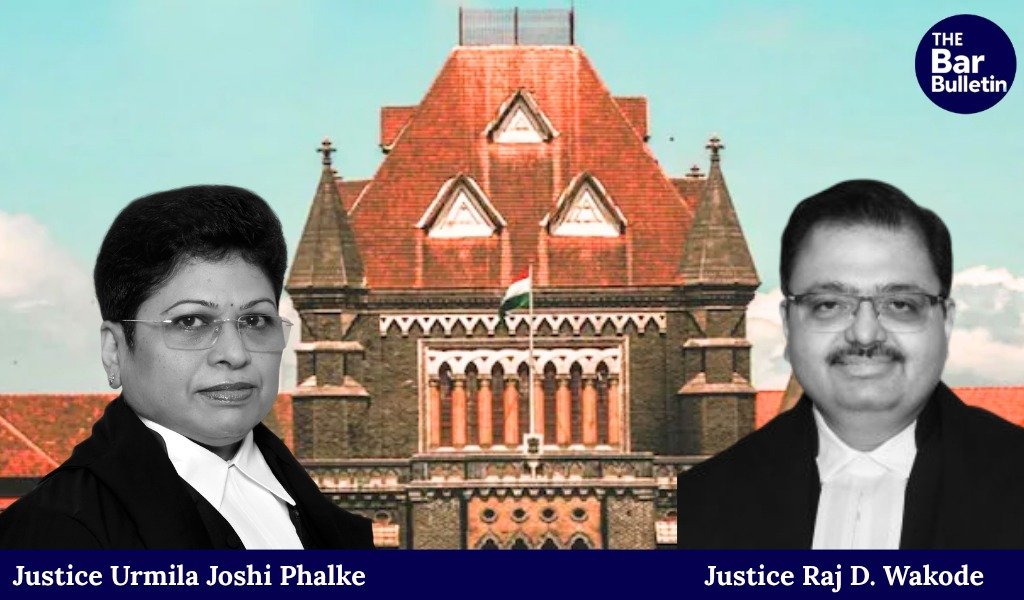

Reiterating that apology is not a ‘paper apology’ to escape punishment, the Bombay High Court has held that threatening a judge with false corruption complaints to superiors amounts to criminal contempt and interference with the administration of justice. The Court explained that advocates who threaten a Judicial Officer in open court with false corruption complaints and intimidation, with the aim of pressuring the judge from passing adverse orders, commit criminal contempt under the Contempt of Courts Act, 1971.
The Court viewed the conduct of respondent No. 2, who was the then President of the Taluka Court Bar Association, with particular seriousness, holding that such behaviour from a senior office-bearer of the Bar is in complete disregard of the principles under the Advocates Act, 1961. The Court rejected the respondent’s apology as a ‘paper apology’, reiterating the settled legal position that an apology must be offered at the earliest opportunity and out of genuine contrition. An apology tendered only after the Court directs it, or when the contemnor realises punishment is imminent, is shorn of penitence and liable to be rejected.
Relying on Section 12(3) of the Contempt of Courts Act, 1971, the Court held that in normal circumstances, a sentence of fine alone should be imposed, and imprisonment is an exception to be applied only when the ends of justice so require. Accordingly, the High Court imposed a fine of Rs. 2,000 on each respondent, directed them to pay costs of Rs. 50,000 each (to be deposited in the Public Welfare Account of the High Court), and referred the proceedings to the Disciplinary Committee of the Bar Council of Maharashtra and Goa for appropriate disciplinary action.
Briefly, the applicant, Sajiduzzaman Mhammad Hanif, was serving as Civil Judge (Junior Division) and Judicial Magistrate First Class at Arni, District Yavatmal. Regular Criminal Case State vs. Nilesh Jadhav was pending before him, and on Sep 21, 2020, the matter was fixed for evidence, but the accused remained absent. Due to the Covid-19 pandemic, bailable warrants could not be issued until Aug 05, 2021. On Nov 26, 2021, when the matter was listed for return of bailable warrants, accused No. 1 Nilesh Jadhav was served but stayed absent, prompting the applicant to issue a non-bailable warrant against him.
After passing the order, respondent No. 1 (an advocate) appeared and claimed the accused was present but could not enter the court, and filed an application for cancellation of the warrant. When the accused was called, he was found absent, and an exemption application was filed. Respondent No. 1 then filed a pursis stating the matter was settled out of court and insisted that the court record evidence. The applicant declined, as other accused were absent and identification was involved. At this point, respondent No. 1 began shouting in the open court, threatening the judge in Marathi that the Bar would pass a resolution and take action against the court.
A little later, respondent No. 2 (father of respondent No. 1 and then President of the Arni Taluka Court Bar Association) entered the court hall, raised his finger at the judge, and threatened that if anything adverse was recorded or ordered, he would not be spared and corruption complaints would be submitted against him to his superiors. The applicant recorded these acts in his order and issued show-cause notices. Despite service, the respondents did not file replies, claiming they could not obtain certified copies. Eventually, they filed their reply by affidavit. The applicant then made the contempt reference to the High Court.
The High Court took cognizance, issued notices, and later had to issue bailable warrants of Rs. 15,000 each against the respondents, who repeatedly failed to appear and changed advocates multiple times. Mr. J.M. Gandhi was appointed as Amicus Curiae. The respondents ultimately tendered unconditional apology before the Judicial Magistrate at Arni, but only after oral directions from the High Court.
Also read Rajasthan HC Denies Bail to Five Accused in Kanhaiya Lal Murder Case
The Division Bench comprising Justice Urmila Joshi Phalke and Justice Raj D. Wakode observed that the respondents, who are practising advocates, used threatening and abusive language against a Judicial Officer during judicial proceedings in open court. Respondent No. 2, who was the President of the Bar Association, threatened the judge with false corruption complaints to superiors, which was an attempt to terrorise and pressurise the Judicial Officer from passing orders fearlessly. The Court noted that such conduct clearly interferes with the administration of justice and amounts to scandalising the court.
The Court further observed that the apology tendered by the respondents was not at the earliest opportunity. It was tendered only after the High Court orally directed them to do so, and not out of genuine remorse. The respondents had earlier avoided appearing, forcing the Court to issue bailable warrants. The Court noted that the respondents had not denied the incident in specific terms in their reply, and merely tried to project that the incident occurred due to the court’s order.
The Court emphasised that lawyers are officers of the court and must maintain the dignity and decorum of judicial proceedings. The legal profession is noble and not commercial in nature, and advocates must protect the rights of litigants without intimidating or terrorising judges. The Court observed that the conduct of the respondents, particularly respondent No. 2 as President of the Bar Association, was in complete disregard of the principles under the Advocates Act, 1961.
