

Finding that the State itself had treated the relevant posts as Group-C, the Bombay High Court has ruled that employees appointed on compassionate grounds cannot be removed decades later when there was no fraud or misrepresentation. The High Court refused to allow cancellation of compassionate appointments granted nearly two decades earlier after finding no fault on the part of the employees.
The Court held that authorities could not ignore existing Government Resolutions which classified the post of Group Instructor as a Group-C (Technical) post and instead treat it as a Group-B post merely based on pay scale. Since the petitioners had neither concealed facts nor obtained employment through misrepresentation, their appointments could not be terminated for an alleged administrative error of the authorities.
Having completed probation and been confirmed in service, the petitioners had acquired a right to continue in service, subject to lawfully permissible grounds for removal. The Court noted that terminating employees after many years of service would cause severe prejudice, especially when they had crossed the age limit for seeking fresh government employment.
Briefly, the petitions were filed by Avinash Kondiram Wagh and Abhay Chandrakant Khond, whose fathers had died while serving in the State Government. Following their fathers’ deaths, both petitioners were appointed on compassionate grounds by the competent authorities and were subsequently confirmed in service after completing probation.
Several years later, the authorities issued show-cause notices proposing cancellation of their appointments on the ground that their deceased fathers allegedly held Group-B posts, making their dependents ineligible for compassionate appointment under the policy then in force. The petitioners challenged the proposed action before the Maharashtra Administrative Tribunal, which dismissed their applications, leading to the present writ petitions before the High Court.
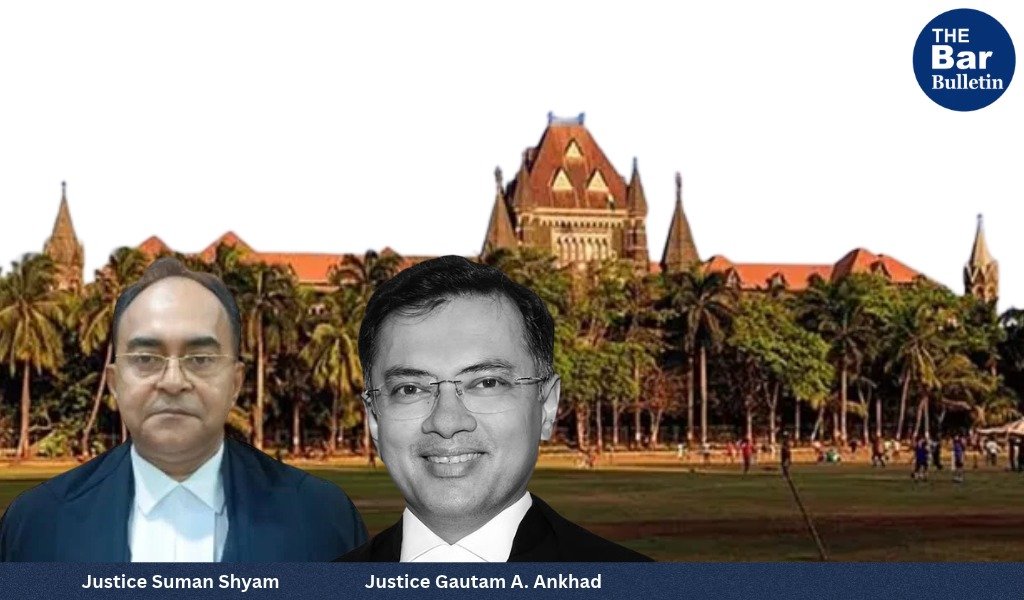
The Division Bench comprising Justice Suman Shyam and Justice Gautam A. Ankhad observed that the authorities sought to treat the posts held by the petitioners’ fathers as Group-B posts solely based on the pay scale attached to those posts. However, several Government Resolutions subsequently issued by the State specifically classified the post of Group Instructor carrying the same pay scale as a Group-C (Technical) post. The Court noted that these Government Resolutions had neither been withdrawn nor superseded and were ignored by both the authorities and the Tribunal while taking the impugned decision.
The Court further found that the respondents failed to establish any valid basis for treating the petitioners’ fathers’ posts as Group-B posts. In the case of Abhay Khond, the respondents themselves admitted that his father was serving on a Class-III post. Therefore, the foundation of the proposed cancellation proceedings was found to be unsustainable.
The Court also emphasized that both petitioners had been appointed through a valid process, had completed probation, and had rendered continuous service for nearly two decades. No allegation of fraud, misrepresentation, concealment of facts, or misconduct was ever made against them. The Court observed that terminating their services after such a long period would cause grave and disproportionate hardship, particularly when they had crossed the usual age limits for fresh government employment.
Referring to the Supreme Court decision in Md. Zamil Ahmed v. State of Bihar [(2016) 12 SCC 342], the Court reiterated that where an employee obtains compassionate appointment without any fraud or misrepresentation, the State cannot seek to terminate such appointment after a prolonged delay merely on the basis of its own alleged mistake.
