
From secularism and reservations to citizenship, federalism, delimitation and digital identity, legal voices identify the constitutional fault lines that could shape India over the next 25 years.
“
What will India argue about constitutionally in 2050?
The answer may not lie in a single amendment, a single judgment or even a single constitutional provision. It may lie in a series of questions that are already beginning to surface who belongs, who is represented, who gets power, who controls resources, and, increasingly, who controls the digital identity of a citizen.
For The Bar Bulletin, we put one question to leading voices from the legal fraternity:
What is the biggest constitutional question India will face in the next 25 years?
The responses point towards a constitutional conversation that is already taking shape, one involving secularism, minority rights, reservations, citizenship, religious conversion, illegal migration, federalism, the North-South divide, delimitation, synchronised elections, devolution of power and the emergence of digital identity in an AI-driven State.
Taken together, these perspectives suggest that India’s next constitutional debates may not necessarily be about creating an entirely new constitutional order. They may instead be about rebalancing the existing one to reflect a country that has changed dramatically since the Constitution was framed.
Is India heading towards a new constitutional debate on secularism, minorities and reservations?
For Additional Solicitor General Chetan Sharma, the starting point is the Constitution itself.

He believes the next 25 years may require India to revisit several foundational questions, including whether the 42nd Constitutional Amendment, which inserted the word ‘secular’ into the Preamble in 1976, raises questions under the Basic Structure doctrine, particularly given that the term did not expressly appear in the original Preamble.
The question, in his view, inevitably brings the Kesavananda Bharati doctrine into the conversation.
But ASG Chetan Sharma’s constitutional questions do not stop there.
He asks whether the idea of a minority needs to be reconsidered in the context of changing demographics. If a community constitutes around 30% of the population, should it continue to be treated as a minority? And if the demographic ratio in a particular geographical area is 50:50, can a community still be regarded as a minority in that region?
He also identifies a constitutional tension between Articles 14, 28 and 31, asking whether aspects of these provisions are antithetical to the guarantee of equality under Article 14.
And then comes the question of reservations:
“
“Finally, there is the larger question of reservations, whether they should continue in their present form and for how long, particularly when those who have already availed themselves of substantial benefits continue to remain in the queue.”
Who belongs to India?
For Sr Advocate J. Sai Deepak, the constitutional question begins even more fundamentally with citizenship.

His answer identifies three interconnected issues:
“
“The biggest constitutional questions India will face in the next 25 years will revolve around citizenship, religious conversions and illegal migration, and how the constitutional framework responds to these interconnected challenges.”
The three issues sit at the intersection of individual rights, State power, demography and national identity.
And that makes the question particularly consequential. How the Constitution negotiates the relationship between citizenship and belonging, while dealing with migration and religious conversion, could shape some of India’s most difficult constitutional debates in the coming decades.
The federal question is coming back
For Dr Amit George, the focus shifts towards how the country itself is governed.
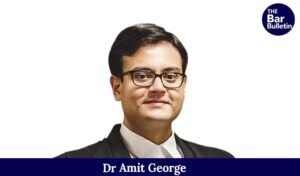
For Dr George, federalism will be a defining constitutional question.
“
“I believe that the issue of federalism will be a defining Constitutional question in times to come, as we reckon with issues such as delimitation and synchronised elections.”
Delimitation can affect the distribution of political representation. Synchronised elections raise questions about the relationship between electoral cycles at the Union and State levels. Both, in different ways, touch the balance between the Union and the States.
The federal question, therefore, may no longer be confined to the familiar debate over legislative lists and executive powers. It could increasingly become a question about political representation itself and whether India’s federal architecture can absorb changing demographic and electoral realities without unsettling the balance between its constituent units.
How much power should Delhi really have?
Arjun Harkauli takes the federalism question one step further.

His argument is that the unitary bias that existed at the time of the creation of the Republic no longer holds, although the constitutional tilt towards the Centre remains.
India has changed. Its aspirations have changed. Its economic environment has changed.
That, Arjun Harkauli argues, creates a natural push towards a more devolved system of governance.
The question, therefore, is not simply whether States should receive more power from the Centre. It is whether administrative and financial power should travel even further down the chain of government.
“
“Therefore a major constitutional question that will emerge is how to redistribute powers between the Centre and States and further devolve government’s administrative and financial power to the last rung.”
It is a vision of federalism that does not end at the State capital.
The constitutional conversation, in this view, eventually reaches the last rung of governance and asks whether citizens should experience the Constitution not merely through institutions in Delhi or State capitals, but through a genuinely decentralised system of administration and finance.
And then comes the North-South question
But redistribution of power becomes considerably more complicated when different parts of the country are moving at different speeds.
That is where Noor Shergill’s answer introduces a potentially significant constitutional fault line: the North-South divide.

His argument begins with a divergence in outcomes. Southern States, he notes, have pulled ahead on measures including per capita income, female literacy and workforce participation, health outcomes and schooling, while northern States have struggled on several of these measures.
The resulting grievance is not simply economic. It is constitutional.
The concern emerging in the South, according to Noor Shergill, is that the reward for performing better could be reduced political influence, because representation in Parliament is connected to population and fiscal transfers.
He said:
“
“The south is paying for the north, while the north enjoys political power.”
That grievance potentially touches multiple constitutional structures at once—the Lok Sabha and Rajya Sabha, Article 280 and the Finance Commission, and the office of the Governor.
It also arrives at a sensitive moment, when questions are being raised about the neutrality and independence of constitutional institutions that may themselves be called upon to mediate these disputes.
Noor Shergill’s warning is therefore not merely about an abstract federal disagreement.
“
“My fear is that this grievance can snowball if not handled deftly.”
The proposed delimitation exercise, he suggests, may already be providing an early indication of how sharply these tensions could develop.
The next constitutional right may exist in a digital world
While these questions concern the structure and identity of the State, Pranay Chitale asks what happens when the State increasingly interacts with citizens through technology.

He said that the next major constitutional frontier may be digital identity.
“
“Since the State has increasingly been interacting with citizens through technology, the right to digital identity is going to emerge as a significant constitutional question much sooner than 25 years.”
But Pranay Chitale’s concern is not simply about having a digital identity. It is about who owns it and who controls it.
“
“This will include questions of who owns and controls an individual’s digital identity, particularly as the traditional right to privacy may no longer be sufficient in the age of AI.”
That could fundamentally alter the constitutional conversation around privacy. The traditional question has largely been: What information about an individual can the State or another entity access?
The emerging question may be more fundamental:
Who controls the digital version of an individual?
As AI increasingly mediates interactions between citizens, institutions and the State, digital identity could become much more than a technological identifier. It could become part of how an individual accesses services, establishes entitlement, interacts with government and is represented within digital systems.
And that raises a constitutional question that the framers could never have anticipated.
Conclusion
The answers received so far suggest that India’s next constitutional reckoning may not centre on one question, but on several interconnected ones: who holds power, who gets represented, who belongs, how equality should evolve, and who controls the individual in an increasingly digital State.
From federalism and delimitation to citizenship, reservations, digital identity and AI, these debates reflect an India that is changing economically, demographically and technologically.
The real constitutional challenge, therefore, may be this:
Can India’s constitutional architecture evolve fast enough to keep pace with the India it has become and the India it is yet to become?