
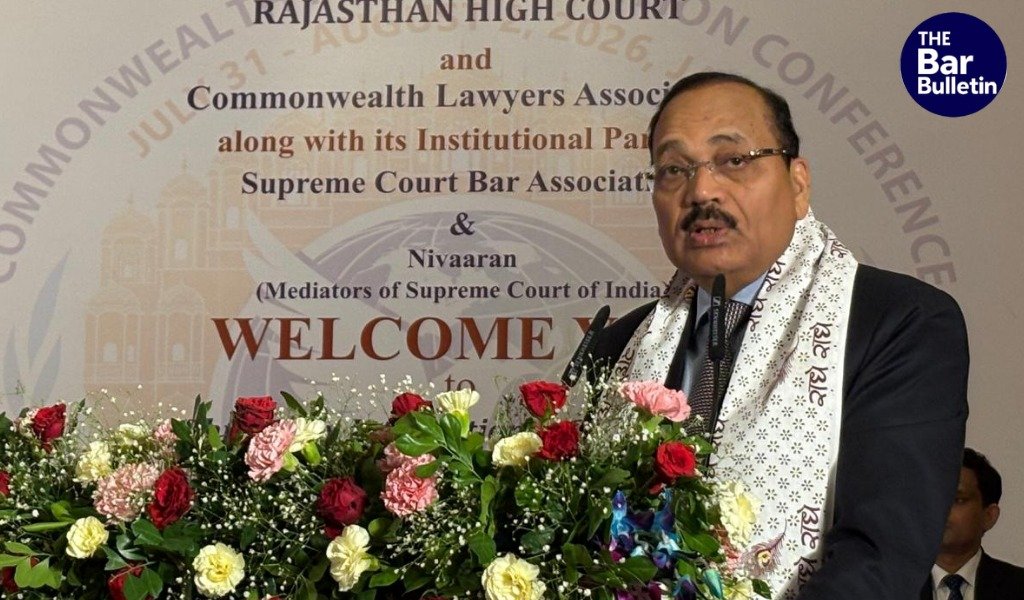

Speaking at the inaugural session of the three-day Commonwealth Peace Mediation Conference 2026 on the theme “Commonwealth Peace Mediation and the Rule of Law”, Chief Justice of IndiaSurya Kant said mediation must no longer be viewed as a “lesser cousin” of litigation, asserting that it has earned an equal place alongside courts through its practitioners and the Mediation Act.
“
“Mediation must no longer be treated as a lesser cousin of litigation, waiting outside the courtroom for its turn. It has earned, through the persistence of practitioners like many of you in this hall and also now with the statutory backup of the Mediation Act, a seat at the same table as the court. The two are not competitors; they are complementary to each other. The court gives us certainty, precedent, and the final word when all else fails. Mediation gives us the space to write our own ending, before the last word ever needs to be spoken. One does not diminish the other. They sustain each other, the way a river needs both its banks.”
Speaking on the conference theme, “Peace, Mediation and the Rule of Law,” CJI Surya Kant said the event sought to dispel the long-held belief that peace and the rule of law belonged to different worlds. While the rule of law was traditionally associated with courtrooms, precedents and judicial authority, peace was often viewed as the product of dialogue and compromise. Rejecting this perceived dichotomy, the Chief Justice remarked that peace was not the absence of law but one of law’s finest achievements.
Recalling dispute resolution practices from his childhood in a village in Haryana, the CJI observed that long before Alternative Dispute Resolution became a recognised legal concept, communities settled disputes through dialogue under the village panchayat. He remarked that the true test of any settlement was not merely whether documents were signed, but whether neighbours could continue living together harmoniously after the dispute ended.
Highlighting the broad scope of mediation, the Chief Justice said the conference would examine its role in family, workplace, commercial, criminal, community, environmental and international disputes. Despite these varied contexts, he observed that the underlying principle remained the same: transforming conflict into mutually acceptable solutions through patient listening and dialogue.
Referring to the conference’s discussions on Online Dispute Resolution (ODR), the Chief Justice welcomed efforts to make mediation accessible to disputants across the Commonwealth through technology. However, he cautioned that online mediation should not be left entirely to AI-based software. He remarked:
“
“Online Mediation may not be left entirely to AI-based software. They may carry a human voice but won’t be able to display human empathy and apology. I recommend that online Mediation should be conducted predominantly by trained Mediators only.”
The Chief Justice also expressed hope that the proposed Jaipur Declaration on Peace Mediation would become a practical guide for judges, lawyers and mediators across Commonwealth nations rather than remaining a ceremonial document. He said the success of the conference would ultimately be measured by the conversations it initiated, the professional relationships it fostered across jurisdictions, and the commitment of participants to carry the spirit of mediation back to their courts, chambers and communities.