
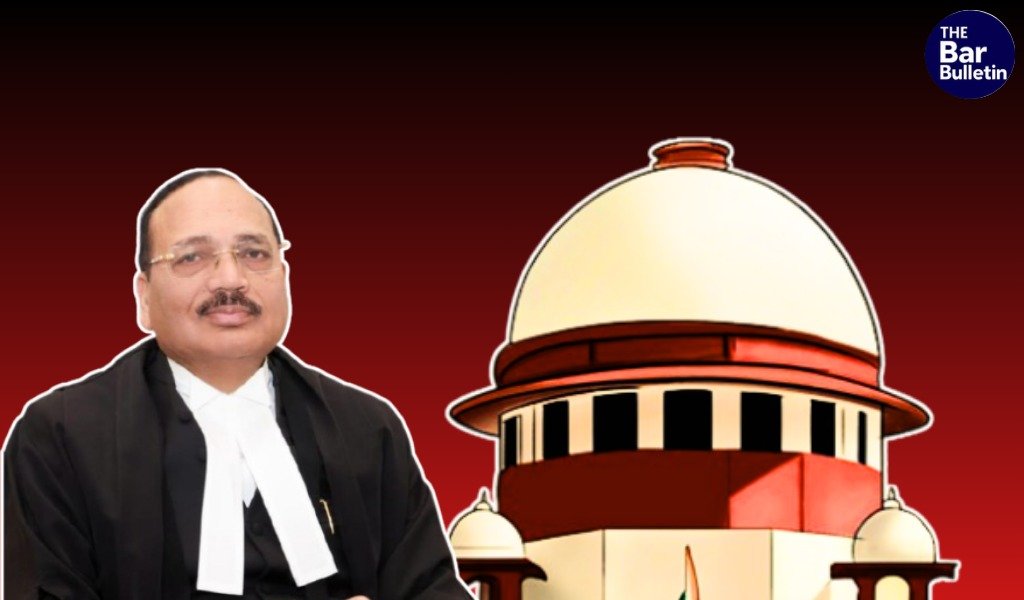

Chief Justice of India Surya Kant on Thursday recalled how opposition from bar associations had stalled an earlier initiative to bring retired judges back to High Courts as ad hoc judges. During today’s hearing a plea concerning the seniority of judicial officers in Rajasthan, CJI Surya Kant recalled the Supreme Court’s earlier failed attempt to revive the appointment of retired High Court judges as ad hoc judges
“
“Chief Justice Bobde, Justice Kaul and my bench, we virtually revived the practice of appointing ad hoc judges from among retired judges. We thought we would bring this practice into vogue so that some good judges who were retired could be taken. But the Bar Associations have started passing resolutions opposing it…and no Chief Justice wants to Annoy the Bar,”
the CJI remarked candidly.
Notably, Article 224A of the Constitution empowers the Chief Justice of a High Court, with the consent of the President, to request a retired judge of that or another High Court to sit and act as a judge of the High Court. The provision provides a mechanism for appointing ad hoc judges to address the needs of High Courts.
The CJI also recalled that two judicial officers in Haryana and two in Punjab, who had previously practised as advocates before the High Courts, and later elevated had resigned from judicial service after seven to eight years because of less pension benefits.
“Very bright officers who were practising advocates in the High Court. They went and after seven years, eight years, they resigned. One of them met me. I asked him, ‘What have you done?’ He said, ‘Sir, because of the new pension rules, after my retirement, I will not get more than ₹25,000 as pension. How do you think I am going to survive? Better I resume my practice again,’” the CJI recounted.
Senior Advocate PS Patwalia urged the Court to examine the pension issue, particularly for judicial officers. He added that in the United Kingdom, judges continue to receive the same salary even after retirement, irrespective of whether they are discharging judicial duties.
Justice Bagchi also agreed that post-retirement security was crucial, observing that security of tenure after superannuation was an important component of judicial independence. He added that United States, federal and circuit court judges can continue serving until the age of 75, after which they may choose to retire without any reduction in salary. Even after retirement, the chief judge can call them back to judicial service and assign work to them.
Justice Joymalya Bagchi then recalled his visit to the Federal Judicial Center, where he met a judge who had tried cases relating to the September 11 terror attacks. The judge, he said, was over 80 years old and had been requested by the Chief Justice to render her services again because of her expertise in handling terrorism cases. He said:
“
“Going to the Federal Judicial Center, I met the judge who had tried the 9/11 case. And she was, you will not believe this, more than 80 years old. She had so much expertise in trying these terror cases that the Chief Justice had requested her to render her services. So the value of judicial resources is really preserved.”
On this, CJI observed that the position in India was different. He then recalled an earlier attempt to revive the practice of appointing retired High Court judges as ad hoc judges, which failed amid opposition from bar associations.
Also Read: ‘We Have A Bureaucratic Judiciary, Very Strict Hierarchy’: Justice Joymalya Bagchi
The matter concerned a seniority dispute involving direct-recruit judicial officers who alleged that they had been placed below 72 other officers in the seniority list, despite delays in their appointments that were beyond their control.
Senior Advocate PS Patwalia argued that, under the applicable rules, the direct recruits should have been placed in the appropriate batch based on when their recruitment process was initiated. He submitted that placing 72 officers above them had significantly affected their career progression and seniority.
The Court has issued notice in this matter.