
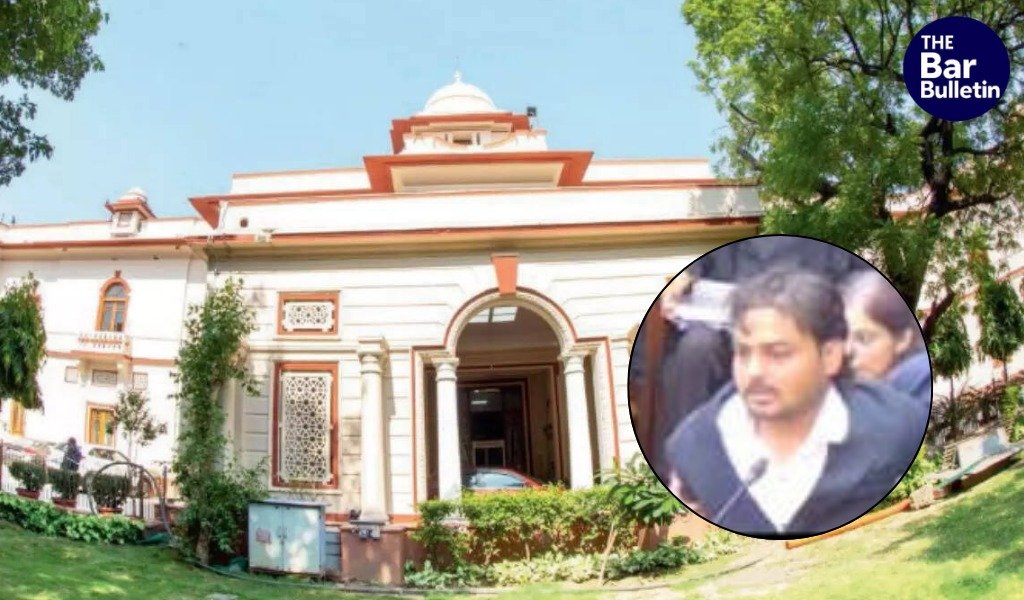

The Patiala House Courts, New Delhi has granted regular bail to two men accused of hurling papers, using abusive language against the Chief Justice of India, and assaulting a Supreme Court security official during proceedings before the Supreme Court earlier this month, observing that however reprehensible the alleged conduct may have been, it could not justify indefinite pre-trial incarceration once the investigation stood substantially complete.
Judicial Magistrate First Class Ravi passed the order allowing the bail applications of Prabal Pratap and Chanderbhan, who were arrested in connection with an FIR registered at Tilak Marg Police Station under various provisions of the Bharatiya Nyaya Sanhita. According to the prosecution, the incident occurred on July 10, when Prabal Pratap, appearing as a petitioner-in-person before the Supreme Court, allegedly hurled papers inside Court No. 13, used abusive and unparliamentary language against the Chief Justice of India, and pushed a Supreme Court security officer who attempted to restrain him. Chanderbhan is alleged to have supported and abetted the co-accused.
While strongly condemning the alleged behaviour, the Magistrate underscored that no litigant, however aggrieved, acquires the licence to disrupt court proceedings or abuse constitutional authorities.
“
“The allegations, as they stand, disclose conduct that squarely implicates the decorum and dignity that every courtroom, and more so the courtroom of the highest constitutional court of the land, is entitled to command from those who appear before it. A litigant, howsoever aggrieved by the outcome of his cause or howsoever unrepresented, does not thereby acquire licence to hurl papers in open court or direct abusive language at the presiding authority, much less at the office of the Chief Justice of India, an institution that stands as the final guarantor of the very rights and liberties that every citizen, including the accused, invokes when knocking on the doors of the judiciary.”
The Court further observed that permitting such conduct to go unchecked could create the impression that it was tacitly acceptable and made it clear that the actions alleged against the accused stood unequivocally deprecated. It also expressed the expectation that the accused would maintain restraint and decorum in all future judicial proceedings.
At the same time, the Magistrate noted that the Supreme Court itself had dealt with the incident with “considerable equanimity.” Referring to the Supreme Court’s order dated July 10, the Magistrate observed that although the apex court had recorded that the petitioner made “incoherent and unparliamentary utterances,” it consciously refrained from initiating action against him.
“
“An institution of the stature and permanence of the Supreme Court of India is not diminished by the intemperate conduct of a single agitated, unrepresented litigant, and it is only appropriate that subordinate courts, in assessing the consequences that ought to flow from such conduct at the stage of bail, be guided by the same institutional restraint and equanimity that the highest court itself has demonstrated. The question of bail, therefore, has to be answered not on the basis of how grave the language used may appear on its face, but strictly on settled principles of bail jurisprudence.”
Considering the merits of the bail applications, the Court noted that the offences alleged carried a maximum punishment of two years, the investigation had been completed, the relevant statements and evidence had already been collected, and no further custodial interrogation or recovery was required. It also found no material to suggest that either accused posed a real risk of absconding, tampering with evidence or influencing witnesses.
Emphasising the settled principle that “bail is the rule and jail the exception,” particularly in offences not carrying severe punishment, the Court held that the gravity of the abusive language allegedly used could not, by itself, convert otherwise non-heinous offences into grounds for prolonged pre-trial detention.
Accordingly, the Court granted regular bail to both accused on furnishing a personal bond of ₹25,000 each with one surety of the like amount, subject to conditions requiring them to cooperate with the investigation and trial, refrain from influencing witnesses or tampering with evidence, furnish their contact details to the investigating officer, and maintain strict decorum in all future judicial proceedings.