
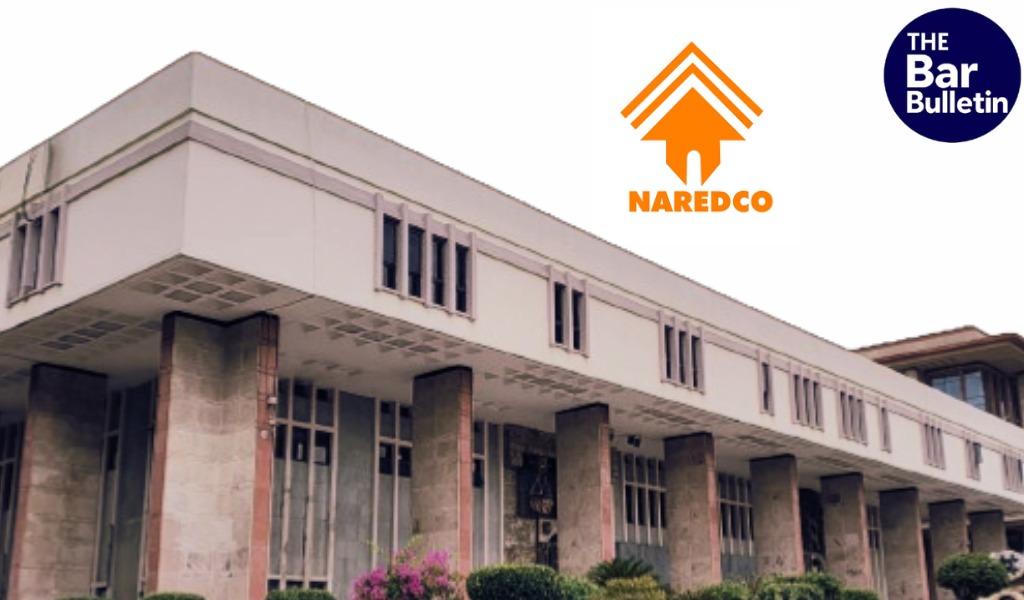

The Delhi High Court on Tuesday listed for final hearing an application seeking rejection of a civil suit challenging the election of office-bearers of the National Real Estate Development Council (NAREDCO), after extensively examining whether the plaintiffs had the legal standing to maintain the proceedings.
Senior Advocate Jayat Mehta, appearing for the defendants, argued that the suit deserved to be rejected at the threshold under Order VII Rule 11 of the Code of Civil Procedure, contending that none of the plaintiffs had pleaded or demonstrated that they were authorised by the members they purported to represent. He submitted that the plaint was completely silent on any authorisation and that a cause of action could not be created through “clever drafting.”
“
“No one would be allowed, by way of clever drafting, to create an illusion of a cause of action where in principle none exists…If a member who alone can be concerned about my functioning has not approached the Court, what cause of action… I can’t be a non-member agitating about the affairs of a society of which I am not a member.”
He further pointed out that the plaintiffs had participated in the 137th General Council Meeting, whose minutes recorded a unanimous decision, yet had not sought any declaration that the minutes of either the 137th or 138th meetings were illegal or void. Instead, the suit merely sought to set aside the election of office-bearers, including Praveen Jain (President), Dr. Niranjan Hiranandani (Chairman), and Rajan Bandelkar (Vice-President), and to direct fresh elections. Mr Mehta additionally relied on the arbitration clause contained in the governing documents, submitting that disputes of this nature were contractually required to be resolved through arbitration.
Also Read: Delhi HC Hears Plea To Reject Plaint In Suit Challenging NAREDCO Office-Bearer Elections
Opposing the application, Senior Advocate Kirti Man Singh submitted that the plaintiffs were not strangers to the dispute but members of NAREDCO’s Governing Council, possessing independent rights to vote, contest elections and question deviations from the organisation’s constitution. He contended that the election process had been bypassed altogether, alleging that although the agenda contemplated appointment of an election officer and declaration of an election schedule, the office-bearers were elected on the same day without following the prescribed procedure.
Responding to the objection regarding authorisation, Mr Singh placed on record resolutions passed by the Karnataka State Chapter affirming that plaintiff Hala Rameshwar had acted in his individual capacity as a Governing Council member and endorsing his challenge to the election process. He argued that, in any event, a Governing Council member was entitled to maintain such a challenge in his own right and did not require fresh authorisation from the State Chapter every time he approached the Court.
Mr Singh also argued that election disputes are inherently non-arbitrable, relying on judicial precedents to submit that disputes affecting an entire electoral body cannot be referred to private arbitration. He further contended that the mere existence of an arbitration clause could not justify rejection of the plaint under Order VII Rule 11 in the absence of a proper application under Section 8 of the Arbitration and Conciliation Act.
During the hearing, the Bench repeatedly questioned whether the plaint itself contained the foundational pleadings necessary to establish the plaintiffs’ locus standi. The Court observed that, for deciding an application under Order VII Rule 11, it was the facts, not the law, that would determine maintainability.
“
“For Order VII Rule 11, it is facts and nothing but facts.”
The counsel responded that while the suit might not be well drafted, the question remained whether the defects were sufficient to warrant rejection at the threshold or whether they constituted matters to be tested during trial. After hearing both sides, the Court granted plaintiffs’ counsel five minutes to conclude and defendants’ counsel ten minutes for rejoinder and listed the matter for 30 July.
Appearances
For plaintiff: Kirti Man Singh Sr adv., Amber Sachdeva and Puru Lekhi, Advs.
For Respondents: Mr Jayant Mehta, Sr Adv., Mr. Manu Nair, Adv., Mr. Bhavik Lalan, Adv., Ms. Riya Basu, Adv., Ms. Zubia Rehan, Adv., Ms. Sidhika Nagrath, Adv. and Mr. Haseet Bathiya, Adv.
Tejveer Singh Batia and Kaveri Rawal, Advs.