
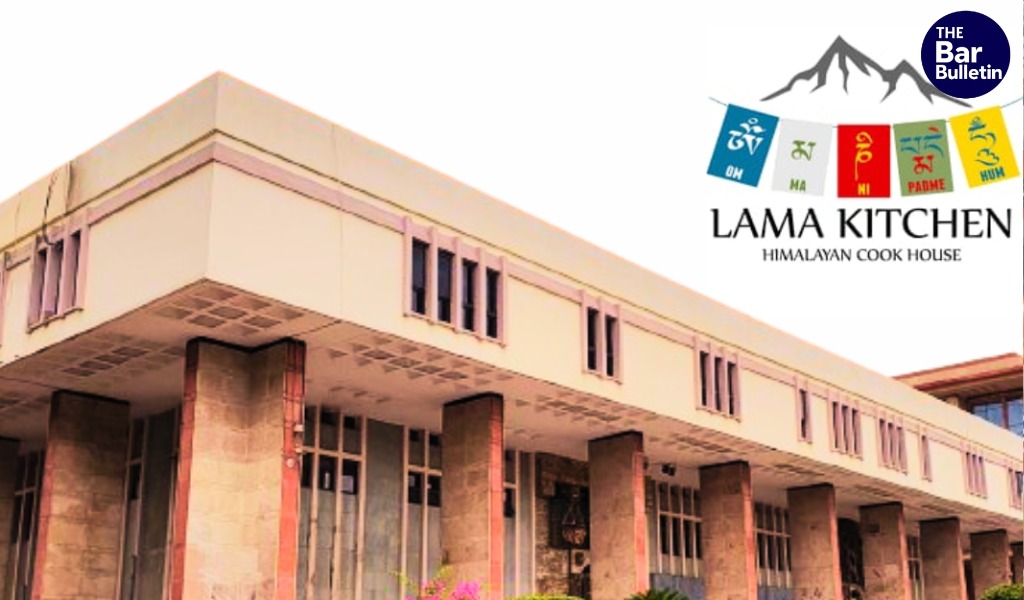

The Delhi High Court has restrained the defendant and all persons acting on its behalf, till the next date of hearing, from using the impugned marks “LAMA KITCHEN” and any other deceptively similar mark in relation to hospitality services including running a restaurant. The restraint also extended to use of the impugned marks as part of an Instagram page, trade name, email ID, corporate name and social media handles, on the ground that such use amounted to infringement and passing off.
The Court held that where a plaintiff holds registered trademark rights and shows prima facie prior adoption and use, a defendant’s use of an identical mark for identical hospitality and restaurant services is sufficient to justify interim injunctive relief, particularly where the businesses target the same consumer base and create a likelihood of confusion. The Court held that such use prima facie constitutes infringement under Section 29 of the Trade Marks Act, 1999.
The Court also made it clear that in a trademark dispute involving restaurants and hospitality services, the Court may look beyond the word mark alone and examine the overall commercial presentation, including interiors, layout, branding style, online presence, and cuisine positioning, to assess dishonest adoption and passing off. If the overall imitation suggests an attempt to falsely project an association with the plaintiff, the Court can protect not only the registered trademark rights but also the plaintiff’s goodwill and trade identity through an ex parte ad interim injunction.
A Single Judge Bench of Justice Jyoti Singh observed that the plaintiffs had made out a prima facie case for grant of ex parte ad interim relief, that the balance of convenience was in their favour, and that they would suffer irreparable harm if interim protection was not granted. The Court accepted, at the prima facie stage, that the “LAMA KITCHEN” trademarks stood registered in favour of Plaintiff No. 1 and that such registration conferred statutory exclusivity and protection against infringing use by third parties.
The Court noted that the defendant was allegedly using identical marks for identical services and that the consumer base of both parties was common, which created a clear likelihood of confusion. The Court also found significance in the fact that the defendant was promoting its business online, where confusion could spread more easily, and that the defendant’s Instagram page had adopted the plaintiffs’ mark in its entirety. The absence of any authorization or licence from the plaintiffs to the defendant was also treated as an important factor.
The Court further observed that, from the record, the defendant appeared to have copied not only the trademark but also the interiors and layout of the plaintiffs’ restaurant, including features such as Tibetan prayer flags, and was offering Tibetan cuisine in addition to Chinese food. This overall imitation, according to the Court, indicated an intention to misrepresent to the public that the defendant’s restaurant and services had some connection or association with the plaintiffs. The Court therefore held, prima facie, that the defendant’s conduct injured the plaintiffs’ reputation and goodwill built over nearly a decade and also amounted to passing off.
Briefly, the plaintiffs, Satinder Singh Sarna and another, filed a commercial trademark suit against the defendant restaurant operating under the name “Lama Kitchen”. The plaintiffs’ case was that they had conceived, in 2016, a distinctive Himalayan cook-house concept serving Nepalese, Bhutanese, Tibetan and North-Eastern cuisine through their hospitality venture, and had adopted the mark “LAMA KITCHEN” as both a word mark and device mark. They pleaded that the mark was inspired by a visit to Nanak Lama Gurudwara in Sikkim and that the device mark reflected mountain peaks, spirituality, Tibetan prayer flags, and the expression “OM MANI PADME HUM”, all tied to the theme and identity of their restaurant located at Hauz Khas Village, Delhi.
The plaintiffs further stated that Plaintiff No. 1 held valid and subsisting registrations for the “LAMA KITCHEN” marks and claimed exclusive statutory rights under Section 28 of the Trade Marks Act, 1999. According to them, the marks were used extensively on menu cards, crockery, staff uniforms, the restaurant website, and across social media platforms. The restaurant was also stated to be listed on popular food and restaurant discovery platforms such as Zomato, Swiggy, TripAdvisor and Eazydiner, and had developed substantial goodwill and customer recognition in the market.
The grievance of the plaintiffs was that the defendant had recently started operating a restaurant in Delhi under the identical mark “LAMA KITCHEN”, offering food, drinks, catering and restaurant services, including Chinese and Tibetan cuisine. The plaintiffs alleged that the defendant was also advertising through platforms such as Magicpin, Justdial, Facebook and Instagram, and that even the overall look and feel of the defendant’s restaurant interiors was visually similar to the plaintiffs’ establishment. They specifically pointed out that the defendant’s Instagram page incorporated the plaintiffs’ mark in its entirety, which according to them showed an attempt to ride upon their goodwill and create market confusion.
