
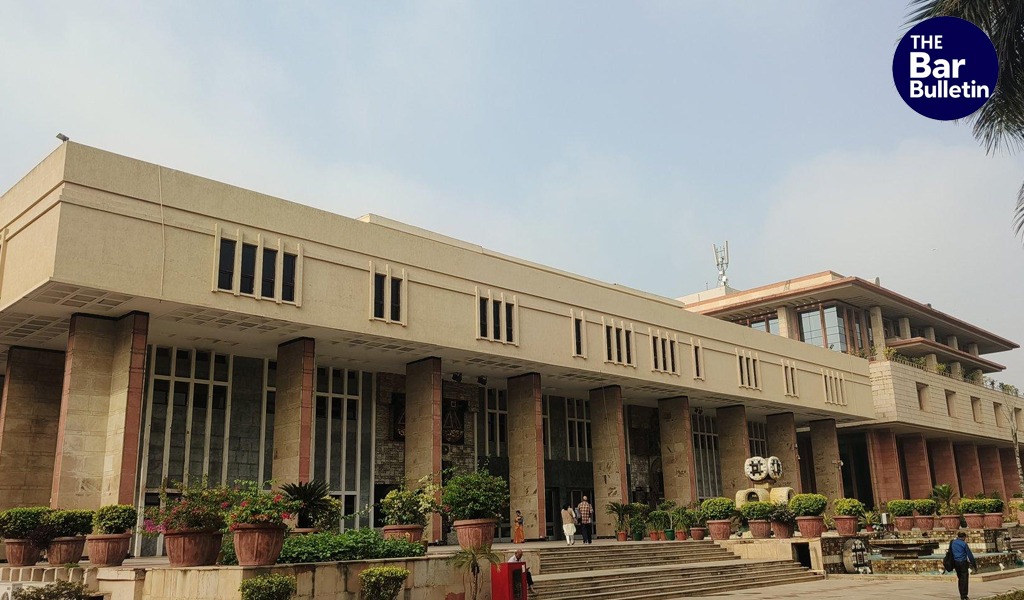

The Delhi High Court has clarified that an appeal under Order XLIII Rule 1(r) CPC read with Section 10 of the Delhi High Court Act is not maintainable against an order that is purely procedural or interlocutory, does not finally decide the application under Order XXXIX Rule 4 CPC, does not grant, refuse, vary, or vacate interim relief, and merely defers consideration of that application while issuing notice in contempt proceedings. Such an order does not amount to an appealable “judgment” under Section 10, nor is issuance of contempt notice by itself appealable in the absence of any order punishing for contempt.
The Court also asserted that, for condonation of delay under Section 5 of the Limitation Act, a party must provide a bona fide and satisfactory explanation covering the entire period of delay. A broad reference to having pursued review proceedings or proceedings before the Supreme Court, without explaining why the appeal could not be filed within the prescribed period, is insufficient to constitute “sufficient cause.”
The Division Bench comprising Justice Vivek Chaudhary and Justice Renu Bhatnagar observed that the principles governing condonation of delay are settled: while the expression “sufficient cause” should receive a liberal construction to advance substantial justice, liberal construction does not dispense with the requirement of a cogent explanation for the entire period of delay. Applying that standard, the Bench was not persuaded to condone the delay of 105 days in filing the appeal.
On maintainability, the Bench observed that the expression “judgment” under Section 10 has a restricted and purposive meaning, and not every interlocutory or procedural order qualifies as an appealable judgment. Only those orders which conclusively determine rights, decide matters of moment, or visit a party with serious civil consequences can be treated as appealable; procedural orders regulating the course of proceedings or merely deferring adjudication do not fall within that category.
The Bench further observed from a plain reading of the impugned order that the Single Judge had neither finally adjudicated the application under Order XXXIX Rule 4 CPC nor modified, vacated, or confirmed any interim injunction. The order merely deferred consideration of that application and directed issuance of notice in contempt proceedings on account of alleged non-compliance with the earlier order.
The Bench also noted that not every interlocutory order passed in the course of proceedings under Order XXXIX CPC becomes appealable under Order XLIII Rule 1(r) CPC. What is appealable is an order substantially affecting rights by granting, refusing, varying, or vacating interim relief. Since the impugned order did not determine any substantive right and only postponed consideration of the Rule 4 application pending compliance, it did not answer that description. The Bench also held that an order merely issuing notice in contempt proceedings is not appealable, since appeal lies only against an order passed in exercise of contempt jurisdiction imposing punishment for contempt.
Briefly, the appeal was filed by Sanjay Piplani under Order XLIII Rule 1(r) CPC read with Section 10 of the Delhi High Court Act, 1966, challenging the order passed by the Single Judge, whereby, while noticing alleged non-compliance with an earlier order, the Single Judge had directed issuance of notice in contempt proceedings against the appellant and deferred consideration of the appellant’s application under Order XXXIX Rule 4 CPC until compliance with the earlier order.
Along with the appeal, the appellant also filed an application under Section 5 of the Limitation Act, 1963 seeking condonation of a delay of 105 days in filing the appeal. The explanation offered for the delay was that the appellant had been pursuing review proceedings as well as proceedings before the Supreme Court, and that the present appeal was instituted after dismissal of the review petition.
Appearances:
For Appellant: In person
For Respondent: Gaurav Mirza, Kaveesh Nair, Arnav Chopra, Advs.