
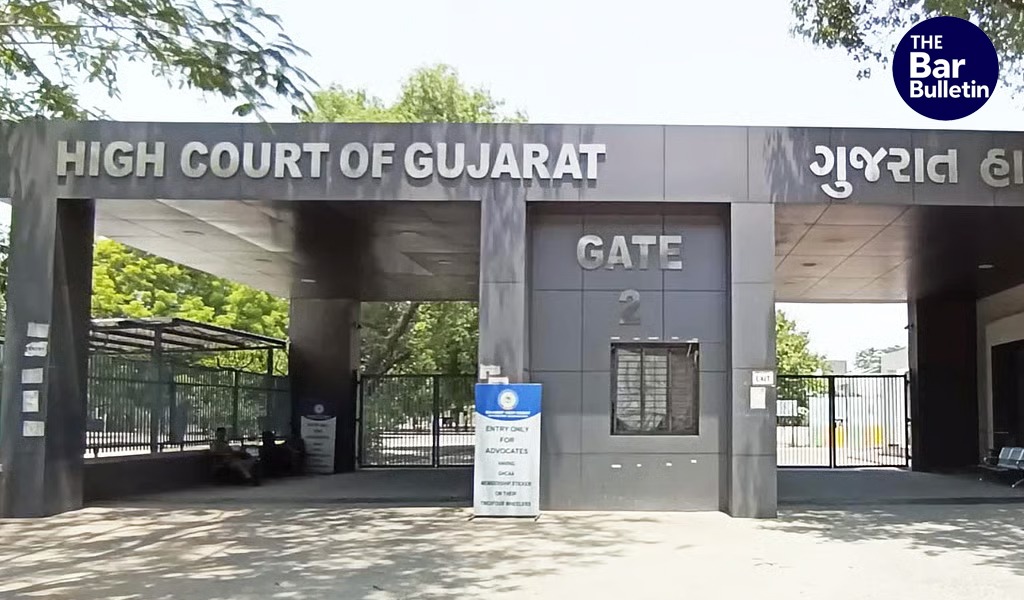

In a first appeal filed before the Gujarat High Court to challenge a judgment and decree by the Principal Senior Civil Judge, Surendranagar, whereby the plaintiff’s suit was partly decreed and the defendants were directed to pay a compensation of Rs. 4,00,000/- with interest at 9% p.a. on an amount of Rs. 3,90,000/-, a Single Judge Bench of Justice J.C. Doshi quashed and set aside the impugned judgment and decree.
On 01-07-1999, the plaintiff underwent a family planning operation under the Government Family Welfare Scheme at the Government Hospital Wadhwan, after which she developed symptoms of paralysis rendering her unable to walk, sit or perform her day-to-day activities. Becoming bedridden and helpless, she claimed a compensation of Rs. 10,00,000/- with interest. The defendants filed a written statement denying any negligence and contended that the plaintiff developed paralytic symptoms due to some other medical condition unrelated to the surgery.
The trial court framed the issues, whereafter the parties were permitted to lead evidence. Upon appreciating the evidence, the trial court passed the impugned judgment and decree.
By an order dated 09-06-2026, the Court referred the plaintiff to the Medical Board at Civil Hospital, Asarwa, Ahmedabad to ascertain whether there was any nexus between the operation and the paralysis. The Medical Board submitted its report wherein the panel of doctors concluded that there was no link between the abdominal tubal ligation operation and the paralysis suffered by her. It was opined that the paralysis was not due to the family planning operation.
The Court sympathised with the plaintiff who had, at a young age, suffered permanent disability and had since been compelled to live a life of pain, trauma, and agony as her lower limbs became functionally useless. However, it was said that sympathy could not form the basis of awarding compensation. The Court noted the unequivocal opinion of the Medical Board which mentioned that there was no connection between the plaintiff’s paralysis and the family planning operation.
The Court took note of the entire record and stated that the medical evidence clearly established that the development of paraplegia was independent of the operation. It was stated that the plaintiff underwent the procedure under local anaesthesia and not under general anaesthesia meaning that there was no possibility of the paraplegia having been caused by the surgical procedure or the administration of local anaesthesia. The Court stated that these crucial aspects had not been considered by the trial court, and that in its anxiety to award compensation to the plaintiff, it overlooked evidence produced by defendants from Civil Hospital, Ahmedabad.
The Court opined that the trial court committed a grave error in decreeing the suit in the plaintiff’s favour. Hence, the Court allowed the appeal while quashing and setting aside the impugned judgment and decree, and dismissed the Special Civil Suit. Further, the Court was informed that the State had deposited a total sum of Rs. 7,46,299/- out of which the plaintiff had withdrawn only Rs. 2,33,999/-, and that the balance amount of Rs. 5,00,000/- continued to remain in a fixed deposit.
Since the trial court had already permitted the plaintiff to withdraw 50% of the decretal amount, the Court entitled the petitioner to an additional amount of Rs. 1,39,150/- with the entire interest accrued on the fixed deposit till date of disbursement. The balance amount was to be refunded to the State.
