
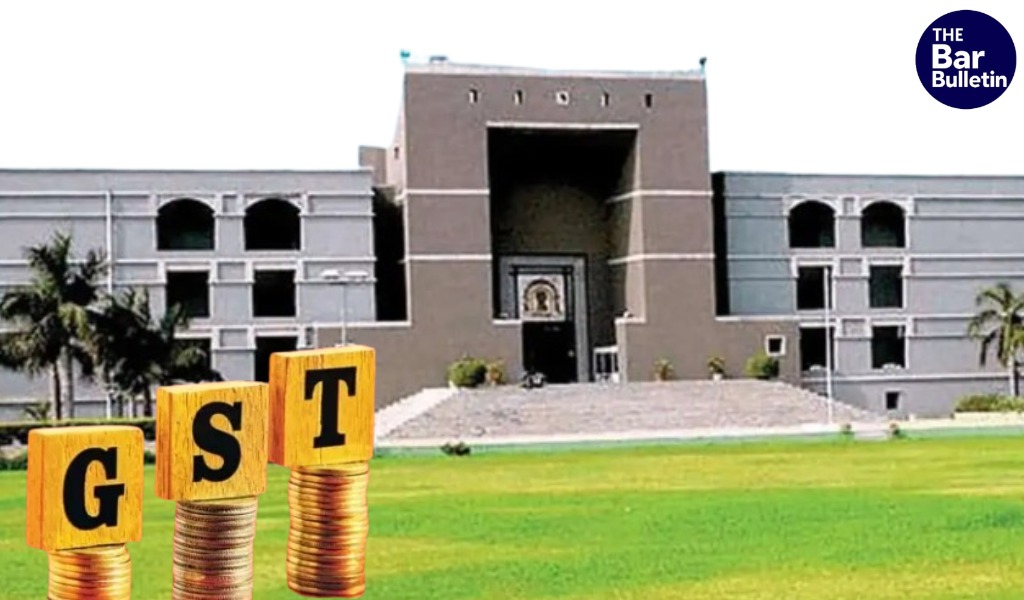

The Ahmedabad Bench of the Gujarat High Court has held that where the contemporaneous search record, panchnamas, and the taxpayer’s own statement show acceptance of liability and voluntary payment of quantified tax dues, a later allegation of coercive recovery, made without any immediate complaint and raised only while seeking refund, can be treated as an afterthought. In such circumstances, refund under Section 54 cannot be claimed unless the taxpayer establishes that the amount was not payable or was paid in excess.
The Court also held that delayed issuance of Form GST DRC-04 does not vitiate the proceedings where payment was voluntary and no statutory time limit is prescribed for such acknowledgment under Rule 142. Accordingly, the High Court held that there was no illegality in the refund rejection order.
Also Read Delhi HC Holds Aaj Tak Liable for Disclosing POCSO Victim’s Details
The Division Bench comprising Justice A.S. Supehia and Justice Vaibhavi D. Nanavati closely examined the panchnamas and the recorded statement of the petitioner, and noted that the petitioner had admitted that he did not have GST registration, accepted the number of students and fee collections, including cash collections not reflected in the books, and agreed to pay the quantified tax, interest, and penalty.
The Bench also noted that a temporary GST number was issued on the petitioner’s own undertaking for payment of tax, and the statement expressly recorded that it was made in a fully conscious state and “without succumbing to any kind of pressure, coercion, threat, or intimidation.” On that basis, the Bench found no semblance of coercive recovery and held that the petitioner had voluntarily discharged the tax liability.
The Bench further attached significance to the petitioner’s later conduct. It observed that after making payment on Oct 10, 2023, the petitioner did not lodge any complaint to superior officers or police alleging coercion, and only after about two years sought refund. The Bench treated the allegation of coercive recovery as an afterthought. It also reiterated that whether payment was voluntary or coerced is a disputed question of fact not ordinarily fit for determination in writ jurisdiction under Article 226, especially where refund of money is sought.
The Bench also rejected the challenge based on delayed issuance of Form GST DRC-04. Referring to Section 74(8), it held that once tax, interest, and penalty are paid, proceedings stand concluded, and Form DRC-04 issued under Rule 142 is only an acknowledgment of voluntary payment. Since there is no specific time limit for issuance of DRC-04, and no dispute had been raised for nearly two years, the belated issuance did not prejudice the petitioner. The Bench also held that Section 54 would apply only if it is established that tax was not payable or was paid in excess, which the petitioner had failed to establish.
Briefly, the petitioner, who was running “Alpha-1 Tuition Classes and Hostel” along with family members, was searched by GST authorities under Section 67(2) of the Gujarat Goods and Services Tax Act, 2017. During the search, documents were seized, statements were recorded, and panchnamas were drawn. The petitioner’s case was that tax, interest, and penalty aggregating to Rs. 1.96 crores for FY 2018-19 to FY 2023-24 were recovered under duress and threat without adjudication, though the payment was shown in Form GST DRC-03. Nearly two years later, the petitioner filed a refund application in Form GST RFD-01 under Section 54(1), which was rejected by order in Form GST RFD-06 after issuance of show cause notice and hearing. The petitioner challenged that rejection, while the State opposed the petition on the ground that the payment was voluntary.
