

In a significant ruling on appellate limitation, the Bombay High Court has held that the period for filing an appeal against an Income Tax Appellate Tribunal (ITAT) order starts from the date the party receives the signed order copy, and not from the date of pronouncement, while condoning an 88-day delay filed by GS Strategic Investments Limited.
The Court held that limitation for filing an appeal against an ITAT order commences from the date the aggrieved party receives the order copy, as required under the statutory scheme, and not merely from the date of its pronouncement. Mere awareness that an order has been passed cannot substitute for receipt of the reasoned order. A litigant must have access to the complete order before deciding whether and how to challenge it.
Referring to Section 254(3) of the Income-tax Act and the ITAT Rules, the Court emphasized that the Tribunal is obligated to send copies of its orders to the parties, and limitation must be viewed in light of this statutory requirement. The Court reiterated that delay condonation applications should ordinarily be considered pragmatically and justice-orientedly when no mala fide conduct, deliberate inaction, or negligence is shown.
Briefly, the assessee sought condonation of an 88-day delay in filing an appeal against an order of the Income Tax Appellate Tribunal (ITAT). The Tribunal had earlier remanded the assessee’s case to the Assessing Officer after observing that the claim for exemption of long-term capital gains had not been properly examined during assessment proceedings.
The assessee contended that the signed copy of the ITAT order was received only on 27 February 2025 and limitation for filing the appeal had to be computed from that date. It explained that after receiving the order, it initially considered filing a rectification application before the Tribunal, but later decided to challenge the order before the High Court. Owing to consultations, preparation of documents and procedural steps, the appeal came to be filed with a delay of 88 days.
The Revenue opposed the application, arguing that limitation should run from the date on which the ITAT pronounced its order and that the delay had not been satisfactorily explained.
Also read AI Cannot Be Allowed to Operate Without Accountability: Sr Adv Shashank Garg at ICPS
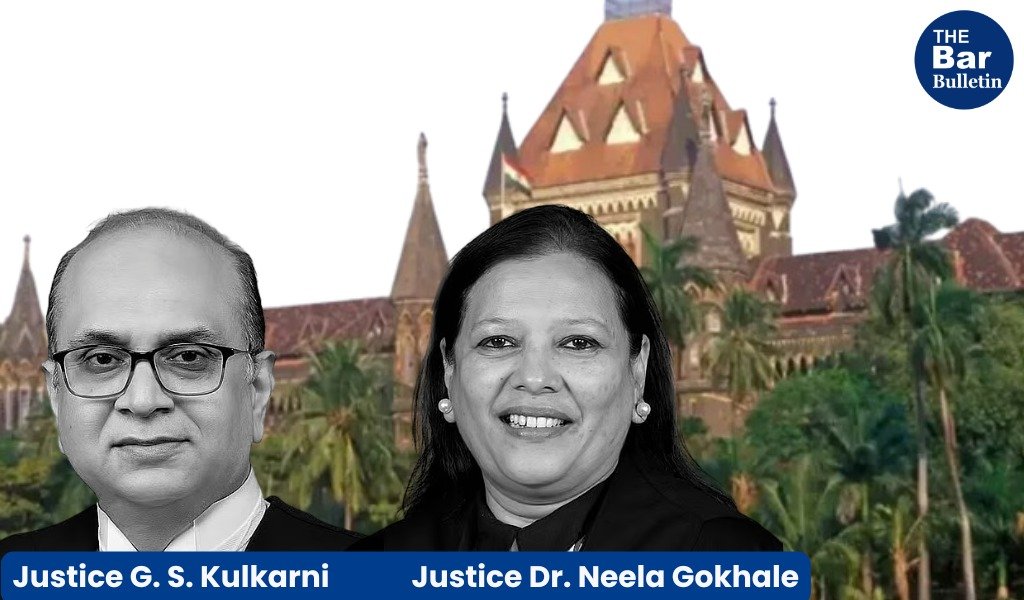
The Division Bench comprising Justice G. S. Kulkarni and Justice Dr. Neela Gokhale examined Section 254(3) of the Income-tax Act and Rules 35 and 49 of the ITAT Rules. The Court noted that the statutory scheme requires the Tribunal to send a copy of its order to the assessee and the tax authorities. The Rules do not require parties to separately apply for a certified copy before exercising their appellate remedies.
The Court observed that mere knowledge of the outcome through pronouncement of the order cannot be equated with receipt of the reasoned order. An aggrieved party needs the complete copy containing findings and reasons before deciding whether to challenge the order and on what grounds. Therefore, limitation cannot begin merely because the party was aware that the matter had been decided.
The Court found that the record showed the ITAT dispatched the order on 25 February 2025 and the assessee received it on 27 February 2025. Hence, limitation had to be calculated from the date of actual receipt of the order.
On the issue of delay, the Court reiterated that applications for condonation should ordinarily be considered with a justice-oriented and liberal approach where no mala fide intention or deliberate negligence is demonstrated. It noted that the assessee had provided a stage-wise explanation covering the entire period of delay and that no irreparable prejudice would be caused to the Revenue if the delay were condoned.
