
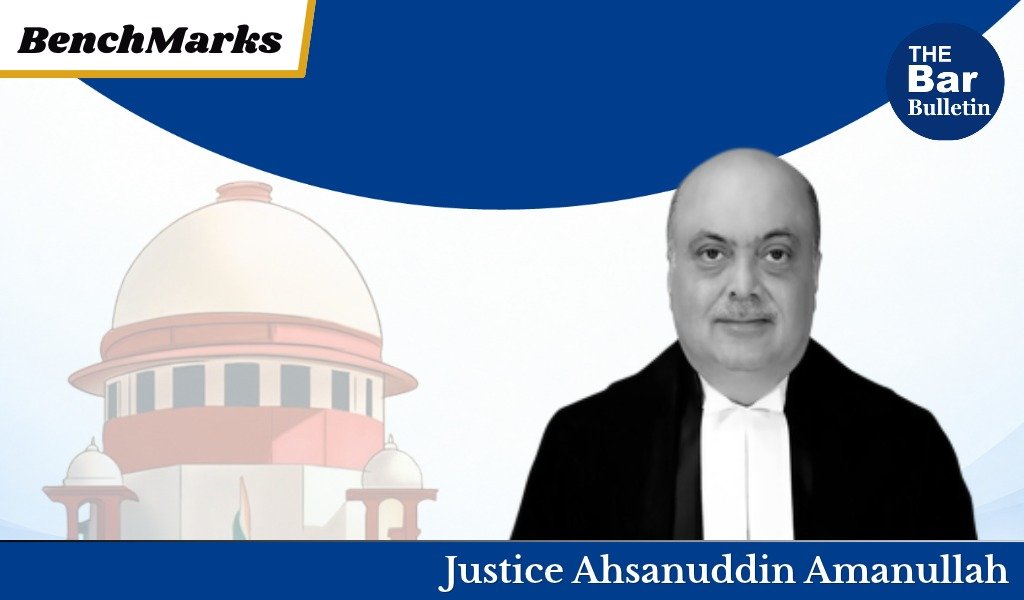


Across a judicial career spanning the Patna High Court, the High Court of Andhra Pradesh, and the Supreme Court of India, Justice Ahsanuddin Amanullah has carved out a distinct reputation as a pragmatic adjudicator. Elevated directly to the Supreme Court on 06-02-2023, without having served as a Chief Justice of a High Court, his jurisprudence reflects a consistent commitment to two core principles: the substantive enforcement of fundamental rights for marginalized citizens and strict institutional accountability for state agencies and corporate entities alike.
Early Life, Education, and Elevation
Born in Bihar on 11-05-1963, Justice Amanullah completed his schooling at St. Michael’s High School in Patna before earning a B.Sc. (Honours) Degree in Chemistry from Aligarh Muslim University and a LL.B. Degree from Patna Law College. Enrolling with the Bihar State Bar Council in 1991, he built a formidable practice at the Patna High Court across constitutional, service, civil, and taxation law. Apart from being appointed as amicus curiae in significant matters, he also had a pivotal role in drafting and vetting subordinate/delegated legislation for the Bihar Legislature’s Acts during 2006-2011.
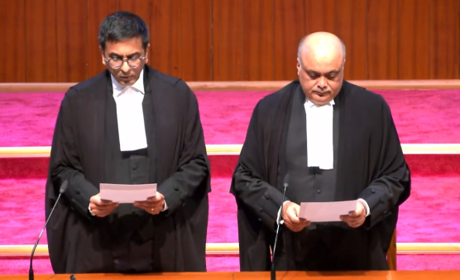
Prior to Justice Amanullah’s elevation to the Patna High Court bench in 2011, he represented the State of Bihar as Standing Counsel and later as Government Advocate, alongside serving as Special Counsel for the Income-Tax Department. Notably, he became the first judge of the Patna High Court to preside over a fully paperless e-Court. Set to retire from the Apex Court in 2028, Justice Amanullah was transferred to the Andhra Pradesh High Court on 10-10-2021 and re-transferred to the Patna High Court on 20-06-2022 before being elevated to the Supreme Court in 2023.
Defining High Court Rulings
Amit Raj v. State of Bihar 2022 SCC OnLine Pat 1270
A Division Bench led by Justice Amanullah reaffirmed that the right of two consenting adults to choose their life partner is an intrinsic facet of Article 21 of the Constitution, holding that intimate relationships between majors do not require familial or societal approval to receive legal protection.
Bibi Mukbari Khatoon v. State of Bihar & Anr. (Cri. Rev. No. 516 of 2018)
Justice Amanullah ruled that a divorced Muslim woman is entitled to claim maintenance under Section 125 of the Code of Criminal Procedure, 1973, even after the iddat period, harmonizing statutory social welfare provisions with personal law protections.
Kaushal Kaushik v. State of Bihar & Ors. (Civil Writ No. 5756 of 2017)
Justice Amanullah held that the decisions and recommendations of legislative committees are not immune from judicial scrutiny and remain subject to judicial review on merits when they infringe upon constitutional rights.
Pawan Kumar Yadav v. State of Bihar (CWJC No. 24243 of 2019)
A stringent stance was taken by Justice Amanullah against ecological degradation by classifying illegally mined sand as “forest produce,” thereby bringing sand mafia operations within the ambit of stricter statutory penalties under forest conservation laws.
Suo Motu v. State of Bihar (Demolition of Patna’s Historic Anjuman Islamia Hall/Waqf Bhawan) ICL 2021 (8) Pat 94
A five-judge Special Bench of the Patna High Court took suo motu notice of a G+3 Waqf Bhawan being constructed during the COVID-19 pandemic directly adjacent to the High Court’s Centenary Building, posing potential security and height-restriction concerns. By a 4:1 majority, the Court held that the structure lacked mandatory municipal approvals and ordered its demolition within two weeks. Justice Amanullah authored the sole dissenting opinion, holding that because the Bihar State Sunni Waqf Board was constructing the building on its own land using state funds, the lapse was merely an ‘irregularity’ rather than an ‘illegality’, and recommended regularizing the structure by reducing its height instead of demolishing it.
Supreme Court Jurisprudence
In Re: Patanjali Ayurved Limited (In the matter of Indian Medical Association and Another v. Union of India and Others) 2024 INSC 605
A Bench of Justices Hima Kohli and Ahsanuddin Amanullah drew a sharp line against deceptive medical advertising. When Patanjali Ayurved continued to publish misleading claims regarding cures for chronic diseases despite an explicit undertaking given to the court, the bench initiated contempt proceedings, summoned its founders, and criticized regulatory authorities for looking the other way. While the contempt notice was eventually discharged following unconditional public apologies, the proceedings established a strict precedent on corporate compliance with judicial undertakings.
Md. Rahim Ali @ Abdur Rahim v. State of Assam & Ors. 2024 INSC 511
Justices Vikram Nath and Ahsanuddin Amanullah presided over a pivotal ruling scrutinizing the functioning of Foreigners Tribunals in Assam. Setting aside an order declaring the appellant a foreigner, the judgment held that while Section 9 of the Foreigners Act places the burden of proof on the individual, the State cannot initiate proceedings arbitrarily without disclosing the specific material or basis upon which citizenship is doubted.
Asian Paints Limited v. Ram Babu & Anr. 2025 INSC 828
Justice Amanullah authored a significant judgment clarifying the scope of a victim’s right to appeal under the proviso to Section 372 of the Code of Criminal Procedure, reinforcing that victims, including corporate entities suffering direct loss, possess an independent statutory right to challenge acquittals without being entirely dependent on state prosecution.
Loganathan v. The State of Tamil Nadu & Ors. (M.A. Diary No. 17103 of 2026)
A Bench of Justice Amanullah and Justice R. Mahadevan questioned how municipal authorities allowed the structure to be completed undetected and subsequently expanded the proceedings on 25-03-2026, into a pan-India examination of unauthorized constructions and the illegal commercial conversion of residential zones. Impleading all States and Union Territories as respondents, the bench issued strict nationwide directives requiring civic authorities to prioritize sealing premises conducting commercial activities in exclusively residential areas, clarifying that pending private title or government litigation cannot shield unlawful land-use violations, and calling for departmental accountability against errant municipal officials.
The Karnataka Lokayukta Bagalkot District, Bagalkot v. Chandrashekar & Anr. 2026 INSC 31
After an HESCOM Executive Engineer caught in a bribery trap was exonerated in a departmental inquiry due to incomplete witness examination, the Karnataka High Court quashed the parallel criminal prosecution under the Prevention of Corruption Act. Setting aside the High Court’s order, a Bench of Justices Ahsanuddin Amanullah and K. Vinod Chandran restored the criminal trial, holding that disciplinary and criminal proceedings are independent and that a departmental exoneration based on procedural or evidentiary lapses does not bar a parallel criminal prosecution.
The Oriental Insurance Co. Ltd. v. Tuni Pati & Ors. (SLP (Civil) No. 5582 of 2023)
A Bench of Justice Ahsanuddin Amanullah and Prasanna B. Varale took serious note of the State’s finding that the same vehicle had been fraudulently ‘planted’ in four other accident cases as part of a wider multi-stakeholder racket. Recognizing that systematic motor insurance fraud extends beyond Odisha, the Bench expanded the proceedings to a pan-India inquiry by directing the petitioner to submit a comprehensive list of all public and private sector insurance companies operating across India.
Kantaru Rajeevaru v. Indian Young Lawyers Association (R.P. (C) No. 3358 of 2018)
Justice Ahsanuddin Amanullah formed part of a nine-judge Constitution Bench deciding the correctness of a 2018 judgment which held that barring the entry of women in the Sabarimala Temple was unconstitutional. The Bench led by the Chief Justice of India Surya Kant has not yet delivered its final judgment as the verdict stands reserved after 16 days of hearing.
The Reassignment of Expanded Part-Heard Matters
The Chief Justice of India Surya Kant reassigned two high-profile, part-heard proceedings from benches led by Justice Ahsanuddin Amanullah after both matters evolved from narrow individual disputes into pan-India public interest inquiries. The administrative reshuffle took place after a directive emphasizing that judges must strictly adhere to their designated subject-matter rosters rather than unilaterally converting ordinary petitions into nationwide PILs.
The administrative transfers involved Ayesha Jain v. Amity University, which grew from a student’s personal grievance into a broad audit of private universities, and Loganathan v. State of Tamil Nadu, which expanded from a local building challenge into a nationwide crackdown on unauthorized constructions. Both matters were moved because PIL jurisdiction and specific planning categories are restricted to benches led by the seven senior-most judges, whereas Justice Amanullah does not hold PILs on his roster.
Judicial Philosophy
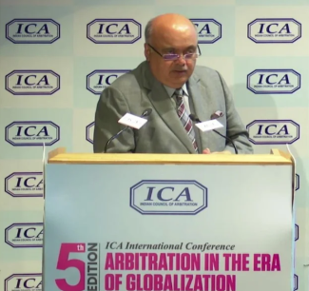
Justice Ahsanuddin Amanullah’s jurisprudence is defined by an unwavering commitment to substantive, citizen-centric justice over rigid procedural formalism. Whether safeguarding personal liberty and marital autonomy, protecting vulnerable citizens from arbitrary state action, or ensuring statutory welfare entitlements for millions of unorganized labourers, his rulings consistently treat constitutional guarantees as living instruments meant to deliver tangible relief. As Justice Amanullah continues his tenure in the Supreme Court, his body of work stands as a compelling testament to a judge determined to make the law accessible, responsive, and grounded in everyday human realities.