
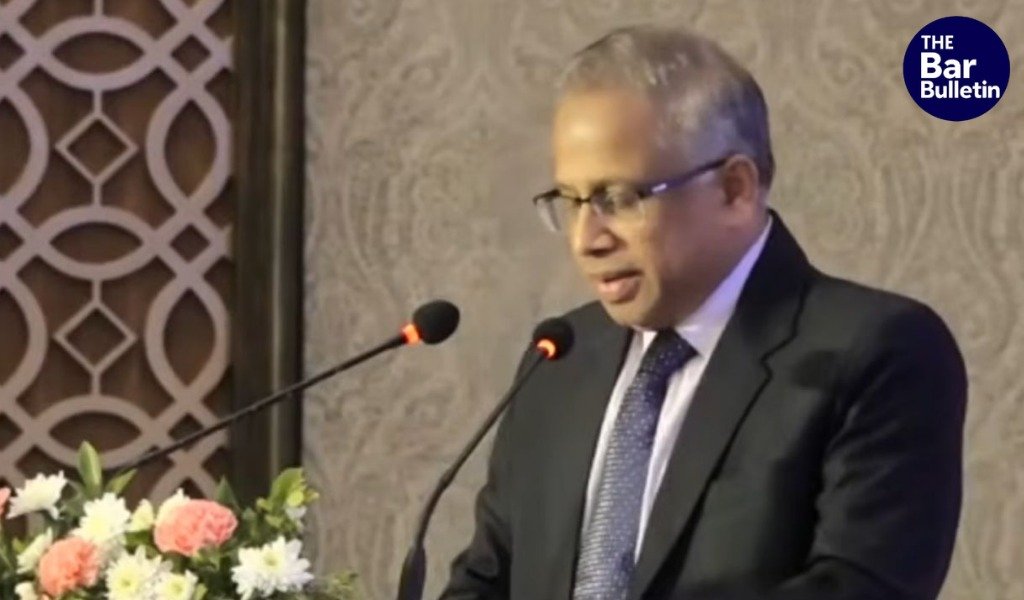

Supreme Court Judge Justice K.V. Viswanathan, while giving the keynote address at the inaugural ceremony of the Gujarat High Court Arbitration Centre’s (GHAC) Arbitration Week 2026, said that the future of arbitration will depend on preserving the confidence parties place in the arbitral process, while maintaining the delicate balance between party autonomy and judicial oversight.
Tracing the origins of arbitration in Gujarat to the 1918 textile dispute resolution efforts associated with Mahatma Gandhi, Justice Viswanathan said the episode demonstrated that consent is foundational to arbitration. He observed that arbitration derives its legitimacy substantially from party autonomy, but the law must simultaneously ensure that the process remains fair, impartial and consistent with minimum standards of justice.
Justice Viswanathan stressed that judicial restraint should not be mistaken for judicial indifference. While courts must respect party autonomy and prevent arbitration from becoming another stage of ordinary civil litigation, judicial supervision remains necessary to ensure equality, impartiality, procedural fairness and adherence to the rule of law. He said neither excessive judicial intervention nor complete withdrawal of judicial scrutiny would serve the cause of arbitration. Limited review, he noted, is central to arbitration, with courts not permitted to substitute their own assessment of the merits merely because another view is possible, while statutory grounds for intervention must continue to operate.
On institutional arbitration, Justice Viswanathan said institutions can provide procedural consistency, administrative support, established mechanisms for appointment and replacement of arbitrators, and greater predictability. However, he cautioned that credibility cannot be created merely by adopting a set of rules.
“
“Confidence is ultimately built through performance,” he said, adding that the quality of administration, independence of the process, competence of decision-makers and confidence of the Bar and commercial community would determine an institution’s credibility.
Addressing arbitration involving the State, he said the public character of the underlying transaction does not disappear merely because the dispute is referred to arbitration. In public procurement and public-private partnerships, arbitration must continue to meet standards of fairness, transparency and accountability governing the exercise of public power.
“
“The forum may change, the obligation of the State to act lawfully does not,” he observed.
Justice Viswanathan also highlighted the emerging challenges in investment treaty arbitration and climate regulation, noting the tension between protecting legitimate investor expectations and preserving the State’s regulatory space to respond to climate change, environmental standards and other evolving public objectives. He said this could become one of the defining questions in investment arbitration in the coming decades.
On artificial intelligence, Justice Viswanathan said AI is already assisting with document review, translation, legal research and organisation of large records, and may significantly reduce the cost and delay associated with complex disputes. At the same time, he warned of hallucinated authorities, confidentiality risks and other dangers associated with poorly governed AI systems. The central principle, he said, is that while AI may assist arbitrators and parties, responsibility for reasoning, judgment and the resulting award cannot be delegated to AI.
Concluding his address, Justice Viswanathan said the central question is no longer whether arbitration should be encouraged, but what kind of arbitral system India wishes to build. A system that is efficient but lacks confidence will not endure, while one excessively dependent on courts would defeat the purpose for which arbitration was chosen.
He said GHAC’s success would ultimately not be measured by the number of conferences conducted or arbitrations administered, but by whether parties come to regard it as an institution where disputes are resolved with efficiency, independence, fairness and integrity.
Referring again to the 1918 episode, Justice Viswanathan said that while the parties at that time had the benefit of Gandhi’s efforts to persuade them to trust arbitration, institutions today must create that confidence themselves. He expressed confidence that GHAC would develop into such an institution and help foster a culture of fair arbitration consistent with the rule of law.