
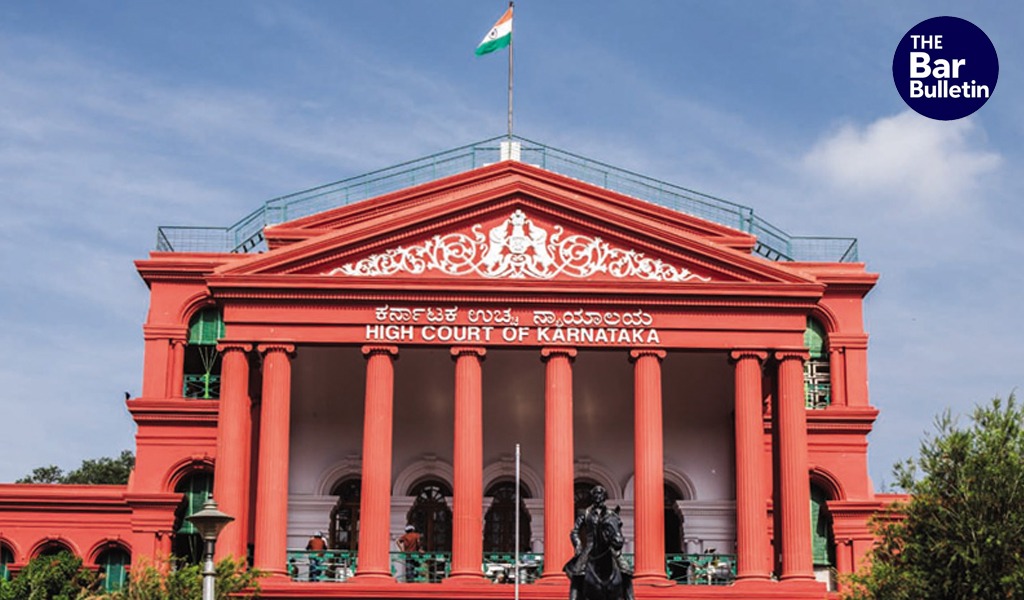

In a case concerning the regulation of homestays in Karnataka, the Karnataka High Court has directed the State Government to examine the feasibility of formulating a comprehensive policy and regulatory framework governing the establishment, operation and supervision of homestays, observing that the increasing number of disputes in the sector underscores the need for an integrated regulatory mechanism.
The Court was hearing a petition challenging an order affecting the petitioner’s homestay registration. The petitioner contended that the action had been taken without issuance of a prior notice, without affording an opportunity of hearing and without complying with the procedure prescribed under the Karnataka Tourism Trade (Facilitation and Regulation) Act, 2015.
Accepting the contention, the High Court held that any administrative action entailing adverse civil consequences must conform to the principles of natural justice, particularly the rule of audi alteram partem, unless expressly excluded by statute. It further observed that where a statute prescribes a particular procedure for exercise of power, authorities are bound to follow that procedure and cannot bypass statutory safeguards.
The Court also used the occasion to outline the essential components of a future homestay regulatory framework. It observed that such a policy should comprehensively address fire safety measures, food safety and hygiene standards, building and zoning compliance, guest security and police verification, consumer protection norms relating to pricing, cancellations and refunds, sanitation and environmental sustainability, and a coordinated regulatory mechanism involving multiple departments. The Court further emphasised the need for transparent inspections, opportunities to rectify deficiencies, graded penalties, an appellate mechanism, and separate regulatory standards for small family-run homestays and larger commercial establishments operating as homestays, so as to ensure both effective regulation and ease of compliance.
Observing that a comprehensive policy would enhance tourist safety, promote transparency, reduce regulatory ambiguity and minimise litigation, the Court allowed the writ petition, read down the impugned order as a show-cause notice, and directed the Principal Secretary, Department of Tourism, Government of Karnataka, to examine and place such a policy on record.
