
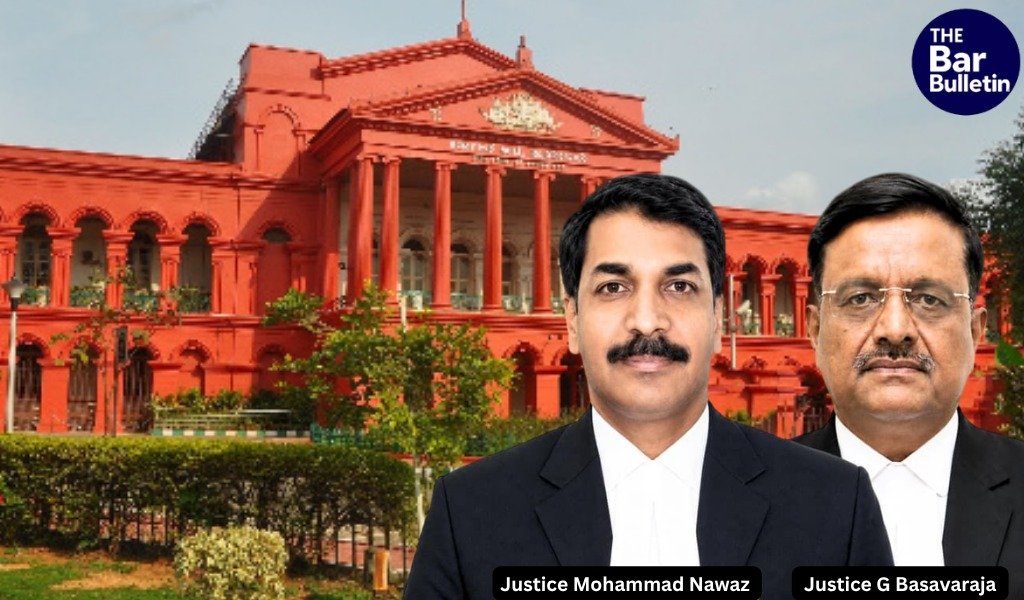

The Karnataka High Court has issued statewide guidelines to ensure proper handling of statements recorded under Section 164(5) of the CrPC, directing Investigating Officers to obtain and review such statements before filing charge-sheets and requiring courts to furnish copies of the statements to accused persons as part of the documents mandated under Section 207 CrPC. The Division Bench of Justice Mohammad Nawaz and Justice G Basavaraja observed that repeated lapses in dealing with Section 164 statements were affecting the fairness of criminal trials.
The Bench noted that in several criminal appeals, Investigating Officers had failed to obtain and properly examine certified copies of Section 164(5) statements before submitting final reports. In some cases, the statements were not furnished to the accused, and were only produced or marked as exhibits during the trial. The Court observed that such a practice deprives the accused of the opportunity to test the correctness of the statement and confront witnesses with material omissions or contradictions.
The Court held that furnishing the Section 164 statement is a mandatory requirement under Section 207(iv) CrPC, corresponding to Section 230(iv) of the BNSS, 2023. Where the statement contains omissions or contradictions with the evidence subsequently given at trial, the accused is entitled to use the statement for contradiction in accordance with law. Failure to furnish the statement, the Bench held, violates the accused’s right to a fair trial guaranteed under Article 21 of the Constitution.
Under the guidelines, the Magistrate is required to preserve the Section 164(5) statement in safe custody after recording it. Before filing a charge-sheet or final report, the Investigating Officer must obtain and peruse the statement and apply his mind to whether it supports or contradicts the prosecution case. Where the statement does not contain anything against the accused, the IO must satisfy himself that sufficient independent material exists to justify filing the charge-sheet.
The Court has further directed Magistrates and Sessions/Special Judges to furnish the accused with all documents required under Section 207 CrPC, including the Section 164(5) statement. It also directed courts to ensure that the accused is specifically questioned about the Section 164 statement while recording their statement under Section 313 CrPC.
The Bench directed the Registry to circulate the judgment to all officers presiding over criminal trials and to place it before the Karnataka Judicial Academy for dissemination among trainee judges. A copy is also to be forwarded to the Karnataka Government’s Home Department for circulation through the Director General and Inspector General of Police to Investigating Officers across the State.
The directions were issued while allowing an appeal against a conviction under Sections 363 and 376(2)(n) of the IPC, Section 6 of the POCSO Act and Section 3(2)(v) of the SC/ST (Prevention of Atrocities) Act. The High Court found, among other things, that the victim’s Section 164 statement did not mention the alleged sexual intercourse, while her subsequent trial testimony contained material inconsistencies. The Court ultimately set aside the conviction and acquitted the accused.
