
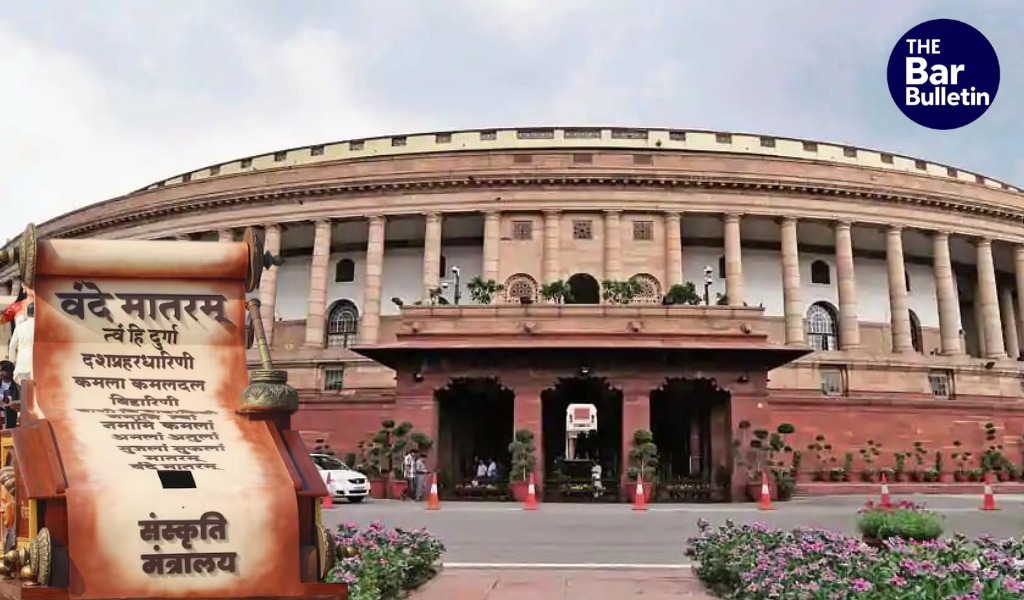

The Central Government has introduced a Bill in the Rajya Sabha proposing to make it a criminal offence to intentionally prevent the singing of “Vande Mataram”, India’s National Song, or disturb any gathering where it is being sung. If enacted, the amendment will extend the same legal protection currently available to the National Anthem under the Prevention of Insults to National Honour Act, 1971, making such acts punishable with imprisonment of up to three years, or fine, or both. The Prevention of Insults to National Honour (Amendment) Bill, 2026, introduced by Union Home Minister Amit Shah on Friday, seeks to amend Section 3 of the 1971 Act to expressly include the National Song within its ambit.
At present, Section 3 of the 1971 Act penalises any person who intentionally prevents the singing of the National Anthem or causes disturbance to an assembly engaged in such singing. The proposed amendment substitutes the existing provision to cover both the National Anthem and the National Song, ensuring that intentional obstruction or disruption of the singing of “Vande Mataram” attracts the same punishment.
According to the Statement of Objects and Reasons, while the existing law protects the National Anthem, there is no specific statutory provision safeguarding the singing of “Vande Mataram”. The Government has therefore proposed to amend the law to prohibit intentional interference with the National Song and make such conduct punishable.
The Bill also refers to the proceedings of the Constituent Assembly on January 24, 1950, when its President, Dr. Rajendra Prasad, stated that “Vande Mataram,” composed by Bankim Chandra Chatterjee, had played a historic role in India’s freedom struggle and “shall be honoured equally with ‘Jana-Gana-Mana’ and shall have equal status with it.”
Explaining the need for the amendment, the Statement of Objects and Reasons states:
“
“Presently, there is no specific legal provision to prevent insults to the singing of Vande Mataram, which is honoured as the National Song. Therefore, in order to prohibit any person from intentionally preventing the singing of the National Song (Vande Mataram) or causing disturbance to any assembly engaged in such singing, it is proposed to amend section 3 of the said Act to include the National Song also within its ambit, so as to make such acts punishable.”
If passed by Parliament, the amendment will place the National Song on the same statutory footing as the National Anthem for the limited purpose of penalising intentional prevention of, or disturbance during, its singing.