
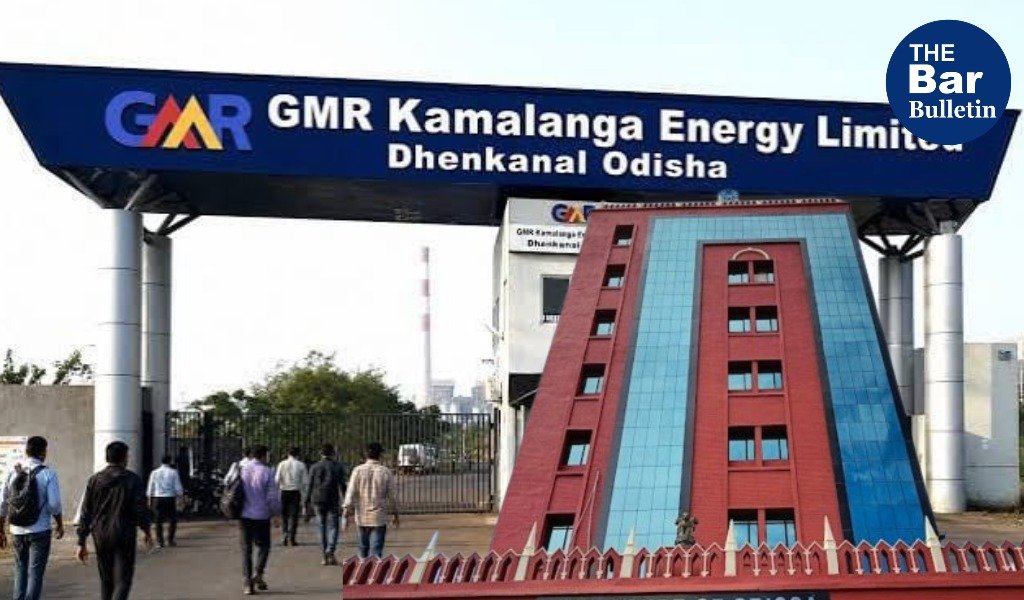

The Orissa High Court (Cuttack Bench) has granted interim protection after finding prima facie issues on whether water charges paid to the Odisha Government constitute exempt water supply or a taxable right to use natural resources, and whether the demand was raised in violation of natural justice. The High Court stayed the operation of the appellate order that confirmed GST demand of over Rs. 6.80 crore, along with interest and penalty, against GMR Kamalanga Energy Limited.
While restraining the Department from taking coercive action until the next hearing, the Bench observed that questions relating to classification of the transaction, applicability of GST exemptions, jurisdiction, procedural compliance and principles of natural justice require consideration, warranting issuance of notice and interim protection.
Briefly, the petitioner, GMR Kamalanga Energy Limited vs Commissioner (Appeals), GST, operates a coal-based thermal power plant in Dhenkanal, Odisha, and draws water from the Brahmani River under agreements executed with the State Government under the Odisha Irrigation Act, 1959 and the Odisha Irrigation Rules, 1961. Following GST audit proceedings, the Department sought to levy GST under the reverse charge mechanism on water charges paid by the company to the Government of Odisha.
Initially, the adjudicating authority dropped the demand holding that the charges were for supply of water, which was exempt from GST. However, the appellate authority subsequently reversed that view and treated the arrangement as a grant of a licensing right to use a natural resource, confirming GST liability of Rs. 6.80 crore along with interest and penalty. The company challenged the appellate order as well as subsequent audit proceedings, show-cause notices, and adjudication orders covering later financial years.
The Division Bench comprising Dr. Justice Sanjeeb K Panigrahi and Justice Murahari Sri Raman noted that the petitioner had raised substantial questions regarding the legality of the GST demand, including whether the transaction was truly a supply of water or a taxable licensing service relating to natural resources. The Court also took note of the contention that the appellate order had been passed ex parte without proper service of hearing notices, allegedly in violation of Section 169 of the CGST Act and the principles of natural justice.
The petitioner further argued that the appellate authority had arrived at its conclusion without examining the underlying water-supply agreement and without considering the applicability of Section 7(2)(b) of the CGST Act and the relevant GST exemption notifications. The Court found that these issues required detailed examination and therefore warranted further consideration.
Also read Bombay High Court Orders Immediate Release Of Man Who Remained In Jail Despite Bail In Two Cases
The Court also recorded the petitioner’s challenge to the subsequent audit and adjudication proceedings on jurisdictional and procedural grounds. According to the petitioner, the authorities wrongly treated the arrangement as a right to use natural resources rather than a supply of water, ignored applicable GST exemptions, and issued consolidated demands covering multiple financial years contrary to Section 73 of the CGST Act.
The petitioner further questioned the competence of the audit authorities and alleged denial of adequate opportunity to respond during the audit process. The Court considered these submissions significant enough to justify issuance of notice and adjudication on merits.
