
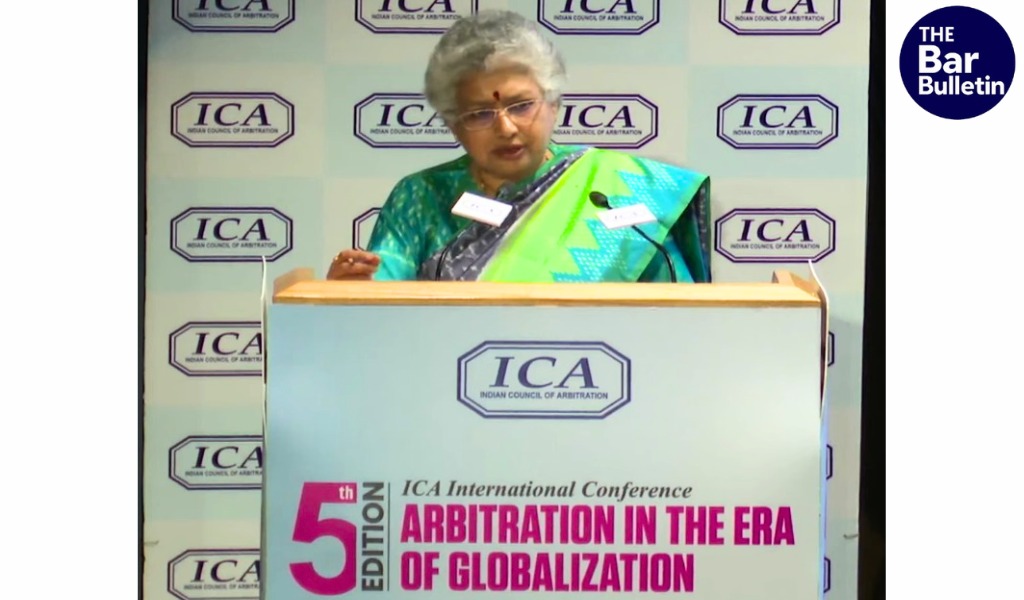

Speaking at the 5th ICA International Conference on “Arbitration in the Era of Globalisation,” Justice B. V. Nagarathna highlighted the growing role of alternative dispute resolution in an increasingly sophisticated and interconnected society, stating that disputes today are not merely legal issues but also social questions. She emphasised that ADR should function as a parallel system to litigation rather than being treated as an alternative.
She noted that arbitration remains the most preferred method for resolving cross-border disputes, particularly in a global economy shaped by investment treaties and foreign investor protections, with subject-specific arbitration developing in areas such as construction, energy and maritime sectors. At the same time, she pointed out that for India to emerge as a global hub, institutional strength and practical efficiency are necessary.
On mediation, she described it as a confidential and party-centric process that facilitates dialogue, especially in family, community and commercial disputes, including those arising in supply chains and business relationships. Referring to the Mediation Act, 2023, she observed that while it is an important legislative step, several provisions remain unnotified and the Mediation Council has not yet been constituted, indicating gaps in implementation.
She stressed that pre-litigation mediation under Section 12A of the Commercial Courts Act, 2015, should not be treated as a “mere formality” before filing the suit, highlighting the prevailing practice where parties briefly enter mediation before filing a plaint, allow it to fail within a short span, and then proceed directly to litigation without any genuine attempt at settlement.
She called for better coordination between mediation centres, legal services authorities and related institutions to ensure effective use of the ADR mechanisms.
Justice Nagarathna also referred to hybrid mechanisms such as Med-Arb and Arb-Med-Arb, noting their relevance in commercial disputes if carefully structured, and observed that arbitral institutions should have trained mediators to follow these methods. Further, she described Negotiation as an “underappreciated form of dispute resolution” capable of resolving matters before they escalate.
She concluded by noting that no single mechanism can address all disputes and that a “mature legal system” requires multiple dispute resolution methods to function together, particularly in light of concerns such as delays, rising costs and adversarial approaches in existing processes.
 Followed by this key address by Justice BV Nagarathna, Dr. Pinky Anand, Senior Advocate and former ASG, opened the discussions on the topic “Navigating the ADR Quagmire: Harmonizing Arbitration & Mediation.”
Opening the discussion, Moderator and Speaker Dr. Pinky Anand, stressed that the current litigation-heavy ecosystem is economically unsustainable. She pointed out the massive costs incurred in legal disputes and underscored the importance of timely resolution. “It is my belief that by marrying arbitration and mediation, we can create a legal regime that assists businesses in flourishing,” she said, advocating for a collaborative and solution-oriented approach.
She also raised important questions around mandatory mediation and evolving dispute resolution models, noting that mechanisms such as opt-in/opt-out frameworks and hybrid processes could help streamline dispute resolution. Emphasising urgency, she observed that disputes must be resolved quickly in a fast-moving global economy.
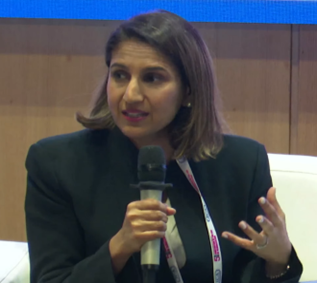 Ms. Sapna Jhangiani KC of Blackstone Chambers built on this by highlighting changing user expectations. Drawing from global surveys, she noted that businesses now seek greater flexibility and efficiency in dispute resolution. She further pointed out that the role of arbitrators is evolving, with institutional rules increasingly encouraging them to suggest mediation. Citing survey data, she added that “over 78% of participants”believe arbitrators should play a role in fostering settlement, marking a significant shift from traditional approaches.
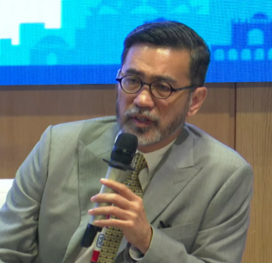 Mr. Chong Yee Leong, Co-head of International Arbitration Practice at Allen & Gledhill and Vice Chairman of SIAC, traced the practical evolution of arbitration–mediation interplay, particularly in infrastructure and construction disputes. He explained how multi-tier dispute resolution clauses have brought mediation into the arbitration process. Highlighting institutional developments, he noted that frameworks like Arb-Med-Arb have addressed enforcement concerns by allowing mediated settlements to be recorded as arbitral awards.
He also observed that arbitration institutions worldwide are increasingly recognising mediation as a key complementary mechanism, stating that tribunals now actively inform parties about settlement options and may even suspend proceedings to facilitate mediation.
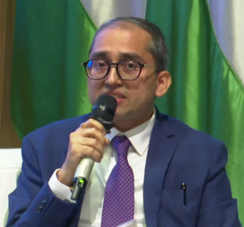 Adding a domestic perspective, Sahil, Partner – Disputes Resolution Practice, Khaitan & Co., flagged declining confidence in arbitration among Indian businesses, noting that “the current satisfaction rate is 40%,” down from 54% a decade ago. He highlighted that this trend raises serious questions about whether arbitration is being effectively utilised, especially as the government has begun limiting or removing arbitration clauses in contracts. “That makes me think, where is arbitration heading?” he remarked, stressing the need for lawyers to guide clients on choosing the right dispute resolution mechanism, whether arbitration, mediation, or negotiation. He also spoke about the importance of strengthening mediation in India, calling for faster enforcement and urging that “India should also ratify the Singapore Convention on Mediation” to bring certainty to cross-border settlement enforcement.
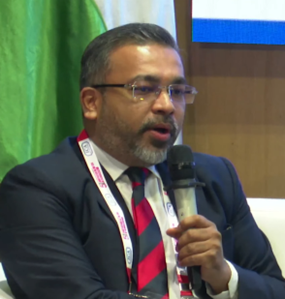 Adding a practitioner’s perspective, Divyam Agarwal, Partner, J. Sagar Associates, emphasised the need to rethink how dispute resolution mechanisms are perceived and used, observing that “an ounce of mediation is worth a pound of arbitration and a tonne of litigation.” He pointed out that mediation continues to be treated merely as an “alternate” mechanism, stressing that the real shift must be towards harmonising mediation with arbitration and litigation. Highlighting ground realities, he noted that despite thousands of cases, settlements through pre-litigation mediation remain minimal, attributing this to both client hesitation and a “checkbox” approach.
He also highlighted the lack of confidence in mediation, noting that it is often wrongly perceived as a sign of a weak case. He observed that parties tend to adopt an “all or nothing” approach “let’s fight it out till the end”, rather than exploring resolution. Emphasising strategy, he stressed that “timing is relevant,”and mediation must be introduced at the right stage, while avoiding a siloed approach to dispute resolution.