
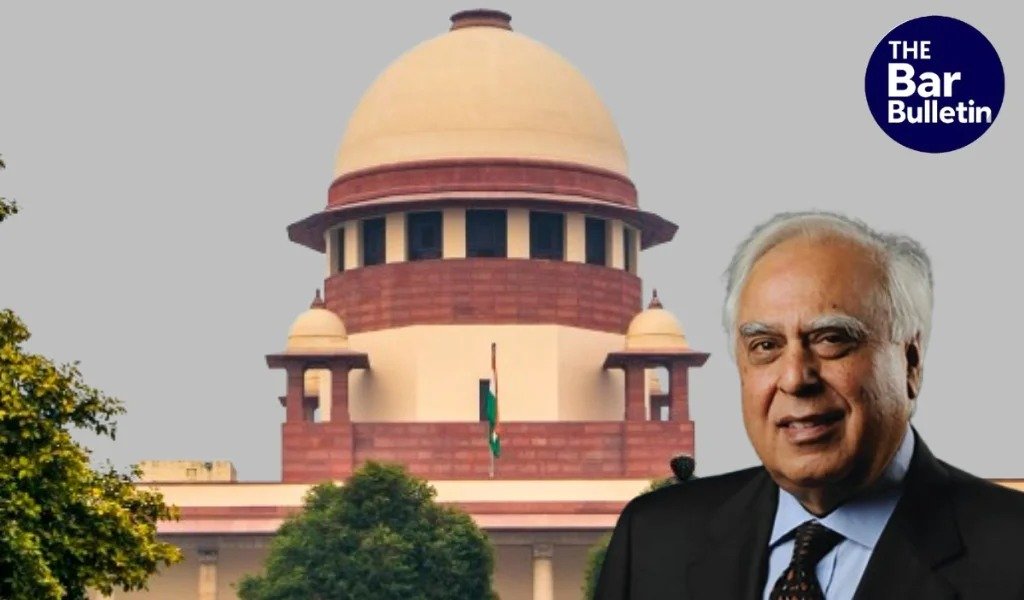
Senior Advocate Kapil Sibal, appearing for the Uddhav Thackeray faction in the Shiv Sena dispute, on Tuesday ontinued assailing the Maharashtra Speaker’s findings under the Tenth Schedule, arguing that the Speaker had exceeded his jurisdiction by treating the majority in the legislative party as representing the political party.
Mr Sibal submitted that the Speaker had arrived at four conclusions in the impugned decision:
● first, that the rival faction’s appointment of its own whip and leader was valid;
● second, that the respondents’ actions from June 21, 2022 onwards did not amount to voluntarily giving up membership of the Shiv Sena political party under Paragraph 2(1)(a) of the Tenth Schedule;
● third, that their voting in the Speaker’s election on July 3, 2022 and in the confidence motion on July 4, 2022 did not attract disqualification under Paragraph 2(1)(b); and
● fourth, that the legislative-party majority could be relied upon to determine which faction constituted the real political party.
He submitted that each of these conclusions was legally and factually untenable. He submitted that the Speaker had conflated the legislative party with the political party, despite the distinction being expressly recognised under the Tenth Schedule.
“
“The Tenth Schedule itself differentiates between a member of the legislature and a member of a political party. And what the Speaker has done is, he says that, look, the member of the legislative party is the political party. Now, the definition itself of the Tenth Schedule does not contemplate a situation where the member of the legislature or members of the legislature have become the political party. Which is the conclusion that the Speaker has arrived at.”
Sibal argued that under Paragraph 1(c) of the Tenth Schedule, the “original political party” is the party to which the member belonged when he was set up as a candidate, while the legislative party comprises the members of the House belonging to that political party. According to him, the statutory scheme therefore does not permit the legislative wing to be treated as synonymous with the political party.
‘How Does The Speaker Go Back to 1999 Party Constitution?’
Sibal also challenged the Speaker’s decision to rely on the 1999 Shiv Sena constitution to determine the party’s leadership structure, despite recognising the leadership structure reflected in the 2018 communication available on the Election Commission’s record.
He pointed to the Speaker’s own finding that the 2018 leadership structure was the relevant leadership structure for determining which faction constituted the real political party. Mr Sibal then questioned how, after accepting the 2018 leadership structure, the Speaker could subsequently compare it with the 1999 constitution and discard it.
“
“The Speaker, completely without jurisdiction, proceeds to compare the political party leadership with the 1999 party constitution and concludes that the political party leadership structure is not in accordance with the party constitution. And consequently discarded the representative of the Shiv Sena political party. Now how is this part of the jurisdiction of the Tenth Schedule? Once he recognizes that I am the political party, the structure is this. I am the Paksha Pramukh….It’s not some academic exercise that is going on. It’s real politics. I mean, I give him the symbol. He fights an election on that symbol. He becomes a minister on that symbol. And then the Speaker says no, no, no. I can’t evern recognize you.”
Mr Sibal also challenged the Speaker’s reliance on Sadiq Ali v. Election Commission of India, (1972) 4 SCC 664 arguing that the decision arose in a materially different factual and legal context and could not be used to automatically treat legislative majority as conclusive of which faction constituted the political party. He submitted that Sadiq Ali involved a situation where the organisational position was unclear and the Court considered both organisational and legislative strength. According to him, the decision did not lay down a rule that legislative majority alone determines the identity of a political party.
Sibal questioned the Speaker’s finding that the decision of the Paksh Pramukh could not be treated as synonymous with the will of the political party, asking, “How does he say that?” He argued that the Speaker could not treat a rift within the legislative party as evidence of a rift within the political party, particularly when the legislative party and political party are distinct under the Tenth Schedule. Sibal submitted that the Speaker’s approach was contrary to the Supreme Court’s ruling in Subhash Desai and lacked any basis in law.
He further submitted that following the deletion of Paragraph 3 of the Tenth Schedule, the legislative-majority test and the erstwhile split defence require reconsideration, particularly because the Tenth Schedule now requires a merger for protection from disqualification. Counsel submitted:
“
“Post the introduction of the Tenth Schedule and the deletion of Paragraph 3, in our respectful submission, that legislative majority test and split will have to be re-looked at now. Because you are promoting something with the Constitution. Until and unless there is a merger.”
Me Sibal also relied on the text of the Tenth Schedule to argue that a political party and its legislative party are conceptually distinct. He submitted: “A member of a legislative party belongs to a political party. A member of a legislative party can’t be the political party by definition.”
According to Sibal, this distinction was crucial because the Speaker’s decision effectively allowed the numerical strength of MLAs to determine the identity of the political party itself.
Mr Sibal further referred to the Representation of the People Act, Conduct of Election Rules and Election Symbols Order, submitting that the election process itself records which political party set up a candidate and entitles the candidate to contest using the party’s reserved symbol.
He argued that the respondents had contested the election as candidates set up by the Shiv Sena under the recognised leadership structure and had benefited from the party’s symbol.
He will continue his submission on the next day of hearing.