

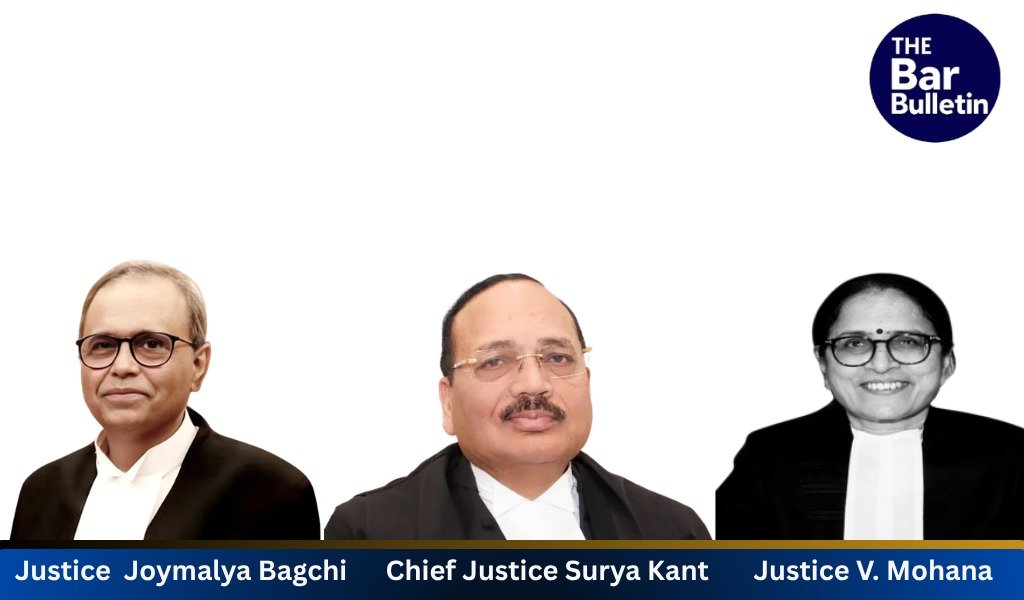
The Supreme Court on Monday dismissed TV Today’s appeal against the Delhi High Court ruling holding that media organisations perform a public function. The appeal was heard by te Bench of Chief Justice Surya Kant, Justice Joymalya Bagchi and Justice V Mohana.
The appeal arose from proceedings concerning a broadcast in which the identity of a minor POCSO survivor was allegedly disclosed. The Delhi High Court had upheld compensation against the media organisation and held that the press, while discharging its role of disseminating news, performs a public function, making it amenable to writ jurisdiction under Article 226 in appropriate cases.
Also Read: Delhi HC Holds Aaj Tak Liable for Disclosing POCSO Victim’s Details
During the hearing, counsel for appellant argued that the finding had wider implications and raised a larger question as to whether a private media organisation could be said to perform a public function so as to invite proceedings under Article 226.
The Bench, however, questioned the media organisation’s position and emphasised the constitutional significance of the press. Chief Justice Surya Kant remarked that the media should not hesitate to acknowledge the public importance of its role.
“
“You should rather proudly say that you perform a public duty of paramount importance, i.e., the guarantee and enforcement of the fundamental rights of the citizenry of this country. So, therefore, why should you feel shy and argue otherwise, only as a defence that you don’t perform public duty? You should proudly say so.”
Counsel submitted that the issue had implications extending beyond the compensation awarded in the individual case and concerned the maintainability of writ proceedings against private media organisations. Justice Joymalya Bagchi questioned this position and remarked:
“
“When your bandwidth, your access to internet will be stopped, you will come saying that the fundamental right is breached because Article 19(1)(a) of the people are being affected; the press is being throttled. And when you make a publication for which you are irresponsible and constitutional compensation is awarded, you say this is not a public function?”
The Bench also discussed the distinction between a sovereign function and a public function, with counsel submitting that the two concepts could not be equated. The Court, however, pointed out that the scope of Article 226 extends beyond bodies exercising purely sovereign functions.
Counsel also raised the apprehension that recognising private media organisations as performing a public function could result in several writ petitions being filed against them. When the concern over the possible opening of “floodgates” was raised, the Bench candidly responded:
“
“It should, it should. We encourage it.”
The Supreme Court accordigly dismissed the appeal.