
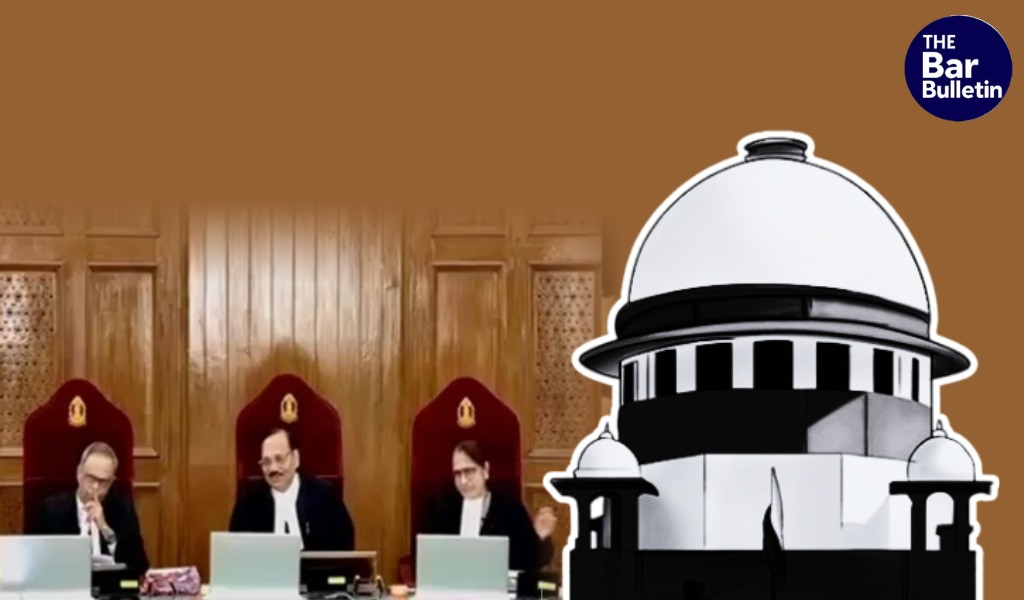

The Supreme Court on Tuesday indicated that it would consider evolving a Standard Operating Procedure (SOP) to facilitate urgent judicial intervention beyond court hours in exceptional cases involving life and personal liberty.
The issue arose during the hearing before a Bench comprising Chief Justice of India Surya Kant, Justice V. Mohan, and Justice Joymalya Bagchi, when a petitioner contended that despite the availability of online filing, litigants often lack effective access to the Court during emergencies occurring late at night.
Referring to a personal experience, the petitioner narrated the case of an interfaith couple who allegedly sought police protection after their marriage but claimed that the woman was handed over to her parents by the police late at night. She submitted that despite making efforts to reach judicial authorities after court hours, she was unable to secure an urgent hearing, highlighting the need for an institutional mechanism to respond to emergencies involving life and liberty.
Justice Joymalya Bagchi observed that while online filing and digital access have substantially improved access to justice, the issue raised was not one of complete denial of access but of the response mechanism after urgent filings are made. The Bench noted that a distinction must be drawn between access to justice and the Court’s assessment of urgency in a particular case.
During the hearing, the Solicitor General Tushar Mehta suggested that an administrative mechanism could be devised to address genuinely urgent matters. The Bench agreed that the issue merited consideration and observed that an SOP could be explored to ensure timely response in cases involving life and personal liberty, while cautioning that any such mechanism should not become a means to bypass regular judicial procedures or permit routine after-hours listings.
The Court indicated that the matter would be considered on the administrative side, with the proposed mechanism being confined to cases of genuine urgency involving fundamental rights under Article 21 of the Constitution.