
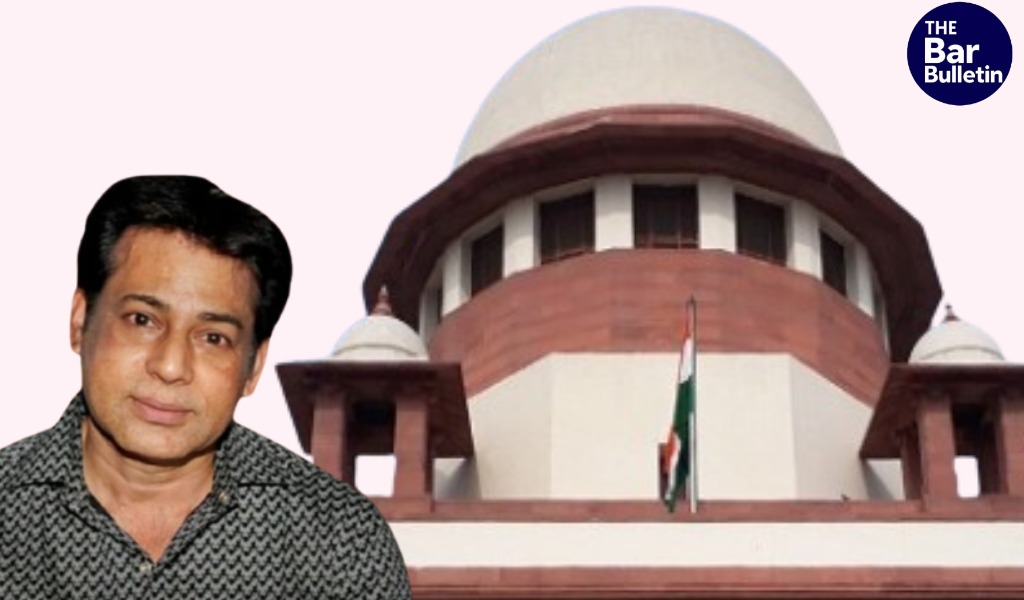

While dismissing Abu Salem’s plea for early release, the Supreme Court has held that concurrent life sentences cannot be counted twice as undertrial and post-conviction custody, and jail-earned remission cannot be notionally added to advance release of a life convict. The Court ruled that sovereign assurance given by the Union Government to the Government of Portugal fixes only the outer limit of imprisonment and does not convert a sentence of life imprisonment into a fixed-term sentence of 25 years.
The Apex Court clarified that where two life sentences are directed to run concurrently, the same period of incarceration cannot be notionally counted twice, once as undertrial custody and again as post-conviction custody, for the purpose of determining completion of the sentence. Thus, jail-earned remission cannot be notionally added to the period of incarceration so as to advance the release of a life convict where the sentence remains one of life imprisonment and the 25-year stipulation operates only by virtue of the sovereign assurance.
The Apex Court also held that the Bombay High Court was justified in rejecting the habeas corpus plea, as the appellant failed to demonstrate that the 25-year period stipulated by the Supreme Court in its 2022 judgment had been completed on a legally correct computation.
A Two-Judge Bench comprising Justice Vikram Nath and Justice Sandeep Mehta found the appellant’s computation of the period of incarceration to be legally flawed because it counted overlapping periods twice. For undertrial custody, he took the date of arrest i.e., 11 November 2005 and computed it until the later conviction on 7 September 2017, while for post-conviction custody, he commenced computation from the earlier conviction on 25 February 2015, resulting in an overlapping computation of the very same period from 25 February 2015 to 7 September 2017.
Since the sentences were directed to run concurrently, the same period of incarceration cannot be notionally counted twice for the purpose of determining completion of the sentence. The sovereign assurance fixes only the outer limit of imprisonment and does not permit periods of custody to be counted twice or otherwise contrary to the manner directed by this Court. On the question of jail-earned remission of 3 years, 6 months and 2 days, the Court observed that the sentence imposed upon the appellant continues to be one of life imprisonment and not a fixed-term sentence of 25 years.
Further, the 25-year stipulation operates only as a consequence of the sovereign assurance and does not alter the nature or duration of the sentence imposed by the TADA Court. The affidavit of the Additional Director General of Police and Inspector General of Prisons placed the appellant in the 50-year category under Rule 25(iii) of the Maharashtra Prison Manual, 1979, and indicated 31 January 2046 as the probable date of release.
Briefly, the appellant, Abu Salem Abdul Qayoom Ansari, was extradited from Portugal to India in November 2005 pursuant to a solemn sovereign assurance conveyed by the then Deputy Prime Minister, Shri L.K. Advani, to the Government of Portugal on 17 December 2002, that he would neither be subjected to the death penalty nor imprisonment exceeding 25 years. Upon extradition, he was arrested on 11 November 2005 in BBC Case and TADA Case. The TADA Court at Bombay convicted him, sentencing him to rigorous life imprisonment in both cases, with the latter directed to run concurrently with the former.
This Court, by its judgment dated 11 July 2022, disposed of the appeals holding that the period of detention for computation of sentence would commence from 12 October 2005, and that upon completion of 25 years, the Central Government would be required to consider advising the President under Article 72 of the Constitution or exercising powers under Sections 432 and 433 of the CrPC. The appellant thereafter filed a writ before the Bombay High Court seeking habeas corpus and mandamus, contending that he had already completed 25 years of sentence. The High Court dismissed the petition on 15 April 2026, holding that the stipulated period of 25 years had not yet been completed.
