
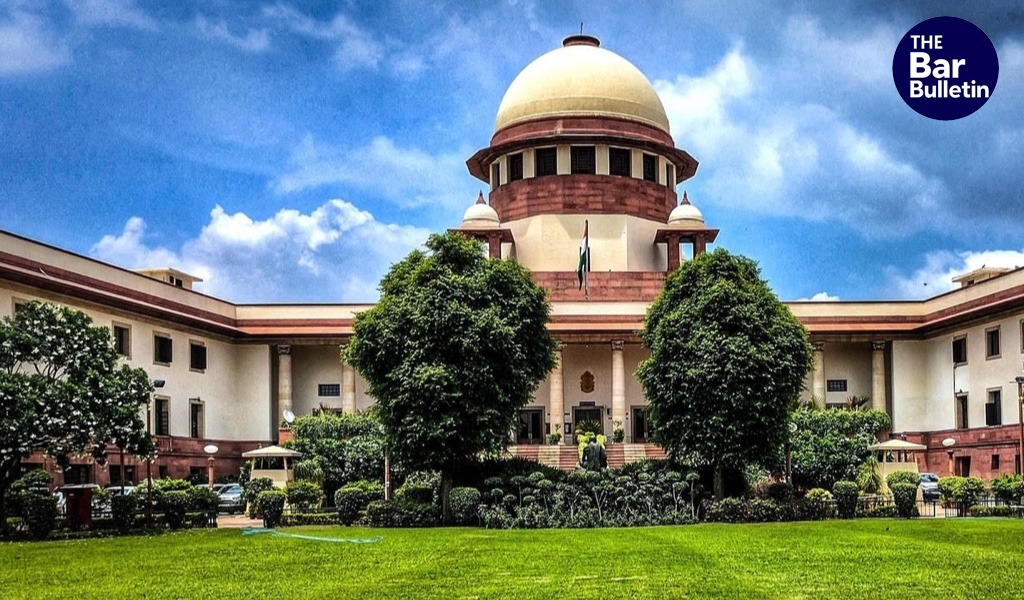

The Supreme Court has held that an erroneous cognizance order does not vitiate criminal proceedings if the defect is curable, while reviving proceedings against a Gujarat municipal councillor accused of suppressing her husband’s immovable properties in her election affidavit. The Court remanded the matter to the Magistrate to take cognizance afresh in accordance with law.
A Bench of Justice Sanjay Karol and Justice Nongmeikapam Kotiswar Singh was hearing an appeal filed challenging the Gujarat High Court’s refusal to quash criminal proceedings initiated against her.
The dispute arose from the 2015 municipal elections in Gujarat. A private complainant alleged that while contesting for the post of Councillor, the appellant had failed to disclose several immovable properties owned by her husband in the affidavit accompanying her nomination papers. Acting on the complaint, the Additional Chief Judicial Magistrate, Gandhidham, issued summons under Section 125A of the Representation of the People Act, 1951 (RPA) for furnishing false information in an election affidavit. The Gujarat High Court declined to quash the proceedings, following which the appellant approached the Supreme Court.
Before the Supreme Court, the appellant contended that the Representation of the People Act, 1951 did not apply to elections for municipal councillors, which are governed by the Gujarat Municipalities Act and the Gujarat Municipalities (Conduct of Elections) Rules, 1994. She further argued that the election rules required disclosure only of jointly owned properties and not assets exclusively owned by the spouse. She also raised the plea of limitation.
Rejecting the arguments advanced by the appellant, the Court held that the election rules require disclosure of the assets of the candidate, the spouse and dependants. Interpreting the affidavit format prescribed under the Rules, the Bench held that the comma after the word “myself” merely separates items in a list and cannot be construed to exclude properties solely owned by the spouse from disclosure. The Court observed:
“
“The ‘comma’ after ‘myself’ is used merely to separate items in a list. The word ‘of’ applies equally to ‘myself’, ‘my spouse’ and ‘dependents’… The ‘comma’ does not create any separate meaning, distinction, or exclusion.”
The Court, however, agreed with the appellant that the Magistrate had erroneously taken cognizance under Section 125A of the Representation of the People Act, which applies only to Parliamentary and State Legislature elections and not municipal elections. Nevertheless, it held that such an error did not render the proceedings void. Relying on the principle that cognizance is taken of an offence and not of the offender, the Court held that taking cognizance under an incorrect statutory provision is a curable defect, particularly where the allegations otherwise disclose the commission of an offence under the applicable law. The Bench observed:
“
“The well-settled position of law is that the error in taking cognizance under the wrong Section is, in fact, a curable defect so long as the Court that has taken cognizance has the power to take cognizance of the other Sections also.”
The Court further noted that although false declarations under the Gujarat Municipalities Act are no longer specifically penalised, filing a false affidavit during the electoral process could still attract offences under the Indian Penal Code, as had also been alleged in the private complaint. Remanding the matter, the Bench held:
“
“If the issue is that a false affidavit has been filed in the electoral process, that is an offence against society at large and has to be investigated.”
Accordingly, the Supreme Court set aside the cognizance order to the limited extent of the statutory provision invoked and remanded the matter to the Magistrate to take cognizance afresh and proceed in accordance with law, clarifying that it had expressed no opinion on the merits of the allegations.
Cases Referred
State of Karnataka v. Pastor P. Raju, (2006) 6 SCC 728
State of West Bengal v. Mohd. Khalid, (1995) 1 SCC 684
Pruthvirajsinh Nodhubha Jadeja v. Jayeshkumar Chhakaddas Shah, (2019) 9 SCC 533,
Pradeep S. Wodeyar v. State of Karnataka, (2021) 19 SCC 62
