
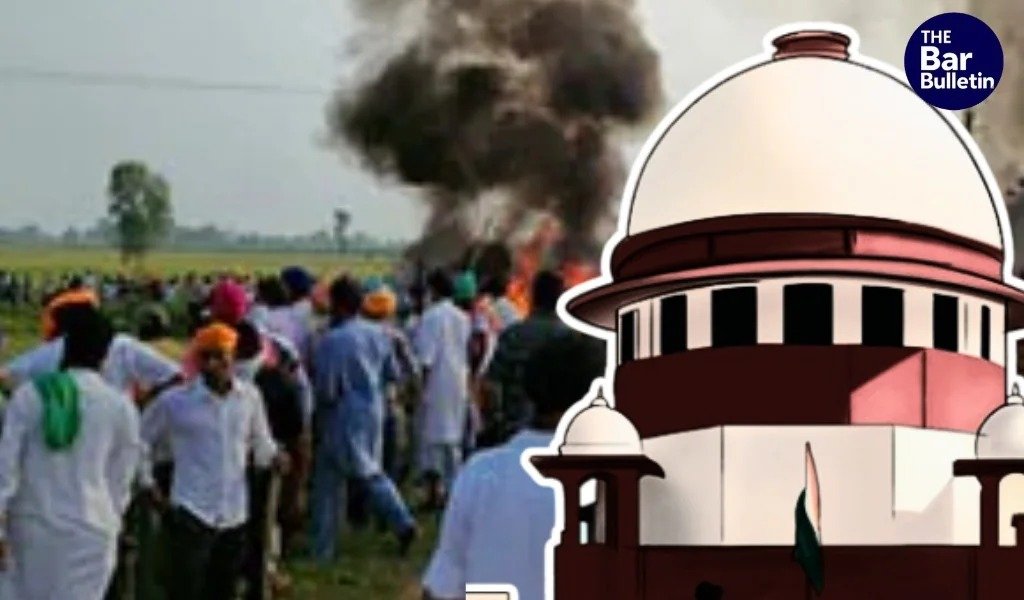
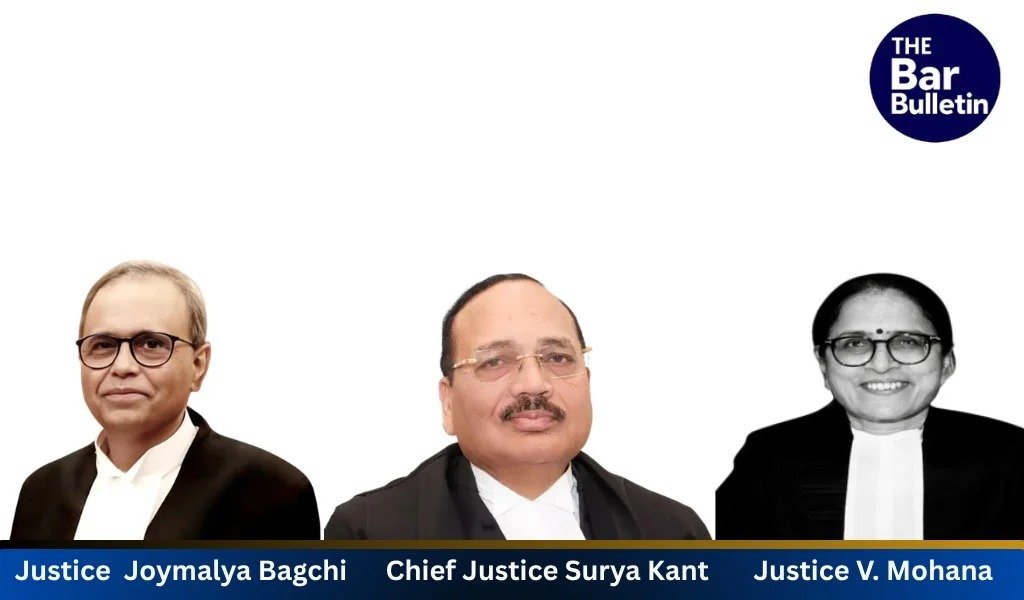
The Supreme Court on Tuesday heard submissions concerning the conduct of the trial in the Lakhimpur Kheri violence case. Advocate Prashant Bhushan raised serious concerns over the conduct of the presiding judge, treatment of witnesses and the replacement of the public prosecutor. The matter was heard by Chief Justice Surya Kant, Justice Joymalya Bagchi and Justice V Mohana.
Bhushan alleged that the judge currently handling the trial had, in several other cases, withdrawn cases to himself and granted bail or acquitted accused persons. He submitted that an administrative inquiry had also apparently been initiated against the judge by the High Court.
“
“Events have taken place which will shock your Lordship’s conscience as to how this judge who is currently dealing with it, apparently what he has done is quite shocking, not just in this case but in so many other cases, he has withdrawn NTPS cases to himself, he has granted bail in those cases, he has withdrawn SC/ST cases to himself, granted bail in those cases, he has withdrawn dozens of cases to himself, acquitted people in matters which were at the fag end of the trial.”
Bhushan objected to the manner in which an eyewitness was dealt with after the judge took charge of the trial. According to his submissions, the previous judge trying the case had retired on April 15 and the present judge took charge around April 16. On April 17, an eyewitness, Sher Singh, was unable to appear due to illness and had produced a medical slip. Bhushan alleged that despite this, the judge issued a non-bailable warrant against him. Bhushan further alleged that the police subsequently went to the witness’s parents and intimidated them, following which the witness was reluctant to appear.
The Bench noted that the trial court had been directed to expedite the proceedings, but counsel maintained that such an order could not justify what he described as the manner in which the witnesses were being treated. He further submitted that the earlier prosecutor, who had experience, had been replaced by a new prosecutor with limited experience. He suggested that the State consider appointing a more experienced public prosecutor.
“
“The prosecutor has also been replaced. Just now. And the earlier prosecutor had experience. This current prosecutor, my Lord, has hardly any experience. He is a new prosecutor who has been appointed. Your Lordship had appointed an SIT in this case to ensure that complete justice is done in this case. That’s why your Lordship is monitoring. Talk to the state government. Let there be some very experienced public prosecutor.”
He submitted that these circumstances raised serious concerns about the fairness of the trial. He referred to an alleged administrative inquiry against the judge and submitted that the relevant case files had been recalled for inspection by the High Court’s administrative committee. He ultimately sought a change of the trial judge, arguing that his continuation could result in a miscarriage of justice.
“
“There is a complete miscarriage of justice, my Lord. If this officer continues with this case, I can guarantee that… There will be gross miscarriage of justice. I can guarantee that if this officer continues with this case.”
The State counsel responded that a reply would be filed and that the issue of recalling witnesses would be examined. The counsel also informed the Court that the senior public prosecutor had considerably more experience than the newly appointed prosecutor.
The matter was thereafter sought to be passed over for a short period.