

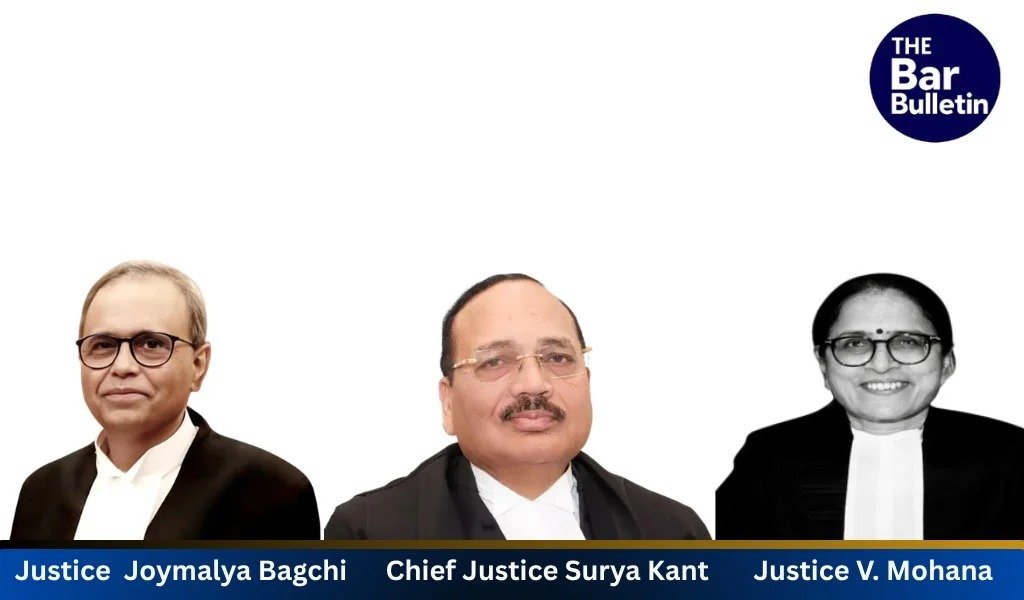
The Supreme Court, on Wednesday, while hearing a challenge concerning the PEARL-FIRST Trust and the establishment and administration of law colleges in Goa and Andhra Pradesh, questioned the Bar Council of India’s expertise to regulate legal education and examined the extent of its statutory role in relation to law universities. The matter was heard by Chief Justice Surya Kant, Justice Joymalya Bagchi and Justice V Mohana.
The issue arose during submissions by Advocate Prashant Bhushan, who argued that the Goa and Andhra Pradesh legislations give the BCI extensive control over the functioning of the law colleges. He pointed out that under the Acts, the BCI is empowered to nominate 27 of the 35 members of the Executive Council of the institutions.
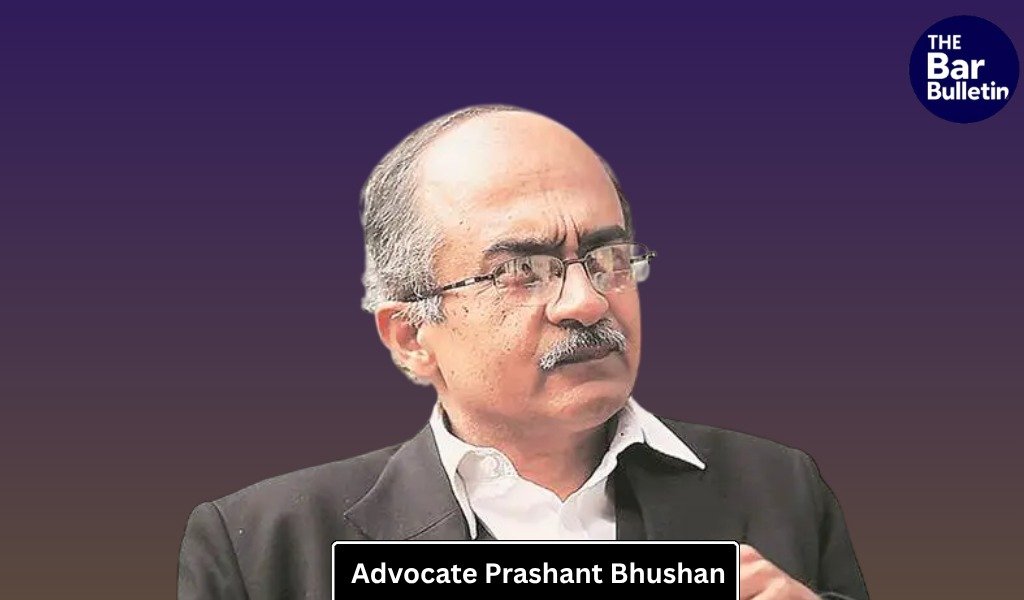
He argued that this raised a fundamental question about the separation between a regulator and the institution being regulated. He relied on the principle that a regulator cannot itself run an institution that it regulates, referring to previous Supreme Court decisions.
To this, the court remarked that it will examine BCI’s statutory authority over legal education.
“
“That is not the question. That’s only a composition. The question is that very basic question of how the Bar Council of India is expert body to regulate the legal education. What do they know about legal education? There are eminent law scholars. There are academia. They should be involved.”
Senior Advocate Atmaram NS Nadkarni, appearing for the respondents, sought to draw a comparison with the regulatory framework governing other professional education, referring to the role of the Medical Council of India in regulating medical education. He also submitted that eminent jurists and other experts are involved in legal education, countering the suggestion that the BCI lacks the requisite expertise to regulate the field.
He further submitted that the BCI’s statutory power under Section 7(1)(h) of the Advocates Act is to promote legal education and lay down standards of such education, arguing that this does not necessarily extend to controlling the institutions themselves.
However, CJI remarked:
“
“You can lay down the general guidelines. You can lay down that the curriculum should be 4 years, 5 years or how you promote legal education. For that, you can take any promotional measures. Absolutely. But you can’t control it,”
Another counsel submitted that the BCI’s own June 15, 2019 resolution recorded that the 1974 Trust had become defunct and a burden on the BCI, following which the BCI resolved to extinguish it, create a new Trust and transfer the assets of the 1974 Trust to the new entity. Counsel further alleged that donations running into crores were being received by the BCI Trust in connection with approvals granted to the law colleges, and submitted that documents supporting these allegations would be placed on record.
The Counsels for the respondents submitted that they would file their reply to this. Thereafter, the Supreme Court issued notice on the plea.