

The Supreme Court has directed the Rajasthan Government to constitute a Special Investigation Team (SIT) to investigate organised illegal bajri (gravel) mining in the Luni, Jojari and Bandi rivers, while restraining the establishment of new industrial units near the river ecosystem until the High Flood Line and buffer zones are scientifically determined.
A Bench of Justice Vikram Nath and Justice Sandeep Mehta, hearing the suo motu proceedings titled In Re: 2 Million Lives at Risk, Contamination in Jojari River, Rajasthan, expressed serious concern over the State’s approach of subsequently granting mining leases in areas where illegal mining had earlier been detected.
The Court deprecated what it described as an apparent attempt by the Mining Department of Rajasthan to legitimise illegal mining activities through the subsequent grant of leases instead of taking appropriate action against those responsible.
The Bench observed that the subsequent grant of mining leases in accordance with the prescribed procedure did not, by itself, establish that such activities were environmentally sustainable. It emphasised that compliance with the procedure for granting mining leases and compliance with environmental safeguards governing the actual conduct of mining were distinct requirements.
Also Read NGT Orders Action Against Mining Company for Illegal Access Road Through Aravalli Plantation
The Court further observed that the State could not discharge its obligation to protect river systems merely by reporting the number of cases detected, FIRs registered, penalties recovered or leases granted. The relevant consideration was whether the measures adopted were capable of preventing further degradation and securing restoration of the affected areas.
The Court issued the following directions:
1. Rajasthan must constitute an SIT within three days of receiving the order. It shall be headed by an officer not below the rank of Inspector General of Police and include the Superintendents of Police of Jodhpur, Balotra and Pali. The SIT will investigate organised illegal bajri mining, identify the persons and entities involved, the networks facilitating extraction, transportation and sale, the beneficiaries and any complicity or dereliction of duty by public officials.
2. The State has been restrained from granting further permissions for the establishment of new industrial units along or in the vicinity of the riverine ecosystem until the High Flood Line and buffer zones are scientifically determined, having regard to the records maintained by the Revenue Department and Water Resources Department. An additional protective zone of 100 metres must be maintained on either side of the recorded outer boundaries of the rivers. No Red Category industry shall be permitted within 500 metres of these boundaries.
<
3. The Court directed the impleadment of the Central Ground Water Authority (CGWA), which must file an affidavit detailing groundwater availability, extraction and depletion in Jodhpur, Balotra and Pali.
4. The Integrated Public Reporting and Environmental Grievance Redressal Mechanism must incorporate a facility for submitting anonymised complaints concerning illegal bajri mining and other unlawful activities affecting the river ecosystem.
5. Financial Assistance for ZLD Plants: Rajasthan must formulate a comprehensive policy for extending financial assistance to industrial units seeking to establish Zero Liquid Discharge (ZLD) plants. Pending formulation of the policy, applications for financial assistance must be considered on a case-to-case basis following technical appraisal and verification.
6. The State must take necessary steps to establish a redistribution pipeline network for conveying and reusing treated wastewater and RO permeate, thereby minimising the discharge of effluents into the river systems. A time-bound implementation plan must be prepared.
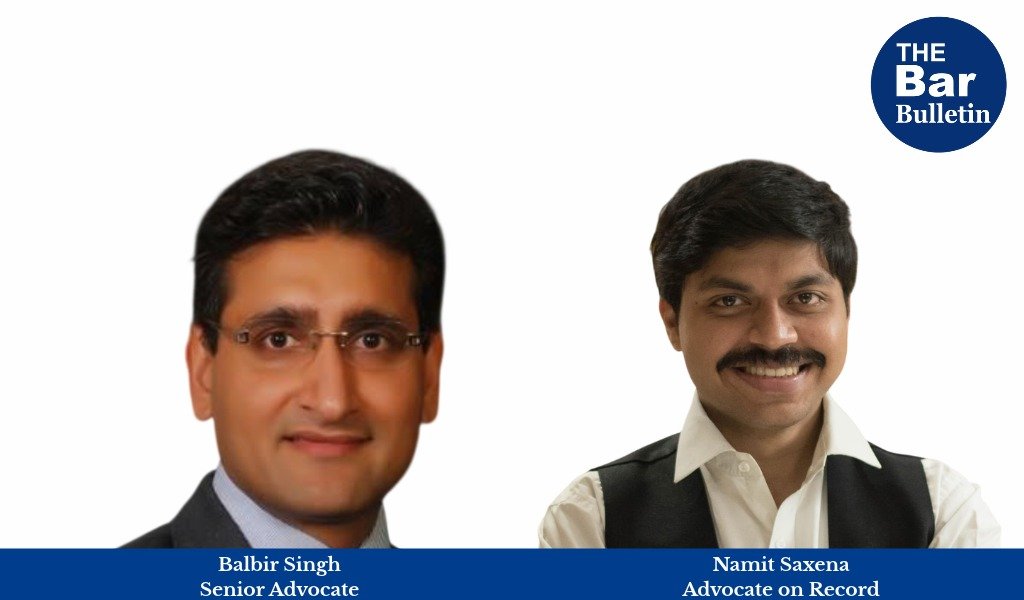
The Supreme Court also appointed Senior Advocate Balbir Singh and Advocate-on-Record Namit Saxena as Amici Curiae to assist the Court in the effective consideration and resolution of the complex issues arising in the proceedings.
In a separate issue concerning Bherawa Textile Industries Pvt. Ltd., the Supreme Court clarified that its earlier directions restricting the reopening of industrial units did not extinguish the statutory appellate jurisdiction of the National Green Tribunal (NGT) to examine the legality and sustainability of an independent regulatory order passed by the Rajasthan State Pollution Control Board.
The company was granted liberty to approach the NGT seeking restoration of its withdrawn appeal. However, the Court clarified that the NGT’s exercise of appellate jurisdiction would not, by itself, permit an industrial unit to resume operations contrary to the Supreme Court’s directions. The NGT was directed to consider any such application on its own merits and in accordance with law.
The SIT has been directed to submit a status report before the next date of hearing. The matter has been listed for November 27, 2026, as part-heard.
