
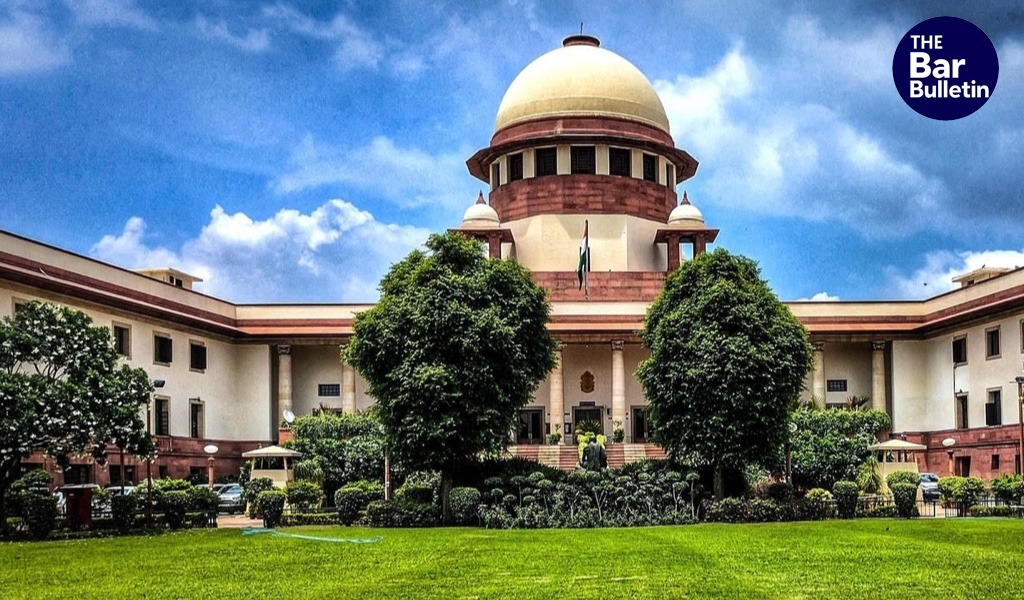

The Supreme Court has declined to interfere with a Punjab & Haryana High Court judgment that set aside textile cess demands raised against independent fabric processing units, thereby affirming the High Court’s view that the definition of “manufacture” under the Central Excise regime cannot automatically be imported into the Textile Committee Act, 1963.
A Bench comprising Justice Sanjay Kumar and Justice K. Vinod Chandran dismissed the Special Leave Petitions filed by the Union of India and others against the High Court’s common judgment dated December 24, 2025. The Court observed that it found no good ground or reason to interfere with the impugned judgment and accordingly dismissed the petitions.
The dispute concerned the levy of cess under Section 5A of the Textile Committee Act on independent processing units engaged in activities such as bleaching, dyeing, printing and finishing of grey fabric. The authorities had issued demand notices contending that such processing amounted to “manufacture” and attracted cess liability.
Allowing a batch of writ petitions, the Punjab & Haryana High Court held that the definition of “manufacture” contained in the Central Excise Act could not be borrowed for the purposes of the Textile Committee Act, which is a distinct statute enacted for a different purpose. The High Court noted that while Parliament had amended the Central Excise law to specifically include certain processing activities within the ambit of manufacture, no corresponding amendment was introduced in the Textile Committee Act. As a result, the expanded excise-law definition could not be read into the 1963 Act.
The High Court also relied on communications issued by the Textile Committee indicating that cess ought not to be levied on independent processing units and observed that the Committee itself had, at various stages, expressed the view that cess should be collected at the yarn stage rather than from independent processors.
Another significant ground accepted by the High Court was limitation. The Court held that the impugned demand notices, largely pertaining to assessment periods beginning in 1995-96, had been issued beyond the period prescribed under Rule 10 of the Textile Committee Cess Rules, 1975, which required notices to be issued within one year. Consequently, the demands were found to be time-barred.
In light of these findings, the High Court had quashed the demand notices and set aside the order of the Textile Committee Cess Appellate Tribunal. The Supreme Court’s refusal to interfere with that judgment has now lent finality to the relief granted to the processing units.
