
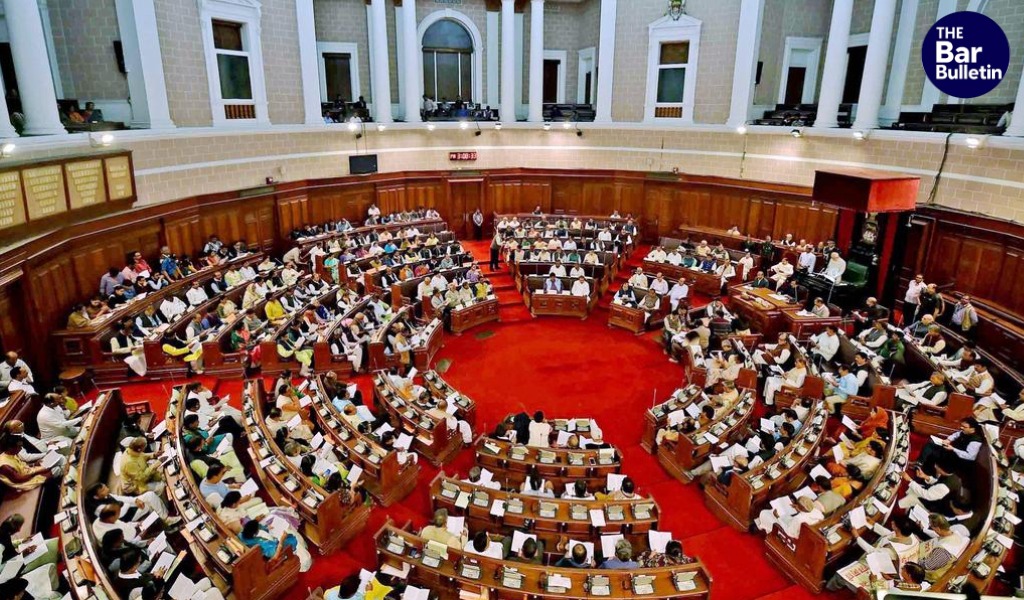

The West Bengal Government has introduced two significant Bills in the State Legislative Assembly aimed at strengthening preventive policing and creating a statutory mechanism for recovering compensation for damage to public and private property caused during riots, unlawful assemblies and other disturbances. The Bills were published in the Kolkata Gazette on June 24, 2026.
West Bengal Public Safety and Control of Anti-Social Activities Bill, 2026, seeks to provide for the promotion of public safety, maintenance of public order and prevention of anti-social activities through preventive detention. The Bill empowers the State Government, and in specified circumstances District Magistrates and Commissioners of Police, to order the preventive detention of persons classified as “goondas” if satisfied that such detention is necessary to prevent anti-social activities. The detention may ordinarily be ordered against persons who have been convicted for specified offences, charge-sheeted in multiple cases within the preceding seven years, or who continue engaging in anti-social activities despite earlier preventive measures.
The proposed legislation defines “anti-social activity” broadly to include acts causing alarm or insecurity among the public, disturbance of public order, unlawful dispossession of property, obstruction of lawful business or occupation, substantial damage to public or private property, and illegal mining, quarrying, sand extraction, forest produce or wildlife-related activities causing loss to the public exchequer. It also covers habitual offenders and persons involved in offences under statutes such as the Arms Act, the NDPS Act, the Immoral Traffic (Prevention) Act and the Explosive Substances Act.
Under the Bill, every detention order must be placed before an Advisory Board comprising a Chairperson who is or has been a High Court Judge and two members qualified to be High Court Judges. The Advisory Board is required to examine the legality of the detention and submit its opinion to the State Government. The maximum period of preventive detention under the proposed law is twelve months. The Bill also empowers authorities to issue externment orders, direct habitual offenders to report their movements, authorise searches and seizures, and makes offences under the proposed legislation cognizable and non-bailable.
West Bengal Maintenance of Public Order (Amendment) Bill, 2026 proposes extensive amendments to the West Bengal Maintenance of Public Order Act, 1972, by creating a statutory framework for adjudicating compensation claims arising from damage to public and private property during riots, unlawful assemblies, protests and similar disturbances.
The amendment Bill envisages the constitution of one or more Claims Commissions with powers equivalent to those of a Civil Court for adjudicating compensation claims. District Magistrates or Commissioners of Police would be required to initiate compensation proceedings before the Commission upon receiving reports of damage to public property, while owners of private property would also be entitled to institute claims for compensation.
The proposed Commission would have the authority to summon witnesses, receive evidence, conduct local inspections, attach property to secure claims, and determine compensation payable. The Bill incorporates the principle of strict liability, providing that once the nexus between the incident and the damage is established, liability may be imposed not only on the actual perpetrators but also on persons who instigated, organised, abetted, sponsored or harboured those responsible. Compensation may include the value of damage to public or private property as well as costs incurred by authorities in taking preventive, protective and remedial measures. The Commission’s award would be final, recoverable as arrears of land revenue, and insulated from the jurisdiction of civil courts.
According to the Statements of Objects and Reasons appended to both Bills, the proposed legislation seeks to address the perceived inadequacy of the existing legal framework in tackling anti-social activities and ensuring effective recovery of compensation for property damaged during incidents affecting public order.