
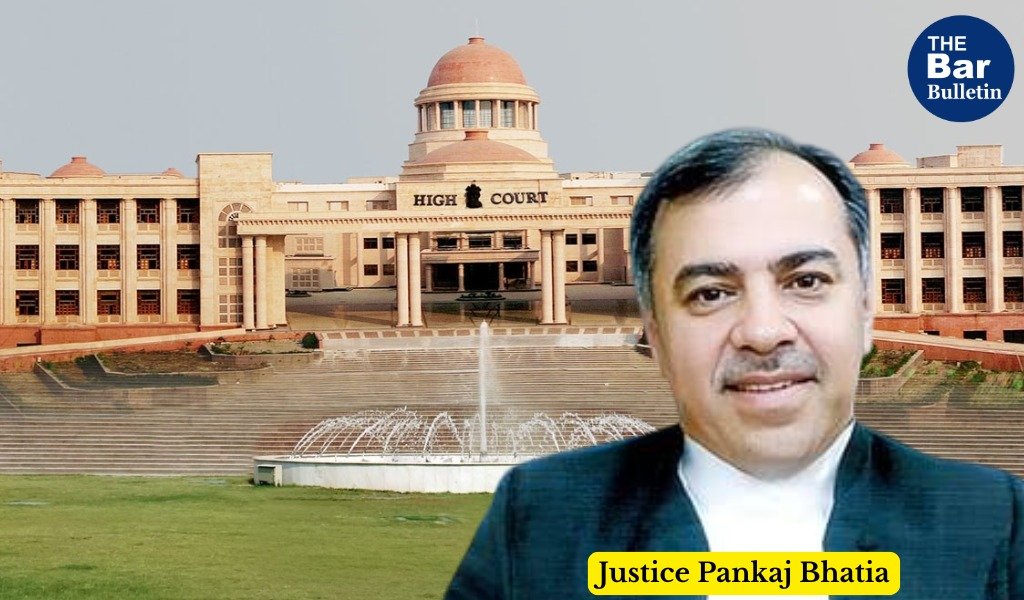

The Allahabad High Court (Lucknow Bench) has asserted that keeping Kasturba Gandhi Balika Vidyalaya teachers on perpetual contractual appointments despite taking regular teaching work is arbitrary. The Court held that teachers who have been continuously serving for years under KGBVs cannot be denied fair service conditions merely because their appointments are labelled as contractual.
Since KGBV teachers possess prescribed qualifications and discharge substantially similar academic responsibilities, the State must ensure equitable treatment in matters of service conditions and remuneration, added the Court while ordering the Uttar Pradesh Government to create the required teaching posts in KGBVs and establish a proper service framework for teachers working under the scheme.
Observing that a welfare scheme meant to promote girls’ education cannot be implemented by keeping teachers in a state of continuous uncertainty and inadequate remuneration, the Court directed the State to consider regularisation of eligible and long-serving KGBV teachers against the posts to be created, keeping in view their qualifications and years of service.
Briefly, the petitioners were teachers working in various Kasturba Gandhi Balika Vidyalayas (KGBVs) across Uttar Pradesh under the Samagra Shiksha/KGBV Scheme. Most of them had been serving on contractual arrangements for many years, with some completing more than 10 to 15 years of service.
Despite possessing the requisite qualifications and performing teaching duties similar to those of regular government school teachers, they were paid only a fixed honorarium and were re-engaged year after year through short-term contracts. They approached the High Court seeking regularization of their services and salary parity with regularly appointed teachers.
A Single Judge Bench of Justice Pankaj Bhatia observed that KGBVs were established to fulfil the constitutional goal of providing quality education to disadvantaged girls, particularly those from rural and marginalized backgrounds. While the objective of the scheme was laudable and had benefited lakhs of students, the teachers implementing the scheme had been left in a precarious position for years through repeated contractual appointments and inadequate remuneration.
The Court noted that there was no material to show any substantial difference between the duties discharged by KGBV teachers and those performed by regular teachers in government schools. The teachers were required to hold the same educational qualifications and were entrusted with similar academic responsibilities under the Right to Education Act, 2009.
Rejecting the State’s defence that no sanctioned posts existed, the Court held that the scheme had continued for over two decades and the work performed by the teachers was permanent and recurring in nature. The Court relied upon recent Supreme Court decisions emphasizing that long-term engagement under contractual labels cannot be used to deny fair treatment to employees who perform essential and continuing functions.
The Court further observed that engaging teachers for 11 months and 29 days, giving a one-day break, and continuing this practice for years without service security was inconsistent with constitutional guarantees. It held that a welfare scheme cannot be implemented through methods that infringe fundamental rights. The Court termed the extremely low honorarium paid to these teachers as unfair and observed that continuing such arrangements amounted to exploitation and offended Articles 14 and 23 of the Constitution.
The Court also emphasized that under the Right to Education Act, both the Centre and the State have responsibility towards provision of quality education and teaching staff. Therefore, lack of Central funding could not be used as a justification for denying benefits to teachers. The State must first meet its obligations and thereafter recover the Central share under the principle of ‘pay and recover’.
