
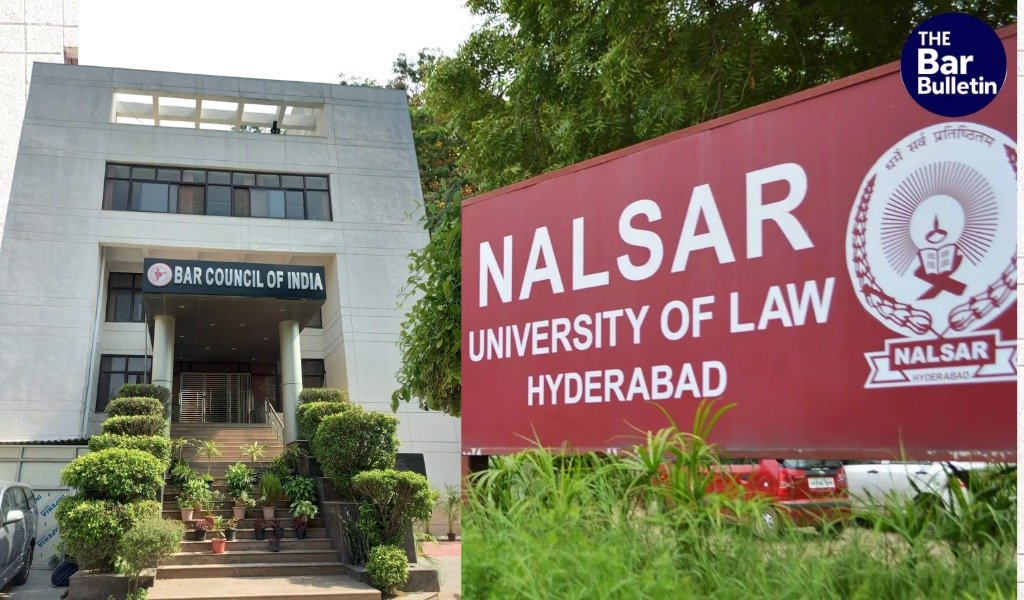
The Bar Council of India (BCI) has decided to close the proceedings against the 2026 graduating batch of NALSAR University of Law, Hyderabad, after considering representations from Senior Advocates, members of the Bar, law students and members of the public.
In an X post, BCI chairman Manan Kumar Mishra said it was satisfied that the 2026 batch as a whole had no role in any disturbance or movement connected with the recent controversy surrounding the university.
“
“After considering the representations and reactions of Senior Advocates, learned members of the Bar, law students and public spirited citizens, and being satisfied that the 2026 batch of NALSAR, Hyderabad, had no role in any disturbance or movement, the Bar Council of India has decided to close the proceedings altogether. No further action is required. I wish the students the very best for their careers. A word of wisdom: we take immense pride in our legal institutions, and the day you enrol, you become vanguards. Voice your opinions freely, but with respect and institutional decorum.
The highest judicial office is our collective pride. Dissent is welcome in a democracy; public ridicule of constitutional institutions is often counterproductive. Official communication to follow.”
The development comes after the BCI had earlier directed State Bar Councils to withhold enrolment of graduates from the NALSAR 2026 batch and had sought an inquiry into persons allegedly involved in opposing Chief Justice of India Justice Surya Kant’s presence as chief guest in the university’s upcoming convocation. The BCI subsequently rescinded the direction concerning the batch’s enrolment.
However, following strong opposition to the initial direction, the BCI issued another circular later the same day, rescinding its direction to State Bar Councils to disallow the enrolment of NALSAR’s graduating 2026 batch. The same circular, however, retained the requirement for the Vice-Chancellor to submit an inquiry report concerning the persons involved.
Responding to the communication, NALSAR Vice-Chancellor Prof. Srikrishna Deva Rao said the University would consider whether conducting such an inquiry fell within its constitutional powers and governance framework. He stated that the issue would be placed before the University’s Executive Council, its highest decision-making body under the statute establishing NALSAR, to determine whether such an inquiry was constitutionally permissible.