
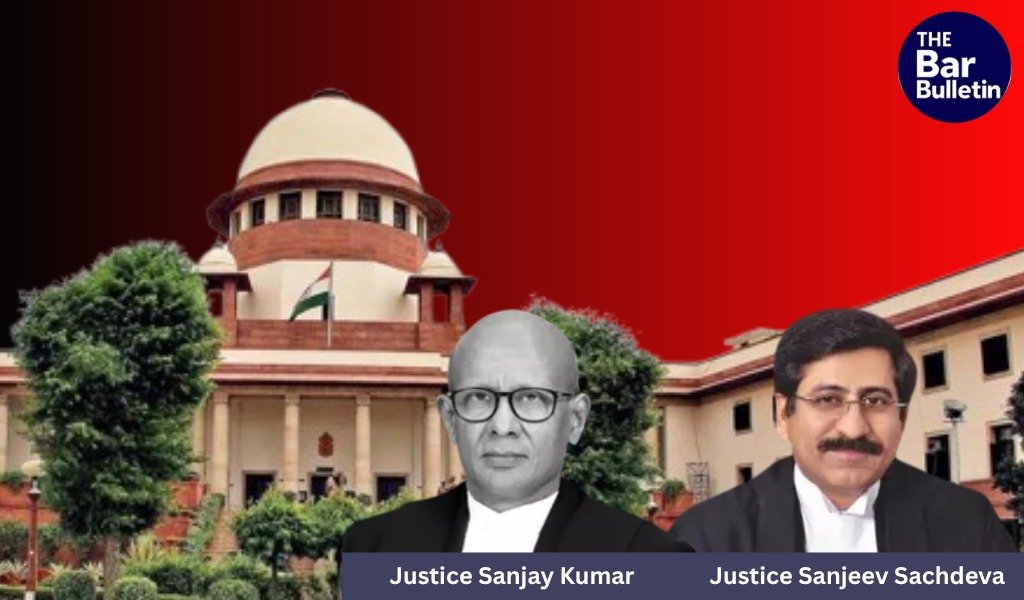

While restoring NCLT order in favour of Ganesh Benzoplast Ltd., the Supreme Court has held that a creditor classified as a contingent liability under a sanctioned rehabilitation scheme cannot later invoke insolvency proceedings to recover its full claim. The Court reiterated that once a rehabilitation scheme under SICA is approved, creditors cannot ignore its terms and seek recovery beyond the scaled-down amount provided therein.
Since the State Trading Corporation of India (STC) was shown as a contingent liability and never challenged that categorisation, it could at best be treated as an unsecured creditor upon crystallisation of its claim. The Court held that insolvency proceedings cannot be used to crystallise or quantify disputed claims, particularly where liability itself remains unsettled.
The Court held that allowing creditors to insist on full dues after rehabilitation would frustrate the very objective of corporate revival. As STC had already received Rs. 2.18 crore, representing the highest amount recoverable under the rehabilitation scheme, there was nothing further left for adjudication under Section 9 IBC.
Briefly, the dispute arose when the State Trading Corporation of India (STC) initiated insolvency proceedings under Section 9 of the Insolvency and Bankruptcy Code, 2016 against Ganesh Benzoplast Ltd. claiming dues exceeding Rs. 24 crores arising from export transactions, domestic transactions, and non-submission of C-Forms. Earlier, the company had been declared a sick industrial company under the Sick Industrial Companies (Special Provisions) Act, 1985, and a rehabilitation scheme was approved, under which unsecured creditors were entitled to only 25% of their principal dues.
Importantly, STC was not listed as an unsecured creditor in the rehabilitation scheme but was shown as a ‘contingent liability’ of about Rs. 11.35 crore. STC never challenged this classification when the scheme was circulated or approved.
The National Company Law Tribunal (NCLT) held that STC could, at best, be treated as an unsecured creditor under the rehabilitation scheme and directed payment of Rs. 2.18 crore, representing 25% of the principal dues. However, the National Company Law Appellate Tribunal (NCLAT) later restored the insolvency petition for fresh consideration, holding that STC could not be compelled to accept only 25% of its dues.
A Two-Judge Bench comprising Justice Sanjay Kumar and Justice Sanjeev Sachdeva observed that STC had been consciously categorized as a contingent liability in the rehabilitation scheme and had never objected to or challenged that classification despite having opportunities to do so. Therefore, it could not later seek a status different from what the scheme provided.
The Court further noted that the options under Clause 11.11 of the rehabilitation scheme were available only to unsecured creditors and not to contingent liabilities. STC’s claim had never been crystallized into a legally determined debt. Consequently, when STC issued the demand notice and filed insolvency proceedings, it was not acting in accordance with the rehabilitation scheme.
Relying on Modi Rubber Limited v. Continental Carbon India Limited [(2023) 17 SCC 263], the Court reiterated that once a rehabilitation scheme is sanctioned under SICA, it becomes binding on all creditors, including unsecured creditors. Creditors cannot refuse the scaled-down settlement and later insist on recovering their entire dues, as that would defeat the objective of reviving sick companies.
The Court also found that STC’s argument regarding payment in five annual instalments was misconceived because its claim had never been crystallized. Since it remained a contingent liability, STC could not insist that the instalment mechanism should have commenced from 2015. Moreover, instead of pursuing crystallization of its claim, STC directly invoked the IBC, which is not a forum for determining or quantifying disputed liabilities.
The Supreme Court noted that STC had already received Rs. 2.18 crore pursuant to the NCLT’s order and had not challenged the quantification of that amount. Therefore, there was nothing further left to be adjudicated in the insolvency proceedings.
