
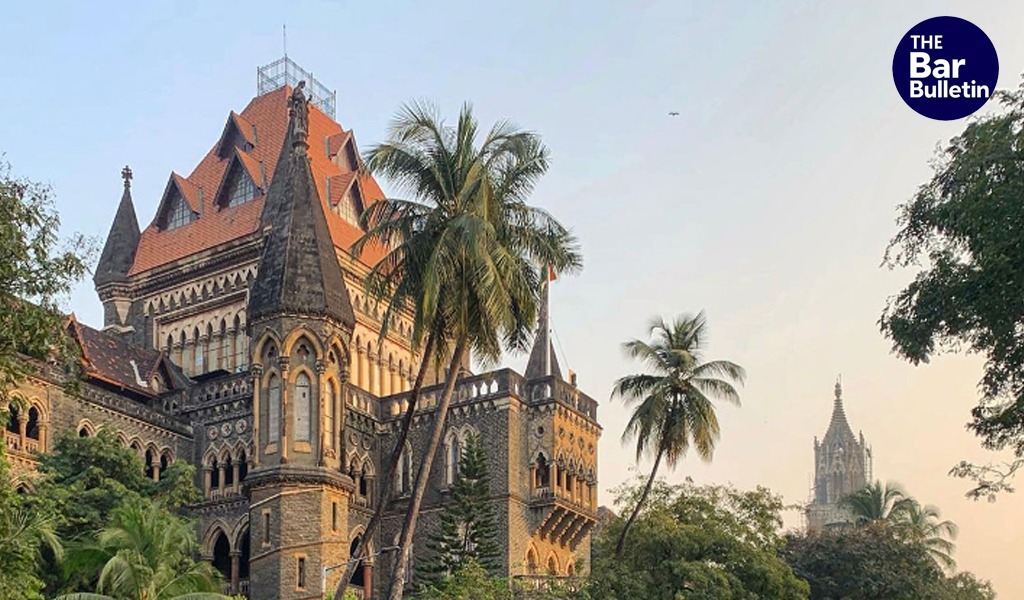

The Bombay High Court has quashed a penalty demand of ₹54.08 lakh imposed on infrastructure company IVRCL Limited for allegedly unauthorised excavation and transportation of minor minerals within the IIT Bombay campus, holding that the proceedings reflected a complete non-application of mind and misuse of statutory powers. Justice Kamal Khata also imposed costs of ₹5 lakh on the State of Maharashtra for compelling the petitioner to engage in nearly a decade of avoidable litigation.
The dispute arose from a construction contract awarded to IVRCL by the Department of Atomic Energy for the construction of a computer centre and engineering complex at IIT Bombay. Under the contract, surplus excavated earth was required to be transported and deposited within designated dumping areas located inside the IIT campus. Despite complying with the contractual terms, the company was issued a show-cause notice alleging unauthorised excavation of minor minerals and was subsequently subjected to a penalty of ₹54.08 lakh under Section 48(7) of the Maharashtra Land Revenue Code (MLRC).
The petitioner contended that the excavated material had never left the IIT campus and had merely been used for levelling low-lying areas within the same premises. It argued that the authorities wrongly treated the movement of earth between different survey numbers within the campus as unauthorised extraction and disposal of minor minerals.
Accepting these submissions, the Court found that the very foundation of the proceedings was legally untenable. It observed that survey numbers are primarily revenue identifiers and that the authorities had completely overlooked the fact that the entire land was allotted to and possessed by IIT Bombay. The Court held that the mere movement of excavated material from one survey number to another within the same campus could not justify the imposition of a penalty under Section 48(7) of the MLRC.
The Court further noted that the show-cause notice itself was fundamentally defective. During the hearing, it emerged that the notice purportedly invoked Section 29(4) of the “Mumbai Minor Minerals Act, 1955″—an enactment and provision that did not exist. Justice Khata observed that the authorities had invoked a non-existent statutory provision and failed to disclose the actual legal basis for the proposed action, rendering the proceedings jurisdictionally flawed.
Referring to earlier decisions of the Supreme Court and the High Court, the Court reiterated that ordinary earth excavated during development work and redeployed on the same plot does not attract royalty or penalty merely because it has been excavated. It also relied on a 2015 State notification exempting royalty on earth extracted and utilised on the same plot for land levelling and development activities.
Expressing strong disapproval of the conduct of the authorities, the Court observed that the State, as the largest litigant, must function as a model litigant and avoid needless litigation. It criticised the concerned officials for failing to understand the applicable law, defending orders contrary to settled legal principles, and dragging the petitioner into prolonged and unnecessary proceedings. The Court remarked that disputes of this nature should have been resolved administratively at the outset rather than escalating into years of litigation.
Holding that the case disclosed a serious misuse of statutory power coupled with a lack of accountability, the Court imposed costs of ₹5 lakh on the State. It also granted liberty to the State to identify officers responsible for initiating and continuing the litigation and to consider recovering the amount from them. Additionally, the Deputy Secretary of the Revenue and Forest Department was directed to file an affidavit within eight weeks detailing measures adopted to prevent recurrence of similar litigation.
The matter has been listed on 24 August 2026 for compliance.
