
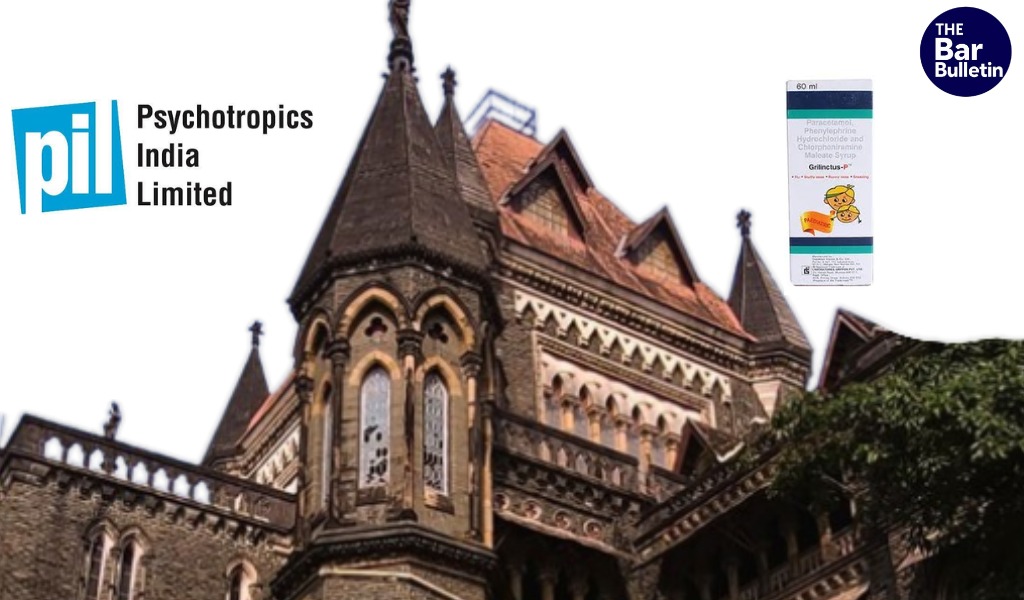

The Bombay High Court has held that, in assessing deceptive similarity, rival marks must be compared as a whole on the basis of their overall structural, phonetic and visual impression, and in the case of pharmaceutical products a stricter standard applies because even a possibility of confusion must be avoided. On that standard, the Court held that “GRILINCTUS” and “PIL-LINCTUS” are deceptively similar, the hyphen does not remove the likelihood of confusion, and the fact that the common element may be descriptive does not, in the facts of this case, negate infringement or passing off where the overall impression remains confusingly similar. The Plaintiffs, having shown prior registration, long-standing use, goodwill, and absence of acquiescence, made out a strong prima facie case for interim relief.
A Single Judge Bench of Justice Arif S. Doctor observed that deceptive similarity had to be assessed by comparing the rival marks as a whole and from the perspective of a person of average intelligence and imperfect recollection, considering the overall structural, phonetic and visual impression created by the marks. The Bench further observed that in cases involving medicinal and pharmaceutical products, a stricter approach must be adopted since confusion between medicinal products may have serious or disastrous consequences.
Applying those principles, the Bench was of the prima facie view that “GRILINCTUS” and “PIL-LINCTUS” were aurally, phonetically and structurally similar, and that the suffix “LINCTUS” dominated and virtually eclipsed the prefixes “GRI” and “PIL”. The Bench observed that the hyphen in the impugned mark was insufficient to obviate confusion, particularly in the context of pharmaceutical sales in India where even prescription drugs are often ordered over the telephone and sold without prescriptions. It also noted that the Defendant had itself admitted before the Registrar of Trade Marks that there existed a “very high degree of phonetic, structural and visual similarity” between the rival marks.
The Bench further observed that even assuming “LINCTUS” was descriptive, deception and confusion were nevertheless likely to arise, and the Defendant, having itself sought registration of “PIL-LINCTUS”, could not now be permitted to contend that “LINCTUS” was merely descriptive or common to trade. It rejected the Defendant’s contention that the Plaintiffs were seeking to monopolise “LINCTUS”, holding that the Plaintiffs were protecting their registered composite mark as a whole. The Bench also found that the Defendant’s conduct weighed against it at the interlocutory stage, noting its knowledge or deemed knowledge of the Plaintiffs’ mark, its abandoned applications for “PIL-LINCTUS” and “BRILINCTUS”, inconsistent pleas on user, and failure to produce material evidencing substantial use.
The Bench accepted, prima facie, that the Plaintiffs had established registration since 1973, extensive and continuous use, substantial goodwill and reputation, and diligence in protecting their statutory rights. It also held that use by Franco Indian Pharmaceuticals, being a sister concern using the mark under licence from the Plaintiffs, would inure to the Plaintiffs’ benefit. The defences of delay and acquiescence were rejected, since delay by itself would not disentitle relief and acquiescence required proof of active encouragement or assent, which was absent. The Bench also held that mere reliance on third-party registrations containing “LINCTUS” was insufficient without substantial proof of actual third-party use.
Also Read Madhya Pradesh HC: EWS Candidates Cannot Claim Age Relaxation as a Matter of Right
Briefly, the plaintiffs sought an interim injunction restraining the Defendant from infringing the Plaintiffs’ registered trade mark “GRILINCTUS” and from passing off the Defendant’s product under the mark “PIL-LINCTUS”. Plaintiff No. 1 had obtained registration of “GRILINCTUS” on August 31, 1972, and the Court recorded that the Plaintiffs claimed continuous use and goodwill in the mark through sales figures, invoices, promotional material and prior enforcement actions. The Defendant’s case was that it had adopted “PIL-LINCTUS” in 2008, had applied for registration in Class 5 on January 17, 2018, and after the first application was abandoned following the Plaintiffs’ opposition, filed a fresh application on October 08, 2021, which was also opposed. The dispute arose in relation to rival cough syrup/pharmaceutical products sold under the competing marks.
The Plaintiffs contended that “PIL-LINCTUS” was phonetically, visually and structurally similar to “GRILINCTUS”; that both products were medicinal preparations for the same ailment though with different compositions; that a stricter standard must apply in pharmaceutical cases; that the Defendant’s adoption was dishonest; and that the Defendant had taken inconsistent stands regarding user of the impugned mark. The Defendant, on the other hand, argued that “PIL” was derived from its corporate name Psychotropics India Limited, that “LINCTUS” was descriptive/common to trade and publici juris, that the marks had to be compared as a whole, that the prefixes “GRI” and “PIL” distinguished the rival marks, and that there was delay, acquiescence, and no likelihood of confusion.
