
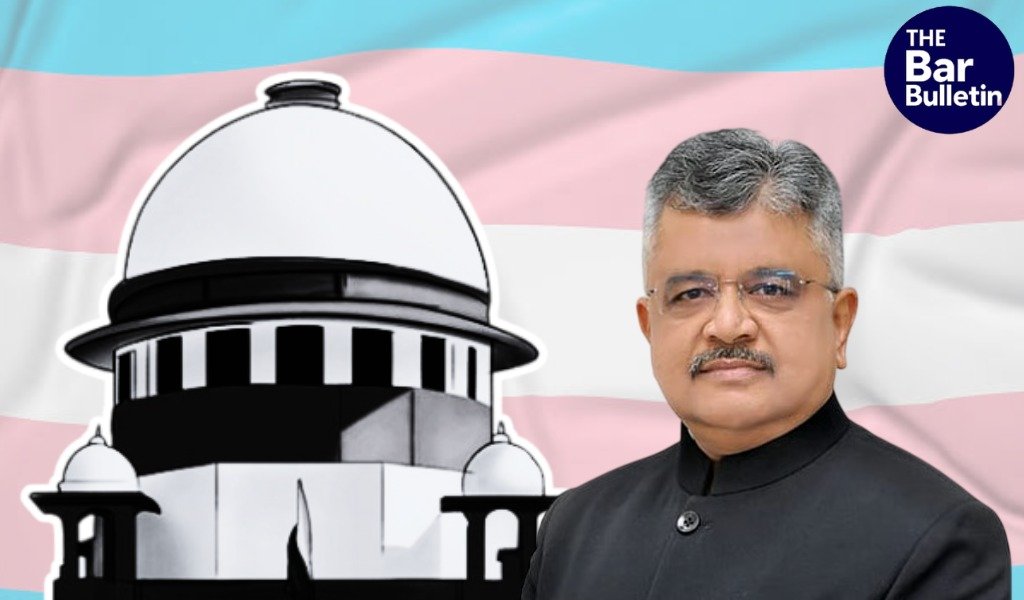

Arguing in defence of the Transgender Persons (Protection of Rights) Amendment Act, 2026, Solicitor General Tushar Mehta told the Supreme Court that recognising a person’s self-perceived gender identity irrespective of biological sex would render “169 statutory provisions” unworkable.
Addressing the Bench, the Solicitor General submitted:
“
“If I am a man but I think I am a woman, that issue is accepted. There are 169 statutory provisions which become unworkable.”
The Solicitor General argued that the amendments address practical difficulties arising under several statutes that draw distinctions based on biological sex. Referring to the amended framework, he submitted that the law now recognises transgender persons on the basis of physical characteristics, unlike the earlier position which, according to him, was founded on self-perceived gender identity.
The petitioners, however, contend that the amendments depart from the principle of self-identification recognised by the Supreme Court in NALSA v. Union of India (2014) and substantially curtail the rights of transgender persons by making biological characteristics central to legal recognition.
The Bench of Chief Justice Surya Kant, Justice Joymalya Bagchi and Justice V Mohana issued notice on the petitions and sought responses from the Union Government.
Also Read: Peace, Mediation and Rule of Law are Global Necessities: Union Law Minister Arjun Ram Meghwal