
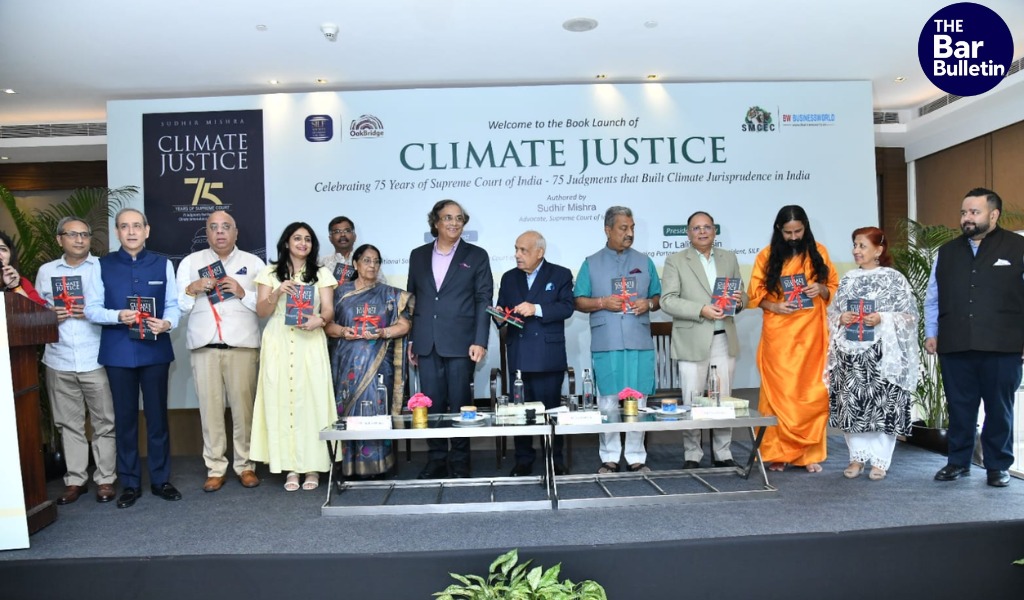

Mr. Sudhir Mishra, Environmental Lawyer and Supreme Court of India Advocate, and Founder and Managing Partner, Trust Legal, Advocates and Solicitors, launched his long-awaited book titled “Climate Justice: Celebrating 75 Years of Supreme Court of India: 75 Judgments that Built Climate Jurisprudence in India,” released by OakBridge Publishing.
The prestigious book launch event was held at The Lalit, New Delhi, and was attended by distinguished personalities in the fields of law, policymaking, and environmental law. The event was chaired by Dr. Lalit Bhasin, Managing Partner of Bhasin & Co., and Mr. Chetan Sharma, Additional Solicitor General of India, was the Guest of Honor. The closing Address was delivered by Ms. Petal Chandhok, Partner, Trust Legal.
Distinguished Attendees included Senior Advocate Joy Basu, Senior Advocate Mr. Uttam Dutt, Eminent Journalist Padma Shri Alok Mehta, Senior Lawyer Meghna Mishra, General Counsel, LG Electronics Rajiv Malik, and Editor-in-Chief, Business World Anurag Batra.
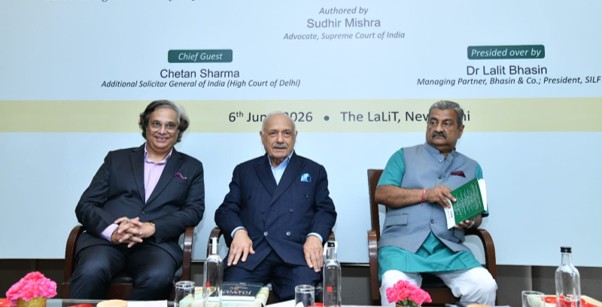
In his address, Mr. Chetan Sharma placed the book in the larger evolution of environmental jurisprudence in India. He cited the constitutional framework under Article 48A and Article 51A(g), and the judicial expansion of Article 21 to include the right to a clean and healthy environment. He talked about the key pillars like sustainable development, precautionary principle, and polluter pays principle, and also mentioned new challenges like climate change, loss of biodiversity, and extreme weather events.
Importantly, Mr Sharma stressed the need for balance between environmental protection, economic development, and national security. Referring to contemporary policy debates like the Great Nicobar Project, he observed that while ecological concerns must be addressed with “scientific monitoring and genuine mitigation”, ecological sensitivity “cannot become a permanent veto on strategic thinking”. He said India has to go for development with ecological responsibility, especially with its strategic and maritime interests in a changing Indo-Pacific.
There is a philosophical dimension to this, he said, that climate is not just an external environmental factor but an internal factor, “climate within one’s self,” which determines the larger balance in society and the ecosystem.
Swami Advaitanand Giri offered a complementary perspective on practical and behavioural approaches towards environmental sustainability. He proposed massive afforestation drives, particularly planting native species like the peepal tree, due to its much higher carbon sequestration potential. If such interventions are implemented systematically, he suggested, they would have a significant impact on urban ecological conditions, including air quality in cities such as Delhi.
Swami Advaitanand Giri also stressed the need to include environmental responsibility in the education system. He called for “one student, one tree” policies, connecting environmental actions with learning outcomes, and stressed that long-term climate solutions needed to be founded on behavioural change, responsibility, and value-based education.
Senior Advocate Mr. Sridhar Potaraju recalled Mr. Mishra’s long years of dedication towards environmental causes and mentioned how Mr. Mishra was involved in educating forest officers, enforcing wildlife protection laws, and touring the entire country for the purpose of promoting environmental governance. It can be said that through the hard work of Mr. Mishra, there has been an increased awareness among corporate and legal institutions regarding environmental legislation.
Speaking to the audience present at the venue, Mr. Sudhir Mishra spoke about the aim of his book, which was to “mainstream environmental law.” The book not only caters to lawyers and legal professionals but also to students and common people, who need a concise understanding of environmental jurisprudence. It has been stressed by Mr. Mishra that the environment should become a matter of personal concern and not remain limited to laws only.
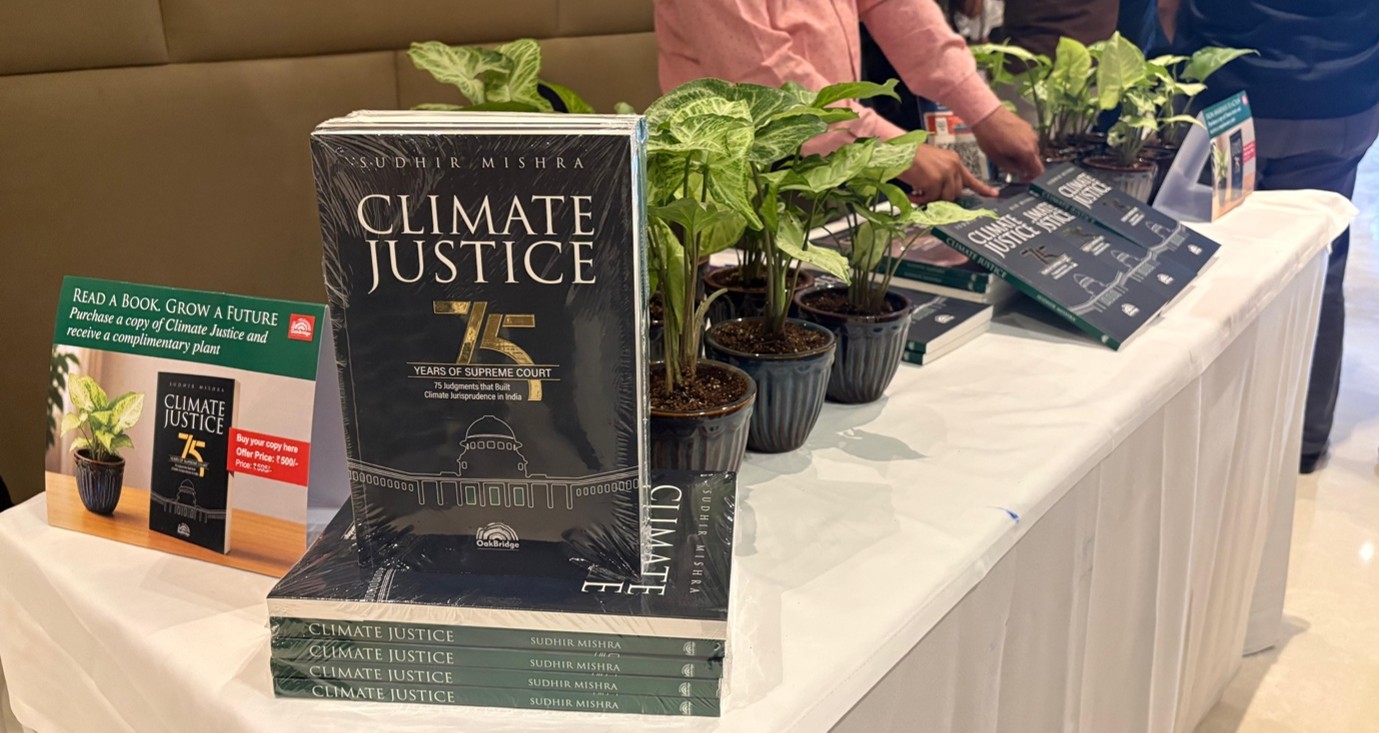
There was another program on the line, which was a program of sustainability, where those who purchased the book were handed saplings, signifying their environmental responsibility. The official launch of the book was done by Dr. Lalit Bhasin along with the Chief Guest and the Author, adding an important element to the existing body of literature on environmental law.