
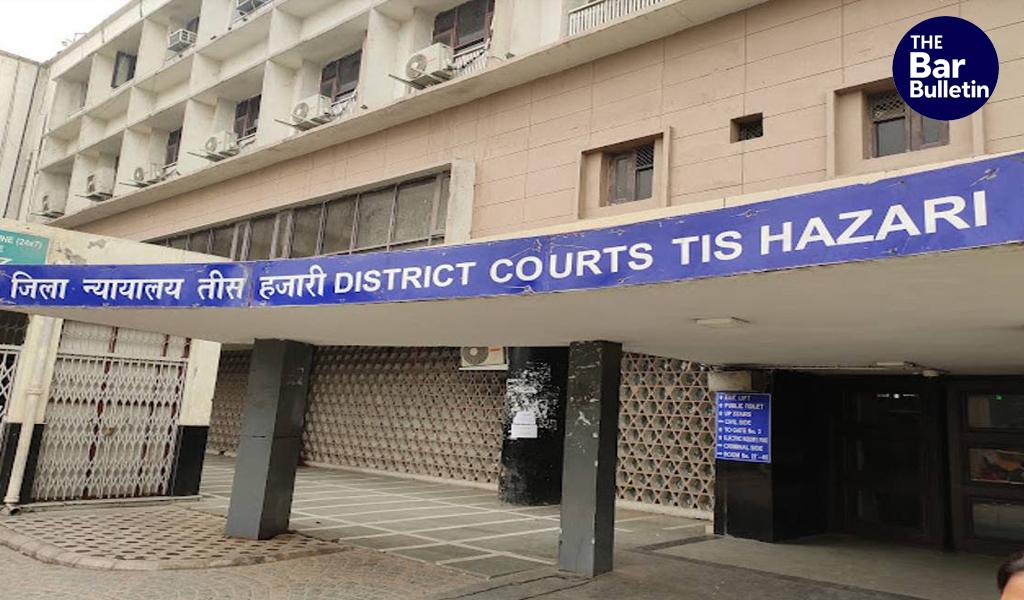

The Tis Hazari Courts, Delhi, passed a final decree in a partition suit concerning a Connaught Place property, bringing to a close a proceeding first instituted on 8 December 1972, over 53 years ago.
The decree was passed by Sh. Sachin Sood, DJ-01 (Central), Tis Hazari Court, Delhi, directing the auction sale of the built-up portion of the suit property, with the sale proceeds to be distributed among the parties in proportion to their respective shares.
The case arose from a suit, originally instituted in 1972, which had over the decades expanded to involve a large number of legal heirs across several branches of the family. A Local Commissioner appointed by the Court reported that despite repeated efforts, the parties were unable to arrive at a consensus regarding division of the property and partition by metes and bounds was impracticable because of the following reasons:
• The property sits in the Lutyens’ Zone, where sub-division of the property is not permissible.
• The property is treated as a heritage property, and L&DO does not permit further construction on certain portions of it.
• Most co-sharers had already sold their interests in five ground-floor shops (F-1, F-2, F-4, F-5 and F-6), while Shop F-7 had been sold by all co-sharers; only Shop F-3 remained jointly owned.
• Different portions of the property were in the possession of co-sharers, tenants and other occupants.
• Litigation concerning the unbuilt portion of the property and disputes relating to certain sale deeds was pending before the Delhi High Court.
The Commissioner recommended sale of the property and distribution of the proceeds among the shareholders.
The Court observed that most of the ground-floor shops had already been sold by several co-sharers, litigation concerning certain portions of the property remained pending, and the property fell within the Lutyens’ Zone where subdivision and further construction were restricted. Given the number of stakeholders and the nature of the property, the Court held that physical partition was not feasible.
Also read- Can Courts Add Left-Out Properties After Passing Preliminary Partition Decree? SC To Decide
Relying on the Partition Act, 1893 and the Delhi High Court’s Full Bench decision in Indu Singh v. Prem Chaudhary, 2018 SCC OnLine Del 8951, the Court held that where a property cannot reasonably or conveniently be divided, sale of the property and distribution of the proceeds is the most appropriate course. It accepted the Local Commissioner’s conclusion that “the property cannot be split or conveniently divided among the shareholders. Therefore, the only option which can be suggested is the sale of the property after arriving at its market valuation by the court.”
Accordingly, the Court passed the following order:
1. The Court directed that the built-up portion of the suit property, including the ground-floor shops (F-1 to F-6), the first floor and the terrace floor, be sold through auction. The sale proceeds, after deduction of necessary expenses, are to be distributed among the parties according to their respective shares as determined in the preliminary decree dated January 2, 1980.
2. Before the property is put to public auction, the parties have been granted liberty to invoke Section 3 of the Partition Act, enabling one or more co-sharers to purchase the shares of the other co-sharers during execution proceedings.
3. The Court clarified that the sale or auction of the unbuilt portion of the property would remain subject to the outcome of a pending specific performance suit before the Delhi High Court.
4. Holding that an order of sale in a partition suit constitutes an instrument of partition under Section 2(15) of the Stamp Act, the Court directed that the final decree be engrossed on non-judicial stamp papers in accordance with Article 45 of the Stamp Act.
5. If any party fails to deposit the requisite stamp papers corresponding to its share, another party may do so on its behalf. The amount spent would then be recoverable from the defaulting party’s share of the auction proceeds.
6. The final decree is to be drawn after the filing of a valuation report in respect of the suit property and payment of the requisite stamp duty.
M/s Urban Improvement Company Pvt. Ltd., which occupies a portion of the property as a tenant, was directed to continue depositing the use and occupation charges already being deposited with the Court. The amount will be available for disbursement in accordance with the final decree.
