

The Delhi High Court has clarified that, in an appeal against refusal of interim injunction in a passing off action, the appellate court will not interfere with the discretionary order of the court of first instance unless the discretion has been exercised arbitrarily, capriciously, perversely, or in disregard of settled legal principles. On the merits of passing off, where the rival composite marks are not deceptively similar when viewed as a whole, the plaintiff has failed to prima facie establish goodwill in the allegedly copied standalone mark, and the material on record does not show misrepresentation or likelihood of confusion among the relevant class of consumers, interim injunction must be refused.
The Court also held that delay and prolonged inaction, particularly where the defendant has openly and continuously used the impugned mark and built its own goodwill, tilt the balance of convenience against grant of interim relief. Accordingly, the appeal was dismissed and directions were issued for expeditious recording of evidence, failing which the suit could be dismissed for non-prosecution.
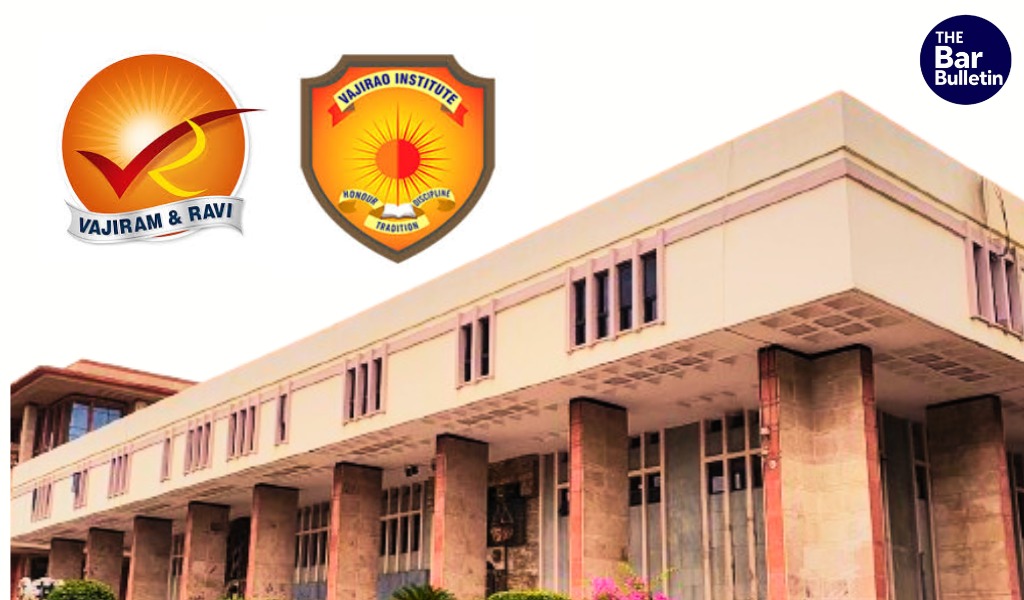
The Division Bench comprising Justice V. Kameswar Rao and Justice Manmeet Pritam Singh Arora observed that, in a passing off action, the plaintiff must establish goodwill in the mark, misrepresentation by the defendant, likelihood of confusion among customers, and consequent damage. It concurred with the Single Judge that the composite marks “VAJIRAM & RAVI” and “VAJIRAO & REDDY INSTITUTE”, when compared as a whole, were not deceptively similar.
The Bench further noted that the appellant had failed to prima facie establish reputation and goodwill in the standalone mark “VAJIRAM”, having placed no material such as sales figures or advertisement expenditure to support such a claim. It also accepted the prima facie view that the target audience comprised well-informed UPSC aspirants who were capable of distinguishing between the two institutes, and that the material relied upon, including interviews of successful candidates and concurrent advertisements over the years, did not support misrepresentation or confusion.
The Bench additionally took serious note of the appellant’s prolonged failure to lead evidence in the suit despite issues having been framed in 2020, and treated this conduct as indicative of lack of bona fides in prosecuting the action.
Briefly, the appeal arose from an order dated Sep 14, 2023 passed by the Single Judge of this High Court refusing interim injunction in a passing off action between two civil services coaching institutes, the appellant operating under the marks “VAJIRAM & RAVI”, “VAJIRAM & RAO” and “VAJIRAM”, and the respondent operating under “VAJIRAO & REDDY INSTITUTE”.
The appellant claimed to be the prior adopter and alleged that the respondent’s use of “VAJIRAO”, including as part of its composite mark, study material and domain name, was deceptively similar to the appellant’s marks, particularly “VAJIRAM” and the earlier mark “VAJIRAM & RAO”, and amounted to passing off.
The respondent however, contended that its mark had been used openly since at least 2007, that its device mark was registered, that the rival marks were to be compared as a whole, and that the relevant consumers, civil services aspirants, were discerning and unlikely to be confused.
