

The Gauhati High Court has held that where the Forest authorities, under the statutory framework of the Assam Minor Mineral Concession Rules, 2013, undertake notice-based scrutiny, inspection and record verification, and conclude that substantial quantities of minor minerals used in a Government project are not supported by valid permits or statutory documentation, the resulting royalty demand cannot be interfered with in writ jurisdiction merely because the contractor claims that the excavated earth was reused within the same site.
The issue of whether such earth was in fact internally reused is a disputed factual and technical issue requiring proper adjudication on evidence, and not re-appreciation under Article 226. The Gauhati High Court has ruled that a contractor’s claim of excavating and reusing earth within the same project site to claim royalty exemption requires strict source-wise verification, and such disputed technical facts cannot be adjudicated in a writ petition.
Accordingly, the Court upheld the impugned communications issued by the Divisional Forest Officer, Nagaon Division, whereby a demand of Rs. 1.45 crores was raised towards forest royalty, price of minor minerals, GST, income tax and penalty in relation to earth used in an EPC highway project, holding that they did not suffer from illegality, arbitrariness or want of jurisdiction warranting interference under Article 226 of the Constitution.
A Single Judge Bench of Justice Kardak Ete noted that the central issue was whether the impugned demand communications suffered from illegality, arbitrariness or lack of jurisdiction. It examined the statutory framework under Section 15 of the Mines and Minerals (Development and Regulation) Act, 1957 and Rules 5, 63 and 64 of the Assam Minor Mineral Concession Rules, 2013. The Bench observed that Rule 5 specifically governs quarrying and utilisation of minor minerals for Government projects and requires the department, agency or contractor granted permit to pay royalty and other dues in advance, while Rules 63 and 64 deal with illegal or unauthorised mining and the consequences flowing from it.
The Bench found from the record that before issuance of the first demand, the authorities had called for details from the petitioner through NHIDCL, sought clarifications, informed the petitioner about the proposed inspection, carried out field verification and then assessed liability on the basis of both inspection and documentary scrutiny. It therefore rejected the petitioner’s plea that the action was purely unilateral or that there was violation of natural justice. The Bench held that the petitioner had notice, was asked to furnish records, was allowed to file objections, and those objections were considered before the demand was reiterated.
On the petitioner’s principal submission that no royalty is payable where earth is excavated and reused within the same site, the Bench said this cannot be accepted as a blanket proposition in the facts of the case. It held that such a claim depends on proper source-wise verification, contemporaneous measurement records and engineering data. Since the respondents had specifically recorded that the claim of internal utilisation was not fully substantiated by documentary material, the Bench said the matter turned on disputed technical facts which could not be re-appreciated in writ jurisdiction under Article 226.
The Bench also observed that once the authorities found non-substantiation of lawful procurement and utilisation of mineral quantities, invocation of Rules 63 and 64 could not be said to be without jurisdiction. It further held that the EPC contract clearly placed responsibility on the contractor to obtain all permits, comply with law and bear royalties and statutory dues, and therefore NHIDCL’s protective conduct pending resolution of statutory dues could not be termed arbitrary.
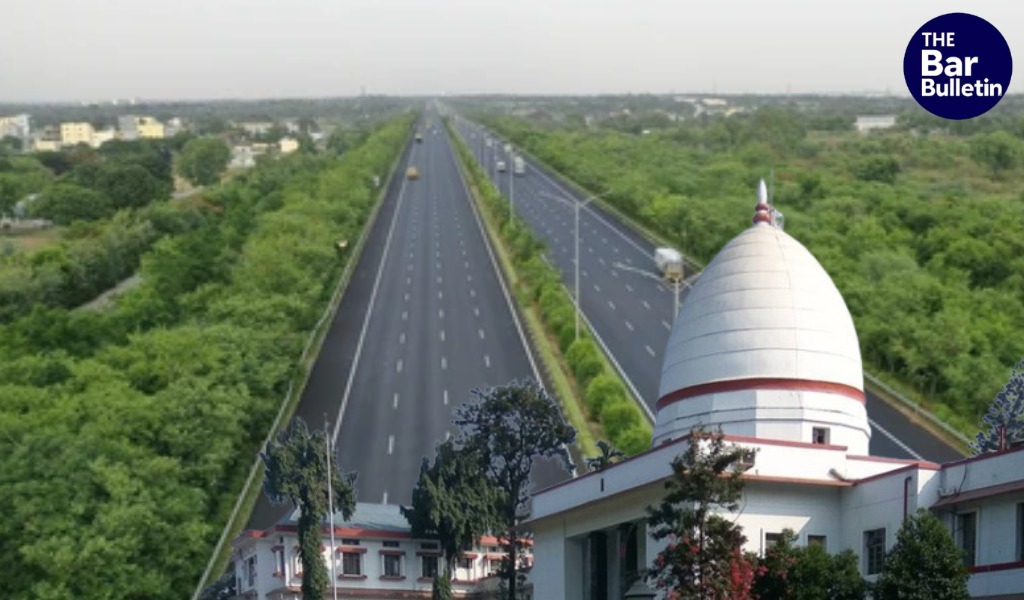
Briefly, a petition was filed by Simplex Infrastructures Ltd. challenging three communications issued by the Divisional Forest Officer, Nagaon Division, whereby a demand of Rs. 1.45 crores was raised towards forest royalty, price of minor minerals, GST, income tax and penalty in relation to earth used in an EPC highway project for four-laning of NH-37 from Rangagara to Kaliabor Tiniali in Nagaon district. The petitioner had been awarded the contract by NHIDCL and claimed that while royalty had been paid for earth procured from outside sources, a substantial quantity of earth had been excavated from within the project Right of Way itself and reused at the same site, for which, according to it, no royalty was payable.
The petitioner’s specific case was that out of 2,54,749.57 CuM of earth used in the project, royalty had already been paid on 1,46,267.17 CuM procured externally, while 1,08,482.04 CuM had been excavated and reused within the same project site. It objected that the forest authorities conducted a field inspection without properly associating it, assessed only 28,200 CuM as site-excavated earth, treated the remaining quantity as externally sourced, and then raised the impugned demand. The petitioner also alleged that work at the project site was obstructed by deployment of Forest Guards until it gave an undertaking that whatever royalty was legally payable would be paid within one month.
On the other hand, the Forest Department argued that the contractor had failed to furnish valid permits, transit challans, lifting permits and royalty receipts for substantial quantities of minor minerals allegedly used in the project. According to the State, after scrutiny of records, field inspection and reconciliation of materials furnished by NHIDCL and the petitioner, the competent authority concluded that quantities unsupported by statutory documentation attracted liability under the Assam Minor Mineral Concession Rules, 2013. NHIDCL separately took the stand that under the EPC Contract Agreement, the contractor alone was responsible for obtaining all applicable permits and bearing royalties, taxes and statutory dues.
