
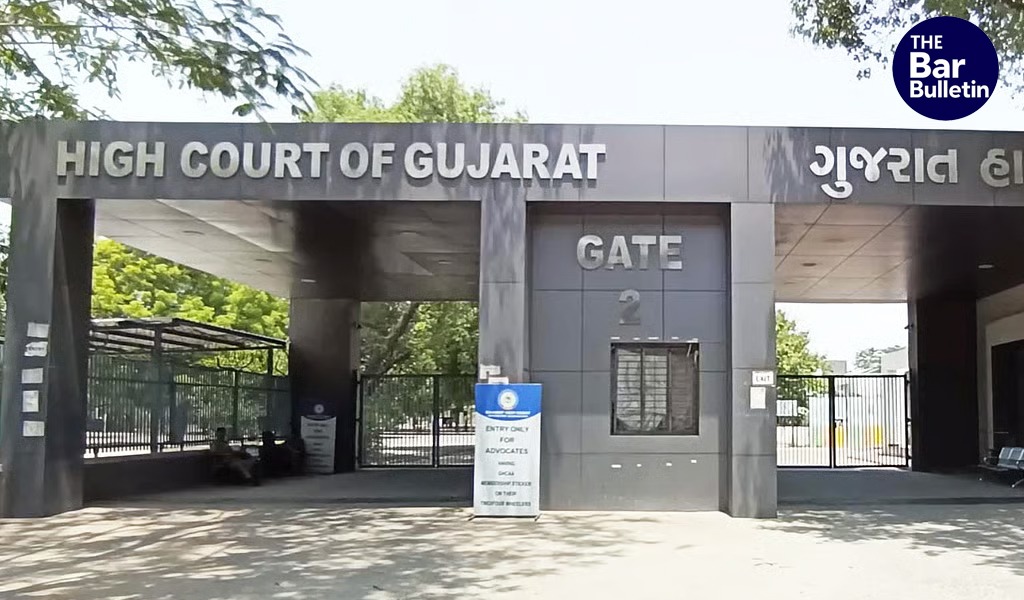

The Gujarat High Court has disposed of a two-decade-old suo motu Public Interest Litigation concerning illegal religious structures on public land, while directing the State Government to continue the process of removing, relocating, or regularising such structures in accordance with the Supreme Court’s directions. A Division Bench comprising Chief Justice Sunita Agarwal and Justice D.N. Ray held that substantial compliance had been achieved over the years and that continued monitoring by the Court was no longer necessary.
The PIL was initiated by the High Court in 2006 following media reports published by The Times of India. The matter subsequently reached the Supreme Court, which, through a series of orders, directed all States and Union Territories to prohibit fresh unauthorised religious constructions on public streets, parks, and other public places, and to formulate policies for the removal, relocation, or regularisation of existing encroachments. In 2018, the Supreme Court remitted the matter to the respective High Courts to supervise implementation of its directions.
The Bench noted that, pursuant to its orders, the Gujarat Government had been filing periodic affidavits detailing action taken across all 34 districts and eight municipal corporations. According to the latest affidavit filed by the Principal Secretary, Home Department, the State had, between 1 March 2026 and 30 June 2026, removed, relocated, or regularised a substantial number of unauthorised religious structures, while issuing fresh notices and continuing enforcement action wherever required. The State also undertook that the exercise would remain a continuous and ongoing process.
Recording the undertaking, the High Court observed that it had monitored the issue for nearly 20 years and that there had been substantial compliance with both its own directions and those issued by the Supreme Court. The Court, therefore, disposed of the PIL while directing the Principal Secretary, Home Department, to ensure continued implementation of the directions in their true letter and spirit.
To ensure continued oversight, the Court directed the Principal Secretary to authorise a subordinate officer to collect data from the authorities concerned and submit a consolidated compliance report to the High Court every six months through the Registrar General.
