
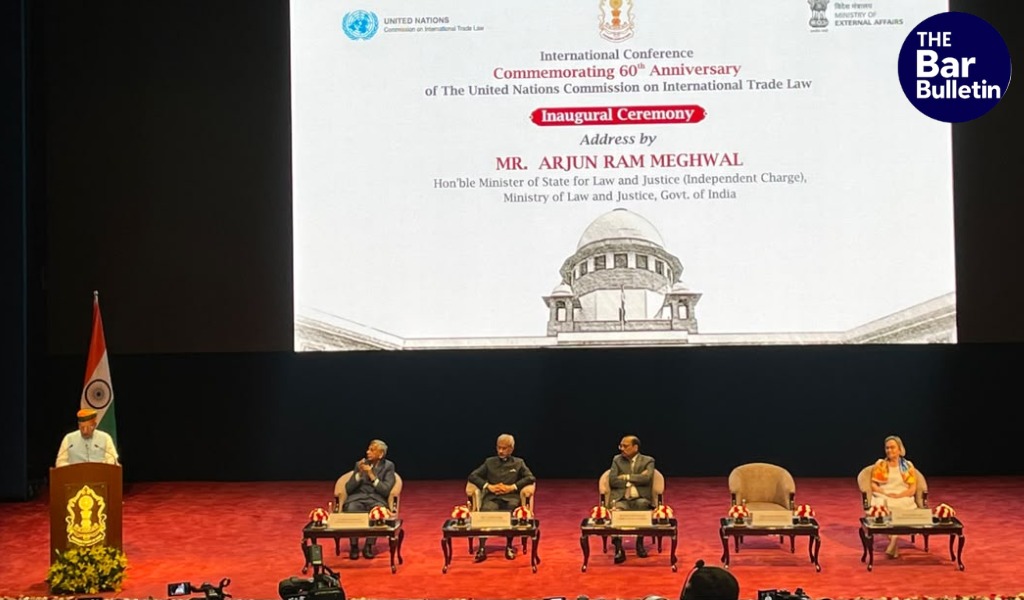

The Supreme Court of India, in collaboration with the Ministry of External Affairs and the United Nations Commission on International Trade Law (UNCITRAL), on Friday inaugurated the international conference commemorating the 60th anniversary of UNCITRAL, bringing together judges, policymakers, diplomats, legal scholars and practitioners from India and across the world to deliberate on the future of international commercial law, arbitration, mediation, digital trade and cross-border dispute resolution.
The inaugural session featured addresses by UNCITRAL Secretary Anna Joubin-Bret, Attorney General for India R. Venkataramani, Union Minister of State (Independent Charge) for Law and Justice Arjun Ram Meghwal, External Affairs Minister Dr. S. Jaishankar and Chief Justice of India Surya Kant, who collectively highlighted the importance of strengthening international legal cooperation amid rapid technological transformation, geopolitical uncertainty and evolving patterns of global commerce.
UNCITRAL Secretary Highlights India’s Leadership, Calls for Stronger International Legal Cooperation
Delivering the welcome address, Anna Joubin-Bret, Secretary of UNCITRAL, noted that India has remained a member of the Commission since its inception in 1966 and has consistently contributed to its work on arbitration, mediation, insolvency and digital trade. Welcoming judges, legal experts and delegates from India and abroad, she said:
“
“How fitting that we gather here in India, one of the eight countries that have been a member State of UNCITRAL since its inception without interruption, always steering and supporting the work of the Commission. UNCITRAL highly values its longstanding ties and close cooperation with the Indian judiciary and the Government and is grateful for India’s active contributions to the work of UNCITRAL and its working groups.”
The Secretary highlighted several significant developments adopted by UNCITRAL during its latest session in New York, including the United Nations Convention on Negotiable Cargo Documents (the Accra Convention), which extends the benefits of negotiable transport documents across all modes of transport, whether by land, sea, air or rail, while also enabling their use in electronic form. She said the Convention is expected to facilitate trade, reduce paperwork and lower transaction costs.
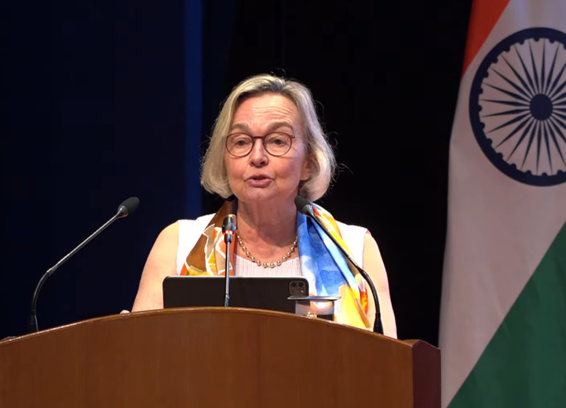
Joubin-Bret also referred to the Commission’s recent work on digitalisation of dispute resolution, stating that UNCITRAL had adopted a package of measures to strengthen confidence in the use of electronic communications in arbitration, including recommendations relating to recognition and enforcement of electronically issued arbitral awards under the New York Convention.
Addressing future priorities, she said the Commission had initiated work on dispute resolution in the digital economy, including the use of artificial intelligence, besides continuing work on electronic commerce, insolvency and public procurement. Concluding her address, Joubin-Bret stressed that international law continues to play a vital role despite increasing global challenges and called India’s leadership indispensable for strengthening the international legal order. She remarked:
“
“Indeed, we’re witnessing strong challenges to international law. International law is under attack in many places. The United Nations is being sidelined and its very existence is being questioned. Yet year after year States continue participating in UNCITRAL’s work. International law matters. The United Nations matters… India’s leadership is critical and its importance as a current and future contributor to the development of legal standards, both within the Asia-Pacific and globally, cannot be overstated.”
Attorney General: UNCITRAL Achieved Global Legal Consensus
Attorney General for India R. Venkataramani praised the United Nations Commission on International Trade Law (UNCITRAL) for fostering global consensus in international commercial law, remarking that the institution had achieved what was otherwise difficult even among lawyers, bringing together representatives from around 70 countries to agree on 13 model laws and conventions. Opening his address on a lighter note, Venkataramani observed:
“
“Lawyers’ reputation to argue over every weak precedent precedes them in every jurisdiction. And yet somehow we have UNCITRAL that has managed to get lawyers from 70 countries to agree, developing by consensus 13 model laws and conventions. A feat like none other and a feat worth celebrating.”
Highlighting UNCITRAL’s contribution to inclusive law-making, Venkataramani said the Commission had “democratized” the development of international commercial law by ensuring that countries from Asia, Africa, Latin America and the Middle East were no longer merely users of international legal norms but active contributors to their evolution.
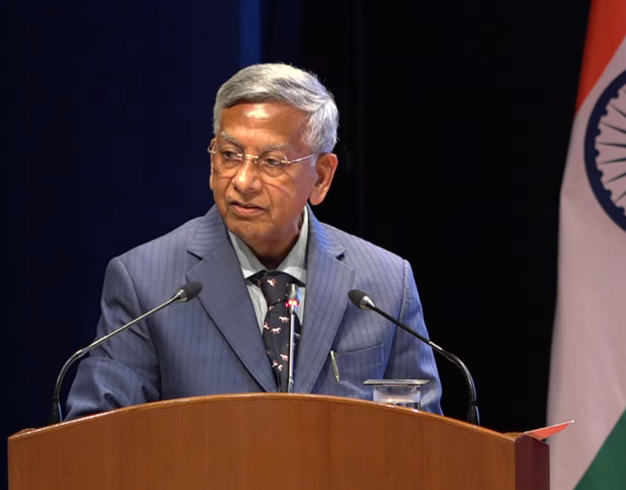
The Attorney General said that the institution’s contribution extended beyond arbitration to areas such as insolvency, electronic commerce, secured transactions, public procurement and investor-State dispute settlement. He noted that UNCITRAL’s legislative texts on electronic commerce had laid down the principles of technology neutrality and functional equivalence, ensuring that electronic communications and signatures receive the same legal recognition as paper documents, principles that now underpin digital trade laws in over 100 jurisdictions.
Speaking about India’s engagement with UNCITRAL, Venkataramani acknowledged that while India may not have adopted every UNCITRAL text, the Commission’s influence on Indian commercial law had been “deep to say the least.”
Looking ahead, the Attorney General said the next phase of international commercial law must focus on ensuring that harmonised legal frameworks remain inclusive, technologically responsive and truly global.
“
“If the last 60 years have been about harmonizing the law of international commerce, the next 60 will undoubtedly be about ensuring that this law remains inclusive, technologically responsive and truly global.”
In his concluding remarks, Venkataramani urged UNCITRAL to continue broadening participation from the Global South, observing that the institution’s relevance would endure if it learnt from the experiences and shortcomings of other multilateral trade institutions, including the World Trade Organisation.
Law Minister: Timely Justice is An Economic Necessity
Union Law Minister Arjun Ram Meghwal highlighted India’s legislative and judicial reforms aimed at strengthening commercial dispute resolution and positioning the country as a preferred global arbitration hub.
Referring to rapid advances in artificial intelligence, blockchain, fintech and digital commerce, Shree Meghwal said legal institutions must evolve alongside technology. He outlined reforms including the India International Arbitration Centre Act, Commercial Courts Act, Mediation Act, repeal of over 1,700 obsolete laws and the e-Courts Phase III project, describing them as milestones in modernising India’s legal ecosystem.
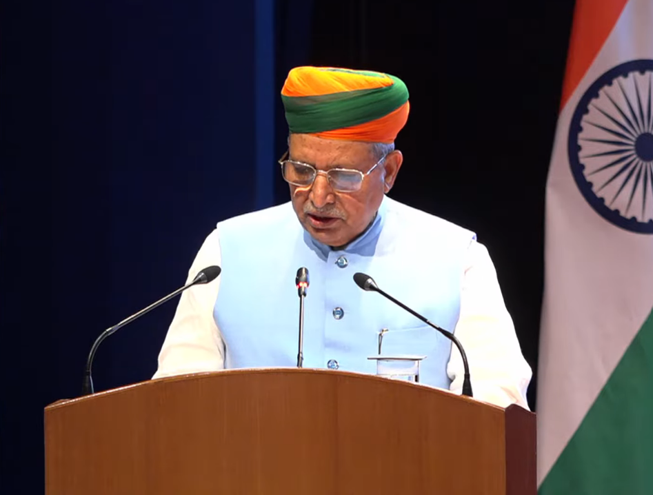
Calling justice the “invisible infrastructure” of economic development, the Law Minister stressed that legal certainty, speedy justice and efficient dispute resolution were indispensable for investment, business confidence and India’s long-term economic growth.
Looking ahead, the Law Minister said emerging issues such as AI-enabled contracts, blockchain-based trade and online dispute resolution would require sustained international collaboration, with UNCITRAL continuing to play a central role in building global legal consensus.
Concluding his address, Meghwal called for renewed commitment to strengthening the rule of law and judicial cooperation, leaving the audience with the message:
“
“Contracts create commerce. Trust sustains it. Justice protects it.”
External Affairs Minister Dr. S. Jaishankar Calls For International Trade Law Reflecting Global South’s Priorities
External Affairs Minister Jaishankar said the Commission had, over the past six decades, emerged as one of the most successful institutions within the United Nations system by promoting the harmonisation, modernisation and progressive development of international trade law through its model laws, conventions and legislative guides.
Noting that the global economy was undergoing profound transformation driven by technological advances, digital commerce, evolving supply chains and new investment patterns, the Minister said UNCITRAL had remained relevant by adapting to changing realities while preserving the principles of inclusivity, consensus and respect for diverse legal traditions.
Highlighting India’s longstanding engagement with UNCITRAL, he said India was among the eight countries that had maintained continuous membership of the Commission and had actively contributed to the evolution of international trade law. He added that India’s reforms in arbitration, commercial dispute resolution and insolvency reflected its commitment to building a modern, transparent and internationally compatible legal framework.
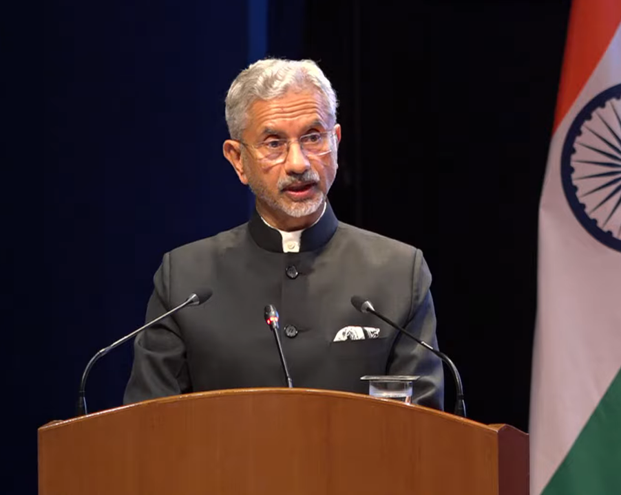
Referring to India’s vision of Viksit Bharat 2047, he said achieving the country’s economic aspirations would require predictable legal frameworks capable of facilitating international trade, investment and commercial cooperation.
“
“Today, India is one of the fastest growing major economies. Our vision of Viksit Bharat 2047… is founded on a resilient economy, technological innovation, expanded manufacturing and deeper integration with the global economy. But achieving these objectives requires predictable legal frameworks that facilitate international trade, investment and commercial cooperation.”
The Minister said India had consistently supported UNCITRAL’s consensus-based approach and believed international legal norms should emerge through inclusive dialogue and broad participation. He emphasised that developing countries had an important stake in ensuring that international trade law reflected their developmental priorities and practical realities.
Addressing the changing geopolitical landscape, Jaishankar observed that nations today sought not merely physical connectivity but legal predictability, amid geopolitical volatility, supply chain disruptions and rapid technological change.
“
“What nations are seeking is not just infrastructure and connectivity, but most of all legal predictability. They’re looking for harmonized rules-based architecture that ensures trade, data flows, and contract enforcement are seamless across borders and continents.”
He said harmonised legal frameworks, efficient dispute resolution mechanisms and greater certainty in cross-border transactions would enable international commerce to remain resilient despite global disruptions. Looking ahead, he said the legal architecture governing international commerce must evolve alongside shifting economic realities.
Concluding his address, the External Affairs Minister expressed confidence that the conference would generate fresh ideas, strengthen partnerships and encourage greater participation by legal scholars, practitioners and policymakers in the progressive development of international trade law.
Keynote Address by CJI Surya Kant
Delivering the keynote address, Chief Justice of India Surya Kant traced the evolution of international commerce from the ancient dockyard of Lothal to today’s rules-based trading system, emphasising that trust has always been the foundation of commerce. He highlighted India’s judicial reforms, mediation initiatives and arbitration ecosystem, observing that courts, arbitration and mediation together provide the legal certainty necessary for global trade while calling for continued international cooperation to address emerging challenges posed by digital trade, artificial intelligence and cross-border commerce.
Read the full report on CJI’s Address at: Courts Don’t Compete with Arbitration, They Enable It: CJI Surya Kant