
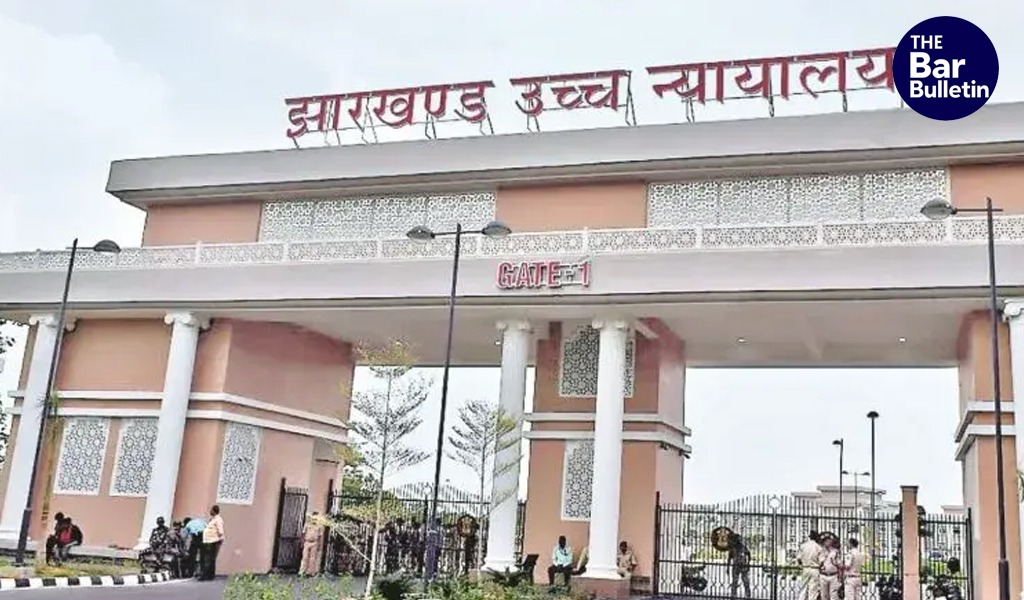

While asserting that the State and all its instrumentalities are under a binding legal obligation to secure a coordinated, survivor-centric framework for dealing with rape and sexual assault cases in accordance with constitutional protections, the Jharkhand High Court (Ranchi Bench) has extensively directed the DGP to ensure compliance with Section 173 BNSS on Zero FIR and to initiate penal and departmental action for non-compliance. At the same time, the Court directed the Women and Child Development Department to remove shortcomings in One-Stop Centres, constitute a women-headed complaints and monitoring committee, use Nari Niketan at Ranchi as a shelter home without a rigid maximum stay period, and publicise shelter facilities.
The High Court also directed the Education Department to appoint district nodal officers and ensure free education up to Class XII for children born out of rape, along with scholarships for meritorious students selected in premier institutions. It directed trial courts to consider interim relief immediately and award final compensation irrespective of acquittal, conviction, or non-tracing of the accused, with payment within 30 days. Further, the Court directed adherence to BNSS trial timelines and constitution of a Special Task Force for quarterly monitoring; mandated strict non-disclosure of victim identity by media, police, and courts; required training and sensitisation of police and court personnel.
Additionally, the Court directed immediate legal aid, care and protection under POCSO, and recording of statements by female police officer, and called for issuance of a circular prohibiting the two-finger test in all government and private hospitals. It also directed institutionalisation of legal awareness and self-defence programmes; required a mechanism for relocation and rehabilitation of victims and families wishing to shift residence; and directed the State to consider designating helpline number 181 as the primary women-centric helpline linked to 112. The Court clarified that these directions are not exhaustive and forwarded the judgment to all relevant authorities for immediate compliance.
Essentially, the Court held that registration of Zero FIR is mandatory regardless of territorial jurisdiction; victim identity cannot be disclosed in media or public records; investigation and trial of sexual offences must follow strict timelines under BNSS and related laws; compensation and rehabilitation are not dependent on conviction alone; children born out of rape are entitled to continued educational support; and practices violative of dignity, such as the two-finger test, are impermissible. The judgment treats access to shelter, counselling, legal aid, medical care, rehabilitation, and institutional sensitivity not as optional welfare measures but as enforceable components of the justice process for survivors of sexual violence.
Also Read Big Relief for Khan Sir: Patna Court Stays Arrest in Coaching Centre Firing Case
The Division Bench comprising the Chief Justice M. S. Sonak and Justice Rajesh Shankar observed that the law already mandates victim-centric handling of sexual offence cases, but those mandates were still not being followed in practice. It found that Zero FIR is obligatory irrespective of territorial jurisdiction; failure to register it delays medical examination and recording of statements and may prejudice prosecution. It also noted serious deficiencies in several One-Stop Centres, including staffing shortages, poor sanitation, non-functional kitchens, lack of drinking water, absent security arrangements, and inadequate infrastructure, requiring urgent correction.
On compensation, the Bench held that trial courts must inquire into immediate needs for interim relief upon registration of FIR and award just and reasonable compensation after conclusion of the case, even in acquittal or where the accused is untraced. It further observed that children born out of rape incidents require uninterrupted educational support, that victim identity must remain protected in media and public records, that police must act with sensitivity and complete investigation within statutory timelines, that the two-finger test is strictly prohibited, and that legal awareness, self-defence training, psychological care, rehabilitation, livelihood support, and a functional women-centric emergency response system are necessary parts of a meaningful institutional response.
Briefly, the public interest litigation was initially filed by Ms. Padma Baraik seeking multiple directions concerning rape and sexual assault survivors, including registration of Zero FIR irrespective of jurisdiction, shelter and rehabilitation support, compensation, free education for children born out of rape, protection of victim identity, humane police treatment, prohibition of the two-finger test, awareness programmes, and livelihood support. Since she was pressing her personal grievance, the High Court treated the matter as one of larger public importance, took suo motu cognizance, and permitted her to assist as an intervenor while leaving her individual remedies open. Suggestions were also placed by the intervenor, JHALSA, and the Amicus Curiae, particularly regarding non-registration of Zero FIR, inadequacies in One-Stop Centres and shelter homes, lack of timely compensation and rehabilitation, and gaps in police, medical, educational, and institutional response to sexual violence survivors in Jharkhand.
