


A panel of experts, led by the President of the Law Society of England and Wales, Mark Evans, discussed the challenges and opportunities arising in dispute resolution in “frontier” areas such as outer space, the deep seabed, and polar regions at London International Disputes Week (LIDW) 2026.
The panel discussed the adaptation of existing legal frameworks – or the failure to adapt – in the face of rapid technological, environmental, and geopolitical change, with Rachael O’Grady (Mayer Brown), Alison Macdonald KC (Essex Court Chambers), Toby Fisher (Matrix Chambers), and Terence McCulley (Ankura) all contributing.

Commercial Expansion and Legal Uncertainty in Outer Space
Rachael O’Grady offered a perspective from the rapidly evolving domain of space law, highlighting the increasing commercialisation of outer space and the legal complexities that follow. As private actors play a larger role in satellite deployment, telecommunications, and space exploration, traditional state-centric legal frameworks are being placed under strain.
She noted that existing treaties, particularly those developed during the Cold War era, were not designed to regulate the scale or nature of present-day commercial activity. This creates uncertainty around key issues such as liability, jurisdiction, and regulatory oversight.
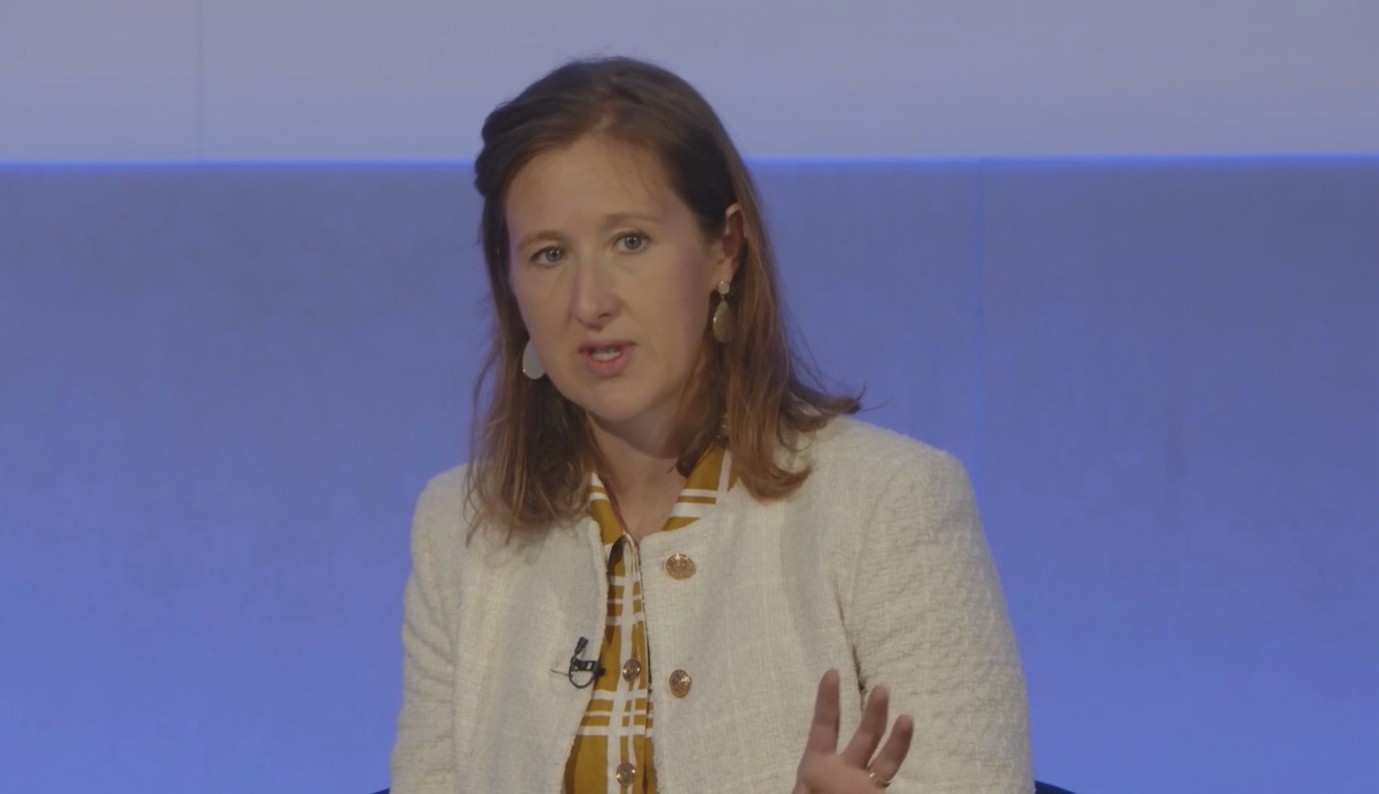
With multiple actors operating across jurisdictions, disputes in the space sector are likely to become more frequent and more complex, often involving both public international law and private commercial considerations. O’Grady emphasised that the absence of a comprehensive and updated regulatory framework risks fragmentation, with different national approaches emerging in response to the same global challenges.
Her remarks underscored a broader theme of the panel: that technological advancement in frontier sectors is outpacing the evolution of legal systems, requiring more adaptive and coordinated international responses.
Governing the Deep Seabed: The “Common Heritage” Model
Toby Fisher opened the discussion by describing the special legal regime for the deep seabed that is established under the United Nations Convention on the Law of the Sea (UNCLOS).The seabed outside of the borders of any one nation is called the “common heritage of humankind” as opposed to the high seas.
Humankind has the right to all rights in the area.

This is implemented via the International Seabed Authority (ISA), which regulates exploration and exploitation of seabed resources and ensures equitable benefit-sharing.Arbitration or the International Tribunal for the Law of the Sea (ITLOS) Seabed Disputes Chamber are all mechanisms used to solve disputes.This system is “an extraordinary act of multilateralism,” but “it’s an anachronism” in this new geopolitical environment, Fisher said.
The legal frameworks of Antarctica and the Arctic are divergent. The legal systems of the Arctic and Antarctica are different.
Alison Macdonald KC compared the governance of Antarctica with the Arctic, emphasising the different approaches to law.

The Antarctic Treaty System (ATS) governs Antarctica, freezing territorial claims and military activity, and encouraging scientific cooperation.It is one of the most successful cases of international cooperation with 56 state parties.
UNCLOS and national sovereignty claims, on the other hand, are the central governing principles of the Arctic.States claiming rights to long continental shelves, causing overlapping rights and resource conflicts.
“There is a scramble in the Arctic.”
The Arctic is not subject to a binding agreement, unlike Antarctica, which is governed by the International Antarctic Treaty.The Arctic Council is a forum for cooperation, but it is not a mechanism for enforcement, and it has no mandate for security. In the wake of growing geopolitical conflicts, these are, respectively, important points to note about the Arctic Council, which provides a forum for cooperation but has no enforcement power and no mandate for security.
New pressures are developing as technology, climate, and commerce advance. Technology, climate, and commerce are new pressures.
In both frontier and non-frontier areas, the panellists noted the increasing influence of technological innovation, environmental issues, and commercial activity.
New opportunities are opening in the deep-sea mining sector, and with polar navigation and satellite technology, new legal conflicts are emerging.Climate change is opening up new areas, especially in the Arctic, that are now accessible to everyone, thus increasing the competition for resources and trade routes.
These changes are outpacing the pace of law development, which leads to concerns over the ability to come up with regulations and the capacity of institutions.
Dispute Resolution Challenges
One consistent finding was that there was a disconnect between the fast-changing activities and the not-so-fast-changing laws.When dealing with frontier disputes, these can include:
Multiple jurisdictions and overlapping claims.
- Novel legal issues not well developed in prior cases
- High geopolitical sensitivity
- Difficult scientific and technical evidence
This leaves considerable doubt in the minds of both states and private parties.
Terence McCulley pointed out that the geopolitical situation was very important and that the conflicts in the border areas were not isolated to them, but were part of broader international dynamics and changing alliances.

Will current programs and protocols be able to adapt?
The panel asked if there is enough clarity in the legal frameworks to deal with new risks.Many frameworks, such as the UNCLOS and the Antarctic Treaty, have survived, but their capacity to support new types of activity, like commercial space operations and deep-sea resource exploitation, may be questionable.
Mark Evans said the Law Society’s “foresight” work was not about trying to foretell the future but to “help to get people thinking and talking about these issues at an earlier stage and more systematically.”
For us, foresight has nothing to do with predicting the future; it is about helping the profession think earlier – about emerging risks and opportunities.”

The Future of Frontier Law has been published.
The Future of Frontier Law is published.Going forward, the panel recommended the need for more international cooperation, flexible regulations, and an interdisciplinary approach in dispute resolution in frontier areas.When legal systems face challenges at the outer limits of human existence, in outer space, in the seabed, and in the polar areas, they must come to terms with some basic questions of governance, stewardship, and how shared resources are distributed.
The debate highlighted not only the new frontiers of law but also the boundaries of legal imagination. For lawyers, the question is how to keep pace and continue to be able to resolve conflicts, cooperate with others, and safeguard the shared resources of the world in an increasingly conflicted world.