
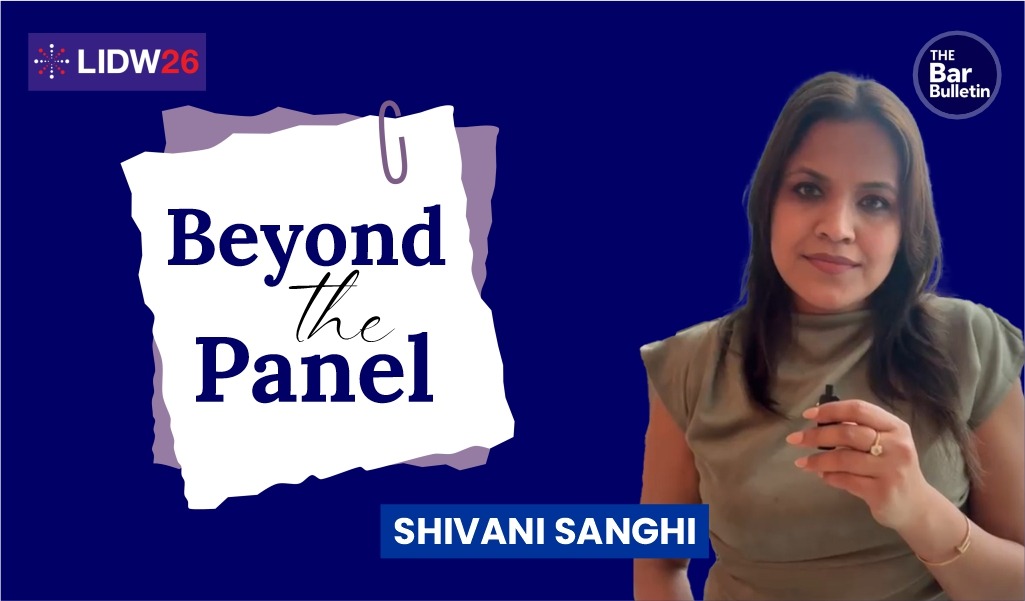

Shivani is a partner in the Business and Commercial Disputes team in BCLP’s London office and also leads BCLP’s India Practice. She has more than 15 years experience in strategically resolving complex, high-value, multi-stakeholder, cross-border Commercial Litigations and International Arbitrations. She is also dual-qualified as a Solicitor-Advocate in England and Wales and as an Advocate in India.
1. Do you think greater transparency is required in arbitration, particularly through the publication of redacted arbitral awards?
Shivani Sanghi: That’s a great question, and one that is currently generating significant debate within the arbitration community.
In my view, confidentiality and transparency should not be seen as opposing principles but rather as interests that need to be carefully balanced. Parties are understandably concerned about protecting their identity and commercially sensitive information. However, what they generally seek to keep confidential is not the legal reasoning of the award itself.
The legal reasoning contained in arbitral awards can be immensely valuable for the broader arbitration ecosystem. Publishing awards in a suitably redacted form would contribute to greater predictability, foster consistency in arbitral jurisprudence, and enhance users’ confidence in the arbitral process. It would also help practitioners and businesses better understand how tribunals approach recurring legal issues.
For these reasons, I firmly believe that redacted arbitral awards should be published. The ICC has already adopted this practice, and it would be beneficial for the arbitration community as a whole if more arbitral institutions followed suit.
2. If the benefits are so evident, why do you think there is still considerable resistance to publishing arbitral awards?
Shivani Sanghi: I think there are two principal reasons.
First, achieving the right balance between transparency and confidentiality is not always straightforward. Properly redacting commercial information and removing details that could reveal the identity of the parties requires careful consideration and significant effort.
Second, users of arbitration often remain apprehensive about the publication of their awards. They may not have complete confidence that all commercially sensitive information or identifying details will be effectively redacted. As long as parties fear that confidential business information could be indirectly disclosed or that they could still be identified through contextual details, resistance to publication is likely to persist.
Addressing these concerns through robust redaction protocols and institutional safeguards will be essential if wider publication of arbitral awards is to gain acceptance.