
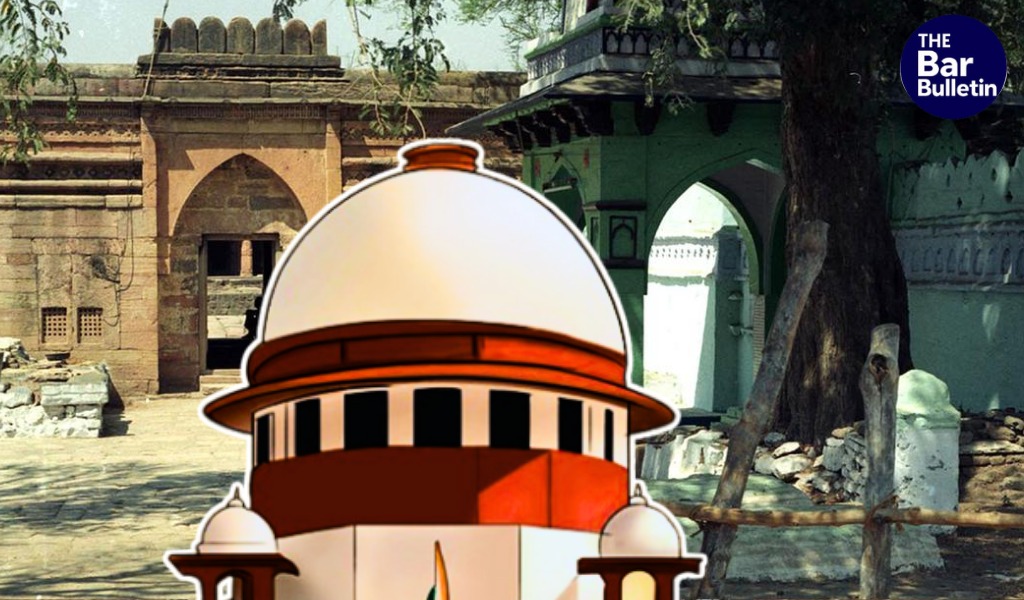
The Bhojshala-Kamal Maula Mosque dispute has reached the Supreme Court, with Muslim worshippers and intervenors challenging the Madhya Pradesh High Court’s May 15 judgment that declared the religious character of the disputed site to be that of Bhojshala, a temple of Goddess Vagdevi (Saraswati), while quashing the long-standing arrangement permitting Friday namaz.
The Special Leave Petition filed under Article 136 contends that the High Court exceeded its writ jurisdiction under Article 226 by effectively determining the religious character of the disputed site despite expressly stating that it was not deciding title. The petition argues that the declaration on religious character indirectly adjudicates core title and possessory issues pending before competent civil forums.
The petitioners have argued that the High Court upset a nearly two-decade-old arrangement evolved through the Archaeological Survey of India’s April 7, 2003 order, which balanced Hindu worship rights and Friday namaz at the protected monument while preserving communal harmony and public order.
Among the principal grounds raised before the Supreme Court is that the High Court’s verdict violates the Places of Worship (Special Provisions) Act, 1991, which bars courts from entertaining proceedings that seek to alter the religious character of a place of worship as it stood on August 15, 1947. The petition also alleges violation of Articles 14, 21, 25 and 26 of the Constitution, arguing that centuries-old Muslim worship rights have been judicially curtailed without trial or evidentiary scrutiny.
The petition also challenges the High Court’s direction that the State may consider allotting alternative land for construction of a mosque, arguing that such a direction effectively acknowledges displacement of Muslim worship rights while invoking a power akin to Article 142, which is reserved exclusively for the Supreme Court.
Calling the matter one of grave constitutional significance involving secularism, minority rights, judicial limits in religious disputes, and constitutional neutrality, the petition seeks setting aside of the impugned judgment.
Petition Drawn by:
Advocates Vaibhav Choudhary, Syed Ashhar Ali Warsi , Mayank Singh Rawat, Poorvi, Hashim Khan
Ms. Lubna Naaz, AOR TKC Partners LLP instructing Mr. Salman Khurshid, Senior Advocate on behalf of Maulana Kamaluddin Wefare Society, Dhar