
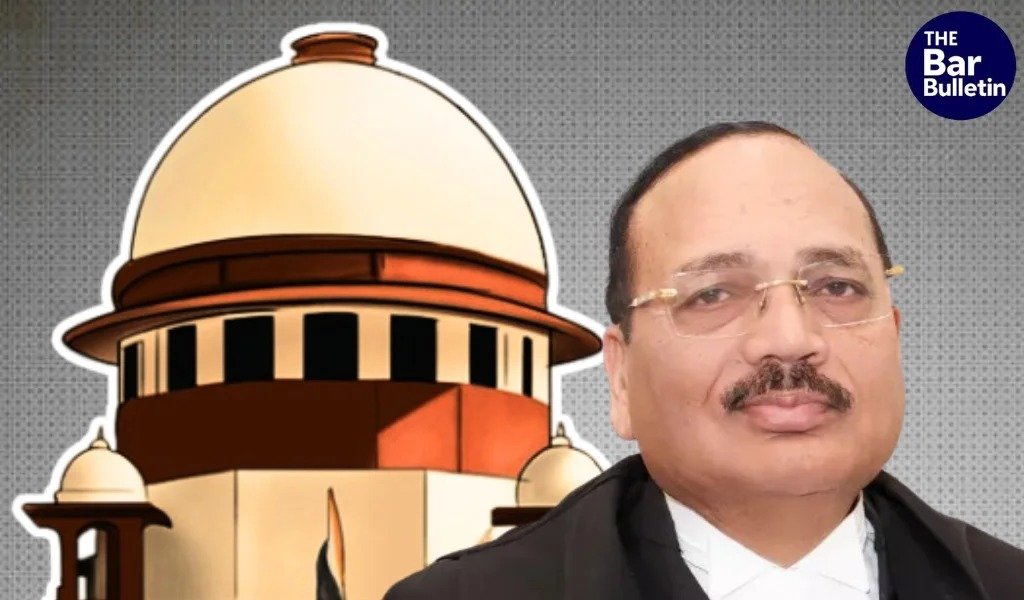

The Supreme Court on Wednesday questioned a lawyer’s plea seeking action against news portals for circulating a recording of his appearance before the Court, asking him to first exhaust the legal remedies available under the Information Technology Act for removal of the content. The matter was heard by the bench of Chief Justice Surya Kant, Justice Joymalya Bagchi and Justice V Mohana.
The lawyer appearing for the petitioner submitted that despite the Supreme Court’s earlier directions prohibiting circulation of video proceedings, a recording of his courtroom appearance had allegedly been circulated by news portals.
The petitioner referred to a video of his appearance in connection with a bail matter, contending that its circulation was affecting his professional reputation. He submitted that the recording had been published despite the Court’s earlier directions.
Chief Justice of India Surya Kant questioned the basis of the grievance, pointing out that the petitioner was appearing in open court and had not alleged that the video was fabricated, manipulated or altered using AI. The CJI observed:
“
“Commercial exploitation may violate our order. But adding words never spoken or falsely attributing remarks to the Bench would be a criminal act and far more serious. You are not alleging that the video was fabricated or altered using AI. You are appearing in open court. You should be brave enough.”
The Bench further asked the lawyer to approach the concerned service providers and seek take-down orders under the IT Act before invoking the Court’s jurisdiction. “Please take that step,” the Court said, adding that if the take-down requests were not complied with, the petitioner could approach the Court again. The Bench stressed that the petitioner, being a lawyer, must first exhaust the legal remedies available under law.
The Court noted that the law provides remedies concerning impermissible publications in the digital domain, including take-down and blocking mechanisms.The Bench also clarified that it had intentionally not issued directions to intermediaries, observing that Section 69 of the IT Act would take care of such situations. It said that when the Court declares the law, the prohibition would operate against publication and circulation by intermediaries, and any breach could be dealt with through appropriate legal remedies.
The petitioner was ultimately granted liberty to approach the intermediaries and seek removal of the allegedly offending material.