
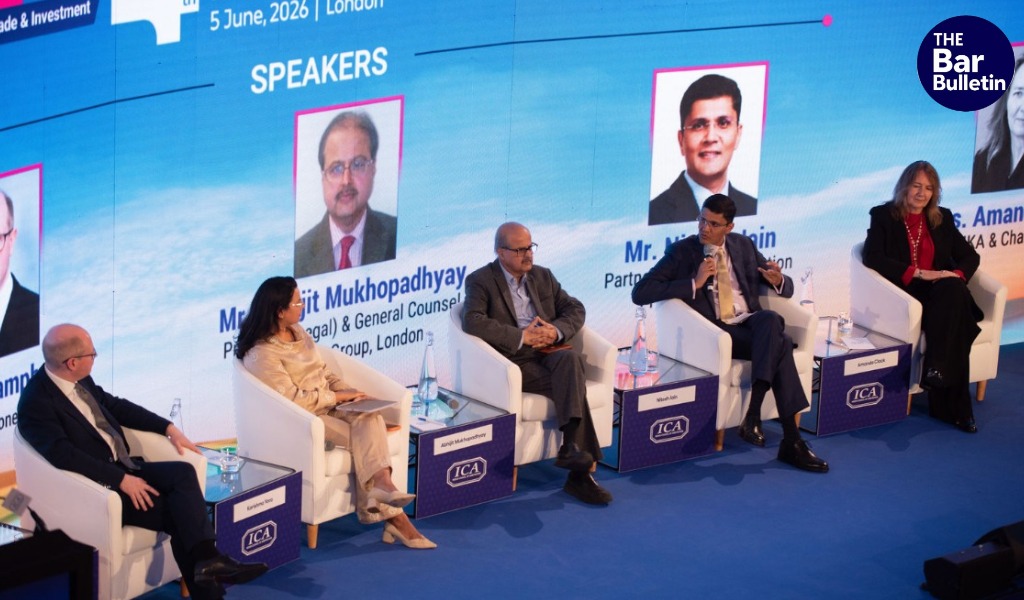

The second technical session of ICA’s 4th International Conference on “ARBITRATING INDO-UK COMMERCIAL DISPUTES” shifted the focus from dispute resolution mechanisms themselves to a more fundamental commercial concern: certainty. At a time when India and the United Kingdom are deepening their economic engagement, the discussion on “Strengthening the India–UK Economic Corridor: Role of ADR in Cross-Border Trade & Investment” explored how effective dispute-resolution frameworks can strengthen investor confidence, preserve commercial relationships, and facilitate cross-border trade.
The session was moderated by Ms Karishma Vora, Barrister at 39 Essex Chambers and International Arbitrator. The distinguished panel comprised:
- Mr Fraser Campbell KC, Barrister at Blackstone Chambers;
- Mr Abhijit Mukhopadhyay, President (Legal) and General Counsel, Hinduja Group;
- Mr Nitesh Jain, Partner, Trilegal; and
- Ms Amanda Clack, Chief Executive Officer of HKA and Chair of Dispute Advisory Boards at RICS.
Together, they examined dispute resolution not merely as a response to conflict, but as an essential component of commercial certainty and economic growth.
Opening the discussion, Ms Karishma Vora framed the central challenge facing modern commerce. Businesses are accustomed to pricing risk, she observed, but uncertainty remains far more damaging. Investors can account for commercial risks in their calculations; what undermines confidence is unpredictability in the mechanisms available to resolve disputes when they arise.

The conversation, therefore, centred on how legal systems can provide the certainty necessary for businesses to invest, trade, and build long-term commercial relationships across borders.
Moving from a Litigation Culture to a Resolution Culture
Addressing India’s dispute resolution landscape, Mr Nitesh Jain offered a nuanced perspective on the often-cited challenge of judicial pendency. While acknowledging the significant backlog of cases, he pointed out that the Indian legal system simultaneously disposes of an enormous number of matters every day. He stated that the arbitration reforms introduced over the past decade have substantially strengthened India’s arbitration framework. However, Mr Jain emphasised that institutional reforms alone are not sufficient. The greater challenge lies in cultivating what he described as a “resolution-oriented culture.”
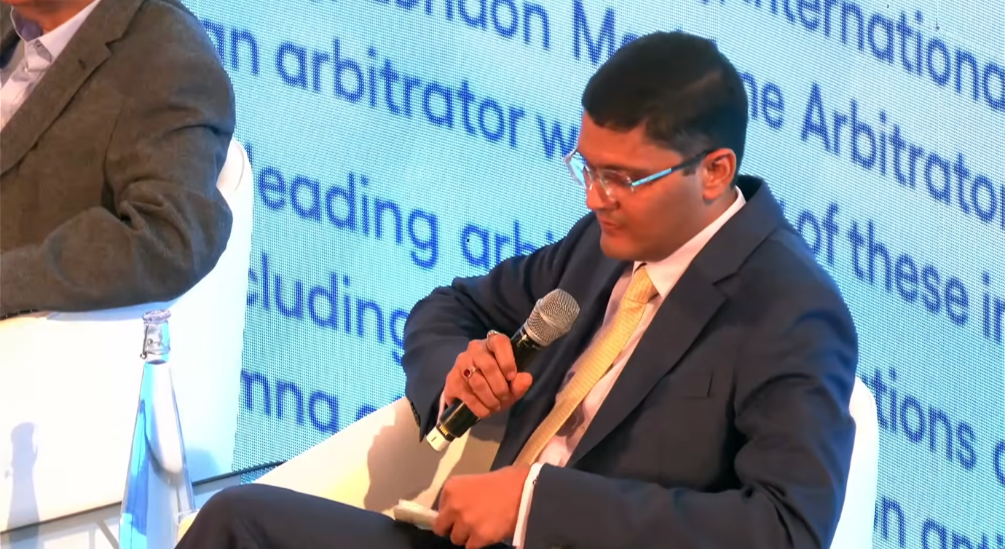
In his view, parties must begin treating dispute resolution not as a contest to be won at all costs but as a means of achieving commercially sensible outcomes. Drawing on practical experience, he highlighted how mediation can often deliver efficient, pragmatic resolutions when parties engage constructively and in good faith. He added:
“
“The real challenge before us is not merely reducing pendency or introducing procedural reforms; it is creating a genuine resolution-oriented culture. Arbitration and mediation can only succeed when parties approach them as tools for solving problems rather than extensions of litigation. The objective must be to achieve commercially sensible outcomes that allow businesses to move forward, rather than becoming trapped in years of avoidable conflict.”
‘Any Conflict Is Bad for Business’: Abhijit Mukhopadhyay
Providing the corporate perspective, Mr Abhijit Mukhopadhyay shifted the discussion from legal frameworks to commercial realities. Speaking from decades of in-house experience, he observed that businesses rarely emerge from disputes unscathed. Even where a party succeeds in litigation or arbitration, the process frequently consumes management attention, strains business relationships, affects reputations, and results in lost opportunities.
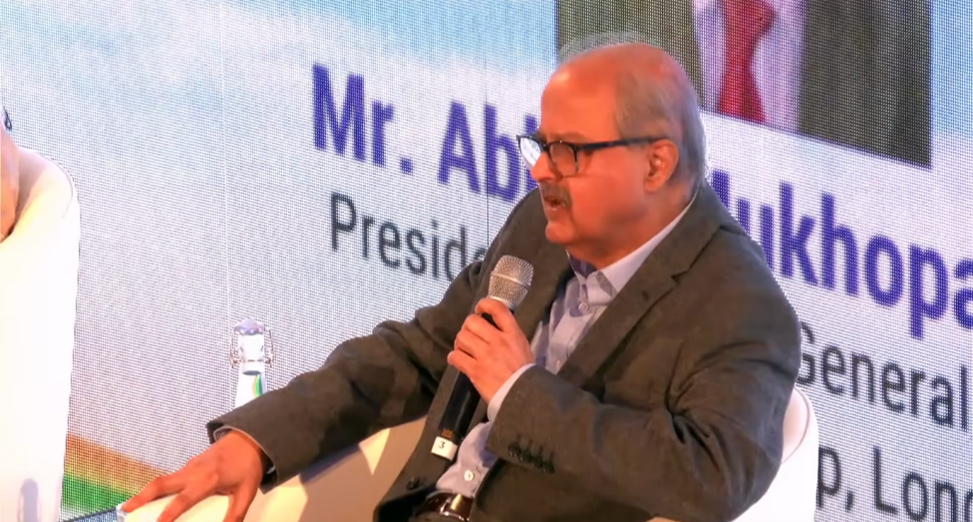
One of the most striking observations of the session came when he identified poorly drafted contracts as “the creator of all disputes.” Rather than focusing exclusively on remedies after disputes arise, he advocated greater attention to prevention. This includes clearer contractual drafting, stronger internal awareness of contractual obligations, and well-defined escalation mechanisms that enable disagreements to be addressed before they develop into formal disputes. “Most disputes are not created in the courtroom or the arbitral tribunal; they are created much earlier, in poorly drafted contracts, unclear obligations, and inadequate internal processes. If organisations invest the same effort in prevention that they invest in litigation, many disputes would never arise in the first place.”
Mr Mukhopadhyay also cautioned against treating mediation as a procedural box-ticking exercise. For mediation to succeed, parties must approach it with genuine intent rather than regarding it as a mandatory step before arbitration.
Rethinking the Architecture of Dispute Resolution
Mr Fraser Campbell KC challenged participants to reconsider conventional approaches to dispute resolution clauses. Arbitration, he suggested, is often inserted into contracts as a matter of routine, resulting in what effectively becomes a private version of courtroom litigation. Yet commercial relationships, particularly long-term cross-border relationships, often require more creative solutions.
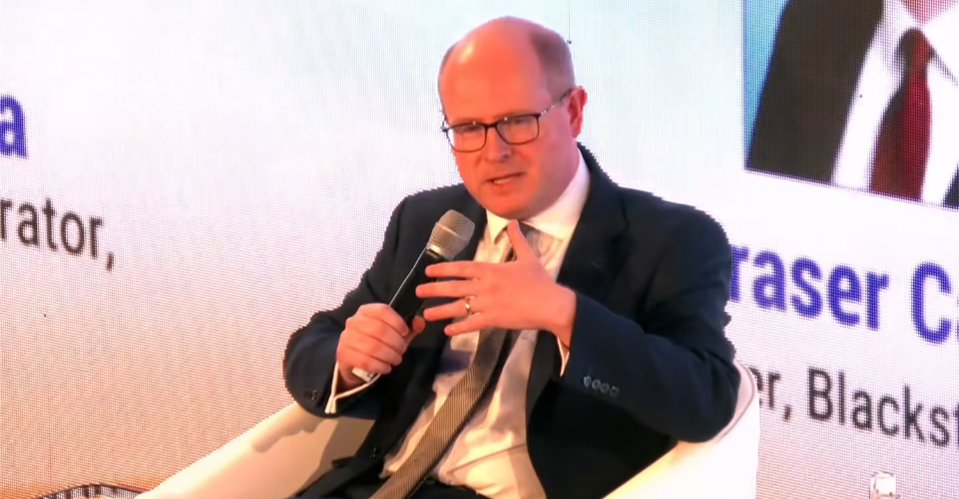 He encouraged parties to move beyond standard-form provisions and consider dispute resolution mechanisms that are better tailored to the realities of ongoing commercial relationships. Among the possibilities discussed were granting arbitrators greater flexibility to manage contractual relationships, facilitate commercial adjustments, or structure exits where relationships have broken down. Such approaches, he suggested, may prove more valuable than rigid adversarial processes in preserving commercial value. he stated:
“I’ve seen so many cases where nobody wins except the lawyers and the arbitrators. And I wonder whether if those people had thought about how they might end up when they were drafting their clause, they wouldn’t just have adopted a boilerplate clause. They might have actually thought how can we design an arbitrator’s powers that can help us find a solution if we need one rather than just resolve a dispute.”
The Role of Forensic Analysis in Driving Resolution
Offering a distinct perspective, Ms Amanda Clack highlighted the growing importance of forensic analysis in contemporary dispute resolution. In complex commercial disputes, forensic experts play a crucial role in clarifying facts, quantifying claims, and providing parties with an objective assessment of their positions.

According to Ms Clack, the value of such analysis lies in its ability to remove emotion and narrative from disputes. By replacing assumptions with evidence, forensic processes help parties make informed decisions about settlement, litigation strategy, and risk assessment. While forensic findings may not be binding, they frequently create a clearer understanding of the likely outcome of a dispute and thereby encourage more efficient resolution. She added:
“
“Forensic analysis brings clarity to complexity. By replacing assumptions with evidence and narrative with facts, it enables parties to assess their positions more objectively. Often, once the facts are properly understood and quantified, the path to resolution becomes clearer, more efficient, and far less costly.”
Keeping Disputes Short, Focused, and Commercial
A recurring theme throughout the session was the importance of intervening early and narrowing disagreements before they escalate. The panellists repeatedly stressed that prolonged disputes impose costs extending far beyond legal fees. Delays can disrupt projects, strain commercial relationships, and undermine business confidence.
The discussion highlighted the importance of identifying the true points of disagreement and resolving them as efficiently as possible through mediation, expert determination, forensic review, or internal corporate processes. In this context, Mr Campbell KC observed that mediation should not be viewed as a single event. Instead, it can operate alongside arbitration or litigation, helping parties resolve issues incrementally while formal proceedings continue.
Certainty as the Foundation of Economic Growth
The session concluded with a powerful consensus: the most effective dispute resolution system is one that prevents disputes from escalating in the first place. Whether through careful drafting, early intervention, mediation, forensic analysis, or innovative dispute resolution design, the objective should always be to minimise uncertainty and preserve commercial value.
More broadly, the discussion underscored that the future success of the India–UK economic corridor will depend not only on the volume of trade and investment but also on the confidence businesses have in the systems that govern commercial relationships. Predictability, enforceability, and commercial practicality emerged as the true foundations of investor confidence.
Ultimately, the panel offered a simple but compelling message: dispute resolution should not be viewed merely as a mechanism for resolving conflict. At its best, it is an instrument for creating certainty, protecting relationships, and enabling business growth.
Read Also
Inaugural Session Report- https://thebarbulletin.com/cji-surya-kant-arbitration-system-introspection-reforms/
Fireside Chat Report- https://thebarbulletin.com/geeta-luthra-wider-arbitrator-pool-arbitration-reforms/
1st Technical Session Report- https://thebarbulletin.com/hybrid-adr-models-indo-uk-commercial-disputes/