
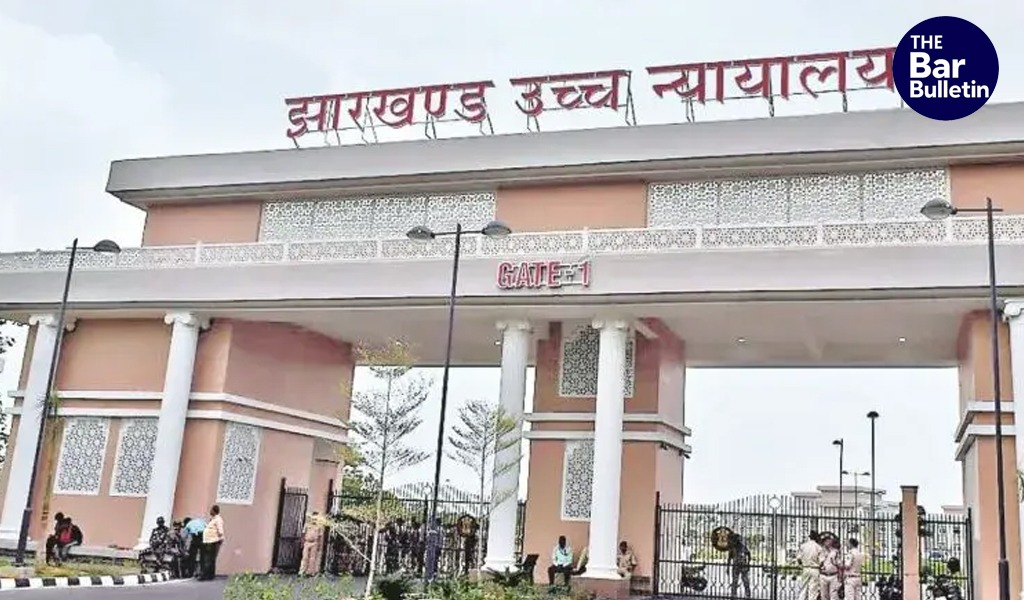

The Jharkhand High Court has held that the mere filing of a charge sheet or issuance of summons does not render an application for anticipatory bail non-maintainable. The Court observed that where an accused has a genuine apprehension of arrest in a police case, the Court can entertain a plea for anticipatory bail notwithstanding the filing of the charge sheet or the issuance of summons.
Justice Sanjay Kumar Dwivedi made the observation while granting anticipatory bail to a petitioner accused in a case registered under Sections 406, 420, 467, 468, 379 and 120-B read with Section 34 of the Indian Penal Code. The petitioner contended that he had cooperated with the investigation, the charge sheet had already been filed, and he apprehended arrest upon appearing before the trial court after the interim protection granted in an earlier quashing petition was vacated.
Also Read [Benchmark] Justice Pankaj Mithal: From Third-Generation Lawyer to Supreme Court Judge
The informant opposed the plea, arguing that since the trial court had already taken cognizance of the offences and issued summons, the petitioner ought to appear before the court and seek regular bail. Reliance was placed on a recent Supreme Court decision concerning a private complaint case to contend that anticipatory bail was not maintainable after issuance of summons.
Rejecting the objection, the High Court distinguished the Supreme Court decision on the ground that it arose out of a private complaint under Section 202 of the Code of Criminal Procedure, whereas the present matter originated from a police investigation. The Court held that the petitioner had cooperated throughout the investigation, yet his apprehension of arrest upon appearance could not be ruled out. Accordingly, the Court held that an anticipatory bail application remains maintainable where such apprehension genuinely exists.
The Court further reiterated that the filing of a charge sheet is not, by itself, a bar to the grant of anticipatory bail. Relying on the Supreme Court’s decision in Ravindra Saxena v. State of Rajasthan (2010) 1 SCC 684, the Court observed that an application for anticipatory bail must be decided on its own merits and cannot be rejected merely because the investigation has culminated in a charge sheet. The Court emphasised that the object of the provision is to safeguard personal liberty and that unnecessary restrictions cannot be read into the statutory scheme.
Taking note of the petitioner’s cooperation during the investigation and the nature of the allegations, the High Court granted anticipatory bail, directing him to surrender before the trial court within three weeks and ordered that, in the event of his surrender or arrest, he be released on bail subject to conditions under Section 482(2) of the Bharatiya Nagarik Suraksha Sanhita, 2023.
