
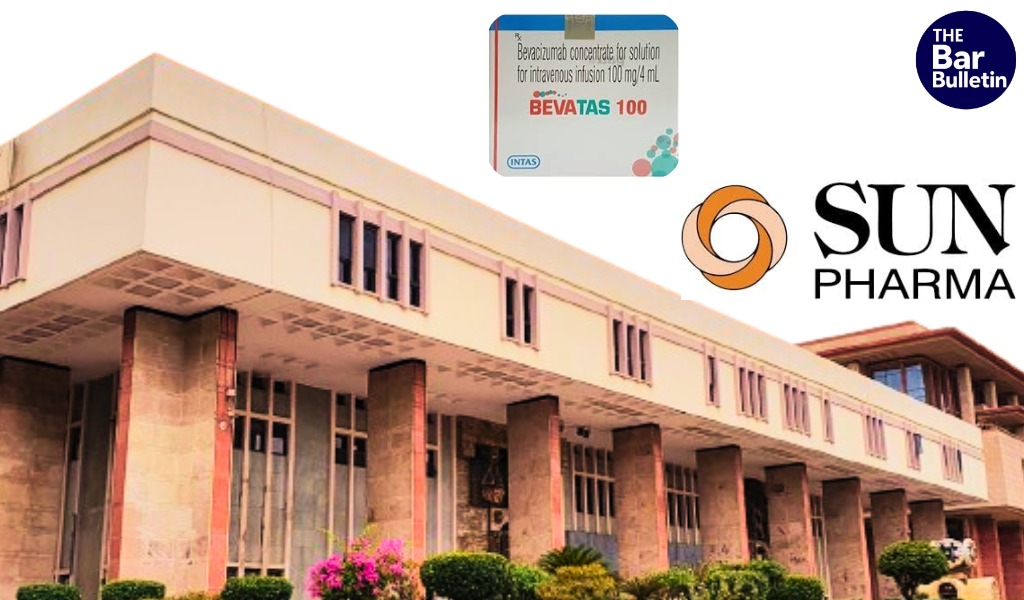

The Delhi High Court clarified that, in a pharmaceutical trademark infringement dispute involving marks that are not identical and goods that are not identical or closely similar, the claim must be assessed within the correct statutory framework and cannot be sustained on abstract comparison alone. Where the case falls under Section 29(2)(b) of the Trade Marks Act, 1999, the plaintiff bears the burden of affirmatively proving likelihood of confusion on the part of the relevant public. At the stage of final adjudication, such a finding must rest on a holistic and evidence-based assessment, and not merely on the court’s visual or phonetic comparison of the competing marks.
The Court also clarified that the factors identified in the case of Cadila Health Care Ltd. v. Cadila Pharmaceuticals Ltd [(2001) 5 SCC 73], including the nature of the goods, their character and performance, the class of purchasers, the mode of purchase, the mode of administration and other surrounding circumstances, remain central to this determination, particularly in cases involving medicinal products.
The Court further held that where common elements in pharmaceutical marks are publici juris, emphasis must be placed on the uncommon portions of the marks in assessing deceptive similarity. On the admitted facts of the case, because the goods were dissimilar, the prefixes “BEV/BEVA” were common to the trade, the rival marks as a whole were not deceptively similar, and no cogent evidence of likely confusion had been led, the Court ruled that Intas’s use of “BEVATAS” did not infringe Sun Pharma’s registered trademark “BEVETEX.”
Also Read ‘Arbitration Was Never Meant to Become a Second Litigation Chamber’; Legal Experts at LIDW
The Division Bench comprising Justice V. Kameswar Rao and Justice Manmeet Pritam Singh Arora first examined the scope and foundation of the respondent’s pleadings and found that the plaint had been framed in an overbroad manner by combining infringement with claims for passing off, unfair competition, misappropriation of goodwill, damages and rendition of accounts, even though the respondent was, on its own later admissions, aware that the two drugs were distinct and non-substitutable. On that basis, the Bench held that the plaint was vexatious to the extent it asserted commercial causes of action unsupported by the respondent’s own knowledge of the facts.
The Bench also found the infringement pleadings imprecise, noting that the plaint merely referred to Section 29 of the Trade Marks Act, 1999 without clearly identifying the applicable sub-section, thereby allowing the respondent to shift its statutory position across different stages of the proceedings. On a holistic reading of the record, the Bench held that the case could only properly be considered under Section 29(2)(b), since the marks were alleged to be similar, the goods at best similar in a broad classificatory sense, and the burden therefore remained on the respondent to affirmatively establish likelihood of confusion.
The Bench then addressed the evidentiary burden applicable where the goods are not identical or closely similar. It held that, in such cases, confusion cannot be presumed and must be proved through cogent evidence showing how the marks operate in the market and are perceived by the relevant class of purchasers or professionals. On the facts, the respondent had not led evidence from any oncologist, pharmacist, nurse or other relevant public person, despite its own case being that confusion could occur at the level of chemists or paramedical staff. Instead, it relied on its Sales Manager as PW-1, whose testimony the Court found both incompetent on the issue of likelihood of confusion and unreliable on material aspects.
The only document cited by PW-1 as an illustration of confusion was an unrelated newspaper article, which the Court held had no probative value in establishing confusion between the rival marks or products. The Bench therefore concluded that the respondent had failed to discharge the evidentiary burden required in a post-trial determination under Section 29(2)(b).
On the substantive comparison of the products and marks, the Bench held that the two drugs were fundamentally dissimilar in composition, therapeutic purpose, indication, dosage and stage of treatment, and were not therapeutic substitutes. While both fell broadly within the pharmaceutical field, that classificatory overlap was not sufficient to establish similarity in the legally relevant sense. The Bnech also accepted that the prefixes “BEV” and “BEVA,” derived from “Bevacizumab,” were publici juris in the context of anti-cancer drugs containing that molecule, particularly given the evidence of multiple third-party marks using those elements. Accordingly, greater significance had to be attached to the uncommon portions of the rival marks.
When compared as a whole, the Bench found that “BEVATAS” and “BEVETEX” were neither visually, structurally nor phonetically similar. In addition, surrounding circumstances weighed strongly against any real likelihood of confusion, including the specialised class of purchasers, prescription-only hospital use, distinct packaging and labeling, prominent disclosure of the active ingredients, differing administration protocols, and the high degree of care expected in oncology treatment. The Bench therefore held that even the slightest real likelihood of confusion had not been established on the record.
Briefly, the suit had originally been instituted by Sun Pharma in 2017 alleging infringement, passing off and unfair competition. Intas had adopted and launched “BEVATAS” in 2016 and contended that the mark had been independently coined from “BEVA,” taken from “Bevacizumab,” and “TAS,” derived from its corporate name, Intas. Although Sun Pharma had pleaded broad commercial causes of action in the plaint, it later repeatedly asserted during the proceedings that it was pursuing the suit only in “public interest” and had “no commercial interest,” since it did not market any drug containing Bevacizumab.
The appeal arose from the judgment and decree passed by the Single Judge, whereby Intas Pharmaceuticals Limited was permanently restrained from using the mark “BEVATAS” for its anti-cancer drug containing the molecule Bevacizumab, on the ground that it infringed Sun Pharma Laboratories Limited’s registered mark “BEVETEX” used for an anti-cancer drug containing the molecule Paclitaxel.
Sun Pharma had instituted the suit in December 2017 alleging infringement, passing off and unfair competition. Intas had launched “BEVATAS” in 2016 after DCGI approval, and asserted that the mark was independently coined from “BEVA” taken from “Bevacizumab” and “TAS” from “Intas.” The respondent had not used “BEVETEX” for several decades after registration and only commenced use in 2015. Earlier, at the interim stage, the Trial Court had refused injunction on Sep 17, 2018, holding that the two marks and drugs were materially different.
